


Hello, and welcome back to The Kable where, once again, we have a light issue for you. Light only in length though coz, oh wait, because, we’re always heavy in the feels.
Starting, as we’ve been for over 100 days now, with Ebola. That’s right. The Bundibugyo Ebola outbreak in Democratic Republic of the Congo (DRC) officially crossed 100 days earlier this week. And CEPI doesn’t have a vaccine yet. CEPI does have a statement about the breakneck speed of work, and how much more needs to be done yet. To be frank, when CEPI came up with the 100 Days mission, we didn’t actually expect them to have a working solution within 100 days. And neither, we believe, did CEPI. And no, this isn’t a diss aimed at CEPI. For CEPI, that mission would’ve been a rallying call to garner support and funding to boost response for critical health emergencies around the world. Maybe they just didn’t expect an emergency of this scale to hit so soon. Or, they thought if an emergency were to hit, it would be like Covid, one that affected people in the global North, and for which wallets would’ve loosened significantly faster. CEPI is still doing the work here too. They’ve just pumped in $16.5 million to take Egypt-based Minapharm’s Bundibugyo vaccine candidate into clinical trials. Good on them.
So, what’s up with Ebola then? Is the outbreak slowing down? Not a chance. At last count, it had reached 5,794 cases with 2,786 deaths, with cases being reported from two new health zones as well. They’ve started vaccinating frontline health workers with Ervebo, the approved Zaire ebolavirus vaccine, which we still believe is a double-edged sword. And violence against health workers, and health facilities, continues, making both response and containment that much more difficult.
In a little bit of good news to wind this section up, Uganda has officially ended its own Ebola outbreak, after 42 days of no new cases. Uganda also received a small lot of an experimental antibody from the US government, just in case.
Over in Botswana, the government has signed a 10-year deal with the Abu Dhabi-based M42 to roll out a national genomics programme, and to digitise health records, and to improve access to medicines.
As has been the norm lately, barely a week goes by without a “natural” disaster of some form striking somewhere around the world. This week, it was Nepal, where a flash flood, precipitated most likely by a glacier collapse, has seen hundreds of people killed and thousands of homes destroyed. UNICEF says more than 17,000 children need urgent assistance. Yes, climate change was a factor. And we will see more and more stories like these more and more often. Just recently, a massive (like, really massive) iceberg said bye-bye to Greenland. In the Alps, glaciers are primed for record-breaking ice loss. Skiing may soon be a sport of the future. Or Dubai malls.
But there is no disaster that Israel can’t top. Not only did they seize the last operational UNRWA centre in East Jerusalem, they also killed four children in separate attacks that destroyed aid supplies and caused even more damage to the already precarious water situation in Gaza.
Elsewhere, operating under a US-enforced embargo for over 60 years, Cuba nevertheless managed to build a flourishing science and medical infrastructure, among many other stellar achievements. However, the cumulative impact of all these years, combined with the cruelty we’ve witnessed in the past few months, is now making its presence felt in more ways than one. Health is obviously one. Food safety is another. And food-borne illnesses are the result, as we saw in Santiago where at least 52 people have fallen ill. They’ve all been hospitalised but at least the hospital doesn’t have supplies. Free world ftw!
And finally, in Belgium, a record outbreak of salmonella led to 306 egg-eaters falling ill. Authorities said more people actually fell ill but with mild to no symptoms. But we reckon Belgium hasn’t really atoned at all for everything they did to Congo, and even if 3 million people were to contract salmonella, it wouldn’t be enough.
Before we dive into the stories of the week...
The Kable is proud to be a Media Partner to Pharmaconex - the largest and most influential pharmaceutical exhibition and conference in Africa.
Like The Kable, Pharmaconex shines a spotlight on the capability story in Africa and is committed to building a symbiotic community of industry leaders, changemakers and regulators to share knowledge, forge partnerships and move the industry forward.
Use this link to register for your free pass.
Stories Of The Week
Work in Africa. This week, the WHO Regional Committee for Africa had its 76th session. And one of the outcomes of the session was a health workforce target: train, employ and retain three million additional health workers by 2035, as part of the Africa Health Workforce Agenda 2026–2035.
The continent’s health workforce grew to an estimated 5.72 million people in 2024, but it is still less than half of what the region needs. Without further action, the shortfall could exceed six million workers by 2035. Ironically, at the same time, around one million trained health professionals across Africa are unemployed, exposing a mismatch between workforce shortages and governments’ capacity to finance and create jobs.
The new agenda therefore shifts the focus beyond simply expanding training, calling for better workforce planning, employment, financing and retention. WHO estimates that closing the gap would require additional investment of around $4–$6 per person annually, arguing that stronger health workforces could deliver wider economic gains through improved productivity and access to healthcare.
(WHO)
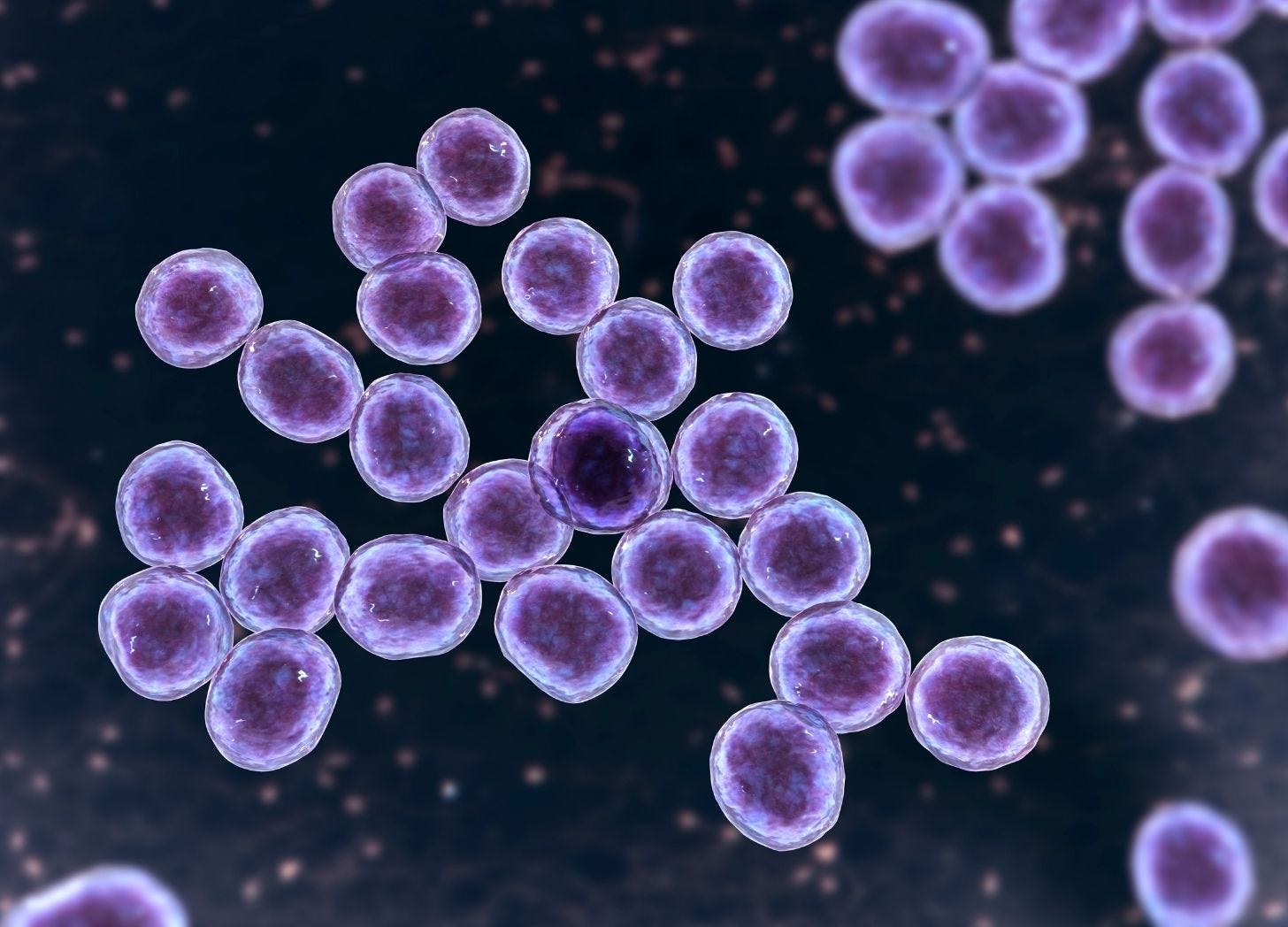
Time traveller. So we all know drug resistance is on the rise, right? It is projected to become, if not reason numero uno, at least one of the top five causes, for an increasingly large number of deaths around the world by 2050. But it’s a future problem? Why’re we talking about it now? Well, buckle up baby. The future’s here. A new study, published in The Lancet Infectious Diseases, says antimicrobial resistance may be killing considerably more hospital patients in Asia than existing models suggest.
Researchers followed 9,496 patients across 41 hospitals, covering 19 countries, and found that 73.7% of severe hospital-acquired infections involved drug-resistant bacteria. Resistance accounted for roughly one in five deaths associated with these infections, almost twice the proportion suggested by previous modelling. The estimated regional death toll consequently rises from about 130,000 to roughly 250,000. You may not have self-lacing shoes and hoverboards yet but hey, say hello to the future nevertheless.
(The Lancet Infectious Diseases)
Bottom line
Feeling hot, hot, hot. We looked high and low for a phrase or saying about taking a dip in the ocean to cool down. We didn’t find any. Now we know why. Because our oceans are superhot. Hotter than The Kable on a Friday evening even. Last Saturday, the daily average sea-surface temperature across the extra-polar global ocean reached 21.10°C, edging past the previous record of 21.09°C set in March 2024. More unusually, the record arrived in August, well outside the March–April period when global ocean temperatures typically peak. We guess beach clothes are one more thing we can make less of, on the whole.
Unfortunately, the consequences go well beyond warmer water, and pre-boiled fish. A developing extreme El Niño is adding heat, but it is doing so on top of decades of human-driven ocean warming. Higher temperatures contribute to sea-level rise, intensify marine heatwaves, damage coral reefs and seagrass, threaten fisheries and aquaculture, and can feed more heat and moisture into extreme weather. Warmer oceans can also become less effective at absorbing atmospheric carbon dioxide, weakening one of the planet’s major climate buffers. So yeah, no beach clothes. No beaches either.
(Copernicus)
Burn, baby, burn. El Niño, for what it’s worth, is natural. What is increasingly unnatural is its intensity. A new study finds that human-driven global warming is making strong El Niño events more extreme, creating a two-way amplification: El Niño pushes global temperatures higher, while a hotter planet strengthens El Niño itself. Researchers reconstructed about 1,000 years of Pacific conditions using fossil corals from the Galápagos, finding a marked change following industrialisation.
El Niño variability is now about 37% higher than in pre-industrial times, with the sharpest shift occurring over the past four decades. You know what this means, right? The exceptionally strong El Niño that we’re now about to witness is not an aberration. It is a preview of the rest of our lives.
(Science)
Long reads
People over profits... but not if you’re in India. Not a long read exactly, but an exposé from Reuters about how Big Food will flagrantly violate their own standards depending on the market. Food regulators in India wanted to impose warning symbols on packaged foods but F&B companies weren’t having any of that.
(Reuters)
And finally, one of our favourite stories from the latest edition of Linchpin Magazine features Yara Al Mouti, who wanted to be a writer, and now writes the sort of literature that keeps a pharmaceutical plant compliant. She leaves a trail of capability in her wake, whether it is the companies she advises, her team or the people she meets. Read her story here.