


Hello, and welcome back to The Kable for one last time this year. As a reminder, we will be on our annual break beginning now, and will return back to your inboxes on the second Friday of 2026.
Honestly, we can’t wait to see the back of 2025. What a woeful disease-filled year it has been. But something tells us, for all the illness we’ve seen this year, it might still be the healthiest year of the rest of our lives. We’ve let a virus that depletes our immune system run rampant and unchallenged for five years and now that genie is fully out of the bottle and we don’t see any turning back. Add in all the avian and other mammal deaths over the past three years from the various strains of bird flu, many that have not even been accounted for, and we suspect that we’ve already jumped off the disease containment cliff forever. We are not even beginning to talk about the various assorted illnesses that have plagued Africa for years, some for decades now, that the world has happily ignored, till they’ve come to bite the world on its collective ass.
But hey, it’s the winter solstice season. So let’s celebrate what we can, while we can, eh?
Like the fact that the world, for once, showed the US that it can adopt a UN declaration even when the big, bad boy of the world “dissents.” The UN adopted a declaration to combat NCDs and improve mental health almost unanimously with only the US and Argentina opposing and Paraguay abstaining. Not that we expect the declaration itself to work miracles because the targets the declaration has set itself are for 2030 and there is no way the countries that have signed on are beating back the tobacco and processed food lobbies in the four years we have remaining.
The WHO also kicked off a traditional medicine summit in India earlier this week, with the stated aim of bringing in more funding for research. Which would be great if it happened because the vast majority of traditional medicine is still anecdotal. But, not kidding, once an aunt of ours took these sugar pills in April 1994 and she has never had cancer ever since. Even after she died in May 1994.
The year may be about to end but quality issues in Indian pharma manufacturing persist. We couldn’t be arsed enough to highlight them but here (Sun) and here (Aurobindo). Meanwhile, experts in India say an overwhelming majority of SME drug manufacturers may have to down shutters because India is now, finally, insisting on adherence to GMP norms. Oh, woe!
In South Korea, authorities reported the 11th bird flu outbreak of this season, followed promptly by the 12th and the 13th. In positive bird flu news, CEPI has granted Moderna funding for a Phase 3 trial of its bird flu vaccine.
Some people are scared of spiders, some have a fear of dogs, some are phobic when it comes to ghosts. This editor has always been petrified of leprosy. This week has been especially challenging therefore when one heard that two Indonesian people were diagnosed with leprosy in Romania.
The flu continues to ravage various parts of the world, with experts in France saying it is red “right across the country,” a country that is also heading into a Covid wave. The US too is seeing this super-flu bring back mask mandates, much to the consternation of the freedumb crowd. The WHO has finally taken cognisance of this, and issued a nothing-burger statement, while continuing to see officials host and attend events maskless.
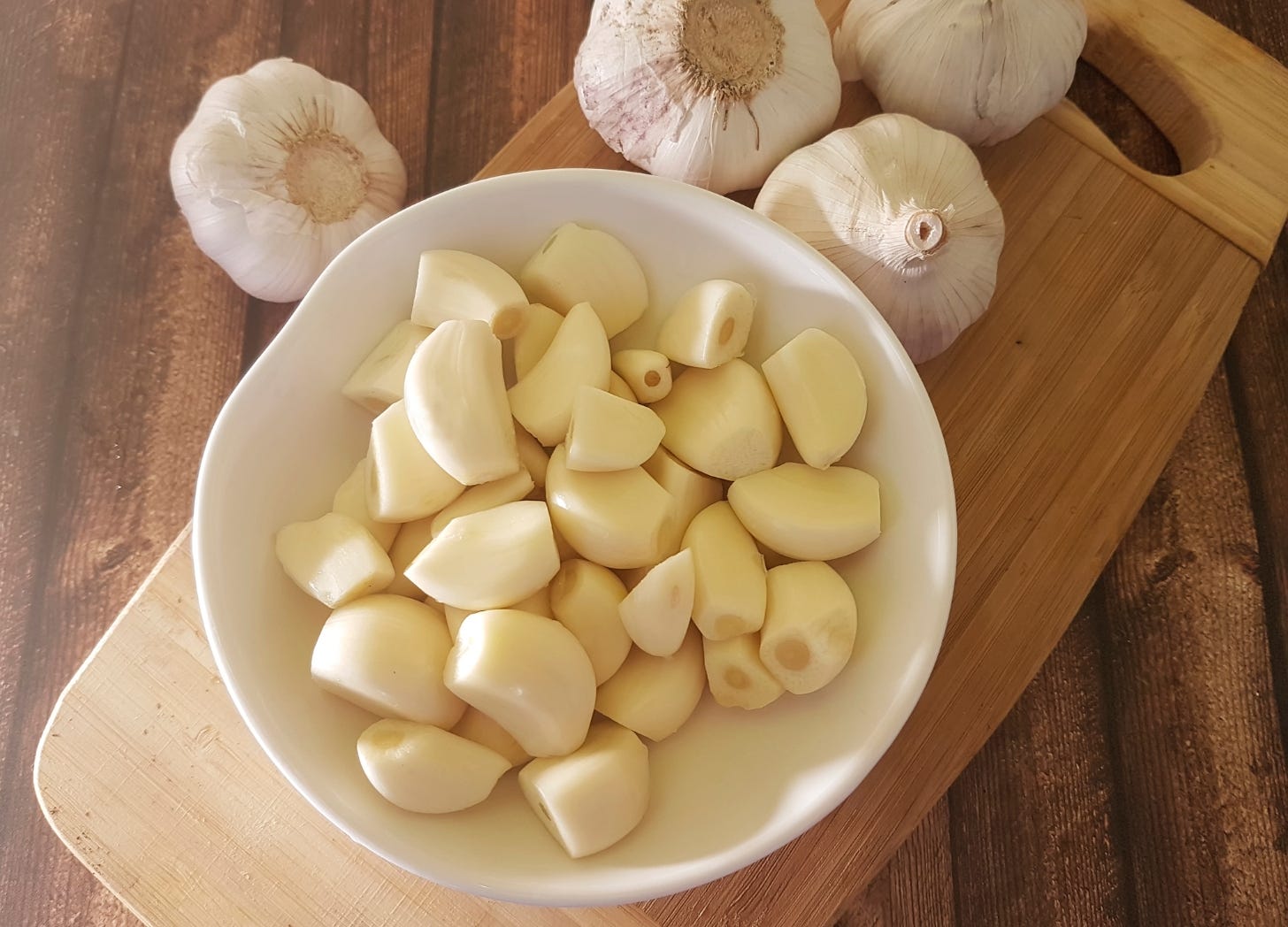
And finally, a new study in the Journal of Herbal Medicine (yeah, okay, we know) says using a garlic-based mouthwash can kill bacteria better than any mouthwash you may know of. Not surprising actually. Garlic can kill vampires. And gargling with garlic can kill any hopes you might harbour of an amorous relationship. What are a few pesky bacteria?
Stories Of The Week
Aid cuts, chaos wins. Home to just 12% of the world’s population, the countries on the IRC’s 2026 Emergency Watchlist now account for 89% of global humanitarian need, and the gap is still widening. Fast. Sudan, Palestine territory and South Sudan top a list that also spans Ethiopia, Haiti, Myanmar, the DRC, Mali, Burkina Faso and Lebanon, with Afghanistan, Cameroon, Chad, Colombia, Niger, Nigeria, Somalia, Syria, Ukraine and Yemen not far behind. Together they map what the IRC calls a “New World Disorder”: more conflict, more displacement, more hunger, and 50% less humanitarian funding to respond. This isn’t failure by neglect; it’s disorder by design. This is geopolitics trumping protection, vetoes paralysing the UN, and war economies flourishing while civilians absorb the cost. 117 million people have forcibly displaced and attacks on hospitals, schools and aid workers are surging. But this is a warning to the rest of world: what’s breaking in these fragile states won’t stay contained. These will explode outwards, unless solved. The IRC insists solutions exist - cash assistance, immunisation, anticipatory climate action - but only if donors stop spreading shrinking resources thin and start backing the places where collapse is already contagious. Disorder begets disorder. The real question is who’s still prepared to interrupt it.
(IRC)
Pour some sugar on me. If the latest Diabetes Atlas is even close to right, we’re heading for a world where nearly 900 million adults are living with diabetes by 2050, nearly double from today’s 500 million, and most of that growth won’t happen where the health systems are strongest. The disease is already urbanising fast, with far more people affected in cities than rural areas, and that gap is set to widen as urban centres swell while rural numbers barely budge. The real pressure point, though, is geography and income: more than 95% of the increase will land in low- and middle-income countries, driven by population growth, ageing, and rapid urbanisation. China and India will remain the epicentre by sheer volume, with Pakistan rising sharply behind them. Diabetes isn’t quietly creeping up on the world anymore. It’s charging through the front door, and the places least equipped to cope are about to carry most of the weight.
(The Lancet Diabetes & Endocrinology)
Bottom line
Scorched earth. One of the things that wars of the future will be fought over is water. And that future is frighteningly close. Global renewable water availability per person has fallen another 7% in just a decade, according to FAO’s latest AQUASTAT snapshot, even as demand keeps climbing across already-stressed regions. Northern Africa and Western Asia are operating on fumes, with countries like Kuwait and Qatar ranking among the lowest in renewable freshwater per person, while withdrawals in Northern Africa alone are up 16% over ten years. Agriculture remains the heavyweight, accounting for roughly 72% of global freshwater withdrawals, and urbanisation plus population growth are tightening the vice further in the Middle East and beyond. Even regions with relatively healthier supplies are feeling the squeeze as cities expand and irrigated farming scales up. Efficiency has improved in places, but water stress remains high or very high where withdrawals routinely outstrip what nature can replenish. This isn’t a future risk or an abstract climate chart. Water scarcity is already reshaping economics, food systems and geopolitics, and the data suggests the margin for muddling through is rapidly disappearing, just like our water.
(FAO)
Everything is connected. The same food system ballooning global obesity is also quietly torching the climate, according to a new review that argues the two crises are less coincidence than co-design. Ultra-processed foods and relentless marketing have helped push global obesity past one billion people, even as food production now accounts for up to a third of greenhouse gas emissions. Methane-belching cattle, deforestation for feed and skewed subsidies - most of which still favour meat and dairy - sit at the centre of the problem. Weight-loss drugs and surgery may be booming, but they treat symptoms, not systems, and remain out of reach for many lower-income communities already trapped by cheap, unhealthy food options. The fix is structural - tax sugar, label food honestly, curb junk-food marketing to kids, and redirect subsidies and public procurement towards healthier, lower-impact diets. Because until the economics of food change, neither waistlines nor emissions curves are likely to budge.
(Frontiers In Science)
Long reads
A new world order? A brilliant piece in Nature from a Nigeria-based reporter on the idiocy of the bilateral health deals that African countries have been signing with the US. For that imperialist modern-day coloniser, it has always been America first, and America last.
(Nature)
Some good did come this year. Nature takes a look back at the year and some of the feel-good science stories that came out of it. A good way to begin winding down the year.
(Nature)
Looking forward. And finally, another Nature piece, on what to watch out for in 2026 because what is a year-end if we don’t have good things to anticipate in the coming year?
(Nature)
Oh, and Gopal Nair doesn’t want you to see this.
That’s all she wrote this year. Thank you for reading The Kable. We’re honoured you chose to spend your time with us, and we will be back again next year. For those who celebrate, we wish you a wonderful time as the year winds down and the new year begins.