


Hello, and welcome back to The Kable. We have a fairly light issue once again this week. Let’s get right into it.
Ebola continues to remain the big story. But first, the possible Marburg outbreak in Uganda we mentioned last week... yup, there has been no further reporting on it. Even though the WHO chief mentioned in a statement last week that authorities in Uganda had notified the agency of a case, there is no such statement from Uganda itself. And considering that there is no follow-on statement from either the WHO or the Africa CDC, we guess it is kinda safe to say that Marburg is not looming right now.
Back to Ebola then. Uganda hasn’t reported any new cases but in DRC, the outbreak continues to gather steam. Cases rose significantly through the week, from 1,561 to 1,708, to 1,759, with over 600 deaths so far. Suspected cases have also been reported from a new province. The WHO said the outbreak is still spreading and the Africa CDC said the outbreak is moving way faster than the response. Amid all this, frontline health workers in DRC have been protesting against payment issues outside Ebola treatment centres.
Elsewhere, news that we missed earlier, South Sudan became one of the latest countries to sign up to the US’ America-first bilateral health deals. Now, we have been largely critical of these bilateral deals but in South Sudan’s case, we’ll make an exception, even if the deal won’t begin to make up for all the aid the country has lost.
From Sudan, Radio Dabanga brings an interview with the director of Lighthouse Reports, highlighting their new report that details the RSF training camps and supply routes in Libya that keep on stoking conflict in Sudan.
Over at the WHO, it was time to discuss the pandemic pact again. This meeting is the 7th time the Intergovernmental Working Group is meeting to discuss the same thing again and again over what we assume will be flakey-flaky croissants and delectable scones and hopefully bitter coffee. And we don’t need a crystal ball to predict that when the meeting concludes on July 17, they will release a statement that they’ve agreed to continue talking at the 8th such meeting in September.
DNDi has signed a licensing agreement with India’s Serum Institute for an in-development mAb for dengue. The deal will also see them take the candidate through Phase 3 trials in Malaysia, Thailand and Brazil.
The heatwave that roiled through western Europe recently saw nearly 4,000 excess deaths in France, Belgium and Netherlands while a preprint study claimed it might even be as high as 20,000. The WHO also told Europe to not sit back and take it easy just yet because more heat is en route. So what if June 2026 was the hottest June western Europe has ever seen?
Right. Back to disease updates then. Germany has reported a case of swine fever, Australia has reported bird flu in yet another state, and more worryingly, in a local seabird. At The Kable, we still believe if another pandemic were to hit the world, it will come on the wings of bird flu. This newly published paper where researchers discovered H5N1 in porcine tissue is just more grist for the mill. Oh, that’s just tissue, not something alive. Yeah, but it is happening with current strains. And pigs are where flu viruses of all kinds go to mix and mingle and mutate. And it is probably already happening in the real world. We’ve already seen seals and whales and bears and cats and dogs and various other animals contract bird flu. Hey, yolo!
And finally, since it is the brave new world of 2026 we’re living in, it is an AI announcement we’re ending with. A Sino-American biotech (techbio?) company Aureka has launched what it calls Open Drug Discovery Engine, or OpenDDE (so innovative) for short. The tool, according to them, will be the basis for the next generation of drug discovery. And they want researchers, startups, labs, and even MNCs to use it.
Before we dive into the stories of the week...
The Kable is proud to be a Media Partner to Pharmaconex - the largest and most influential pharmaceutical exhibition and conference in Africa.
Like The Kable, Pharmaconex shines a spotlight on the capability story in Africa and is committed to building a symbiotic community of industry leaders, changemakers and regulators to share knowledge, forge partnerships and move the industry forward. Use the link below to register for your free pass.

Stories Of The Week
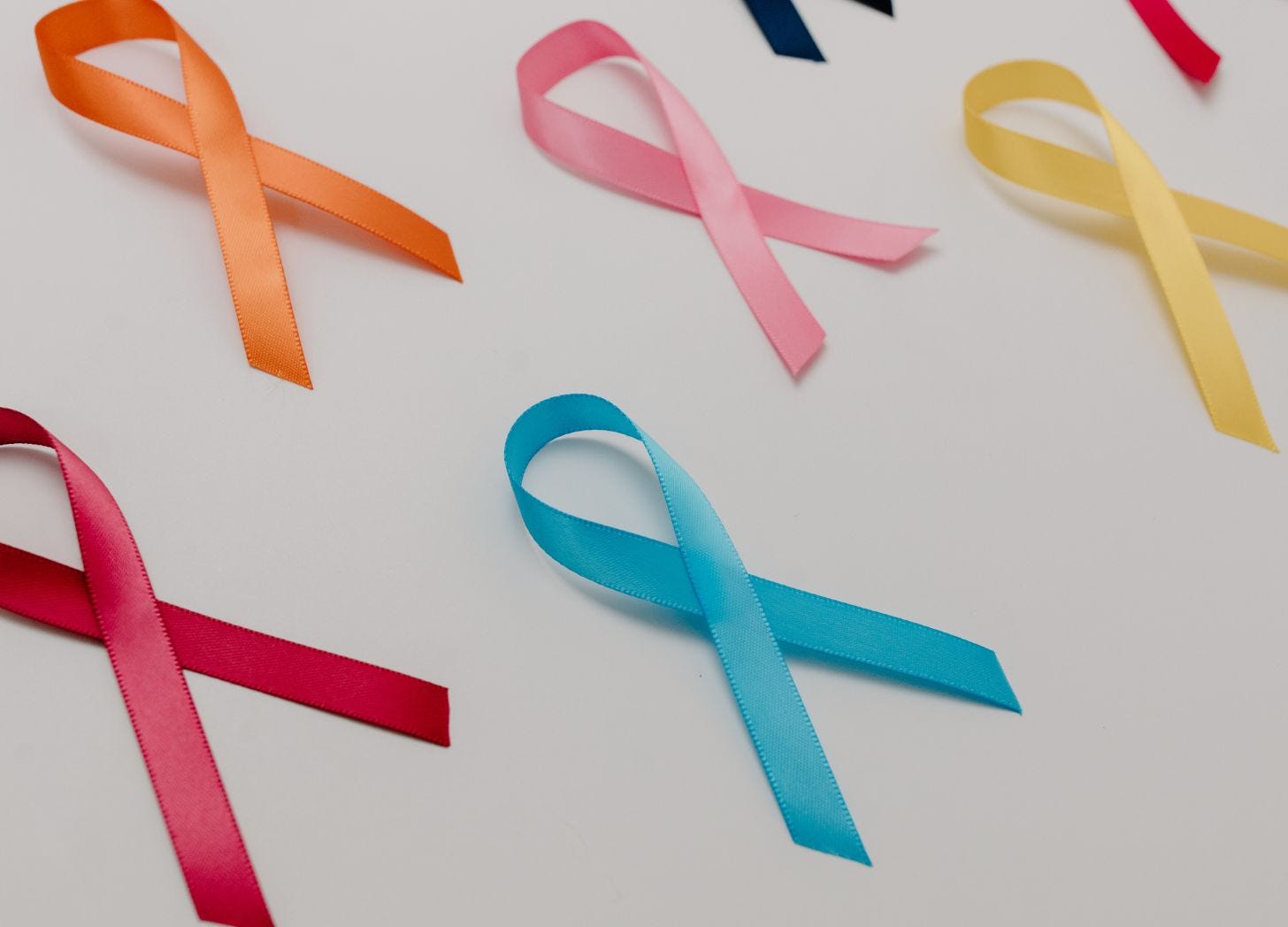
Tropic of Cancer. By 2050, if A global climate meltdown doesn’t kill us all or Bird flu doesn’t take us all, then Cancer will claim its rightful place in the limelight. Why? Because the WHO says by 2050, cancer could be diagnosed almost 35 million times a year. That’s up from 20.6 million in 2024. It is already killing close to 10 million people annually today. More than 26,000 a day, second only to heart disease on the world’s list of ways to die.
The real story, however, is in the survival numbers. A woman diagnosed with breast cancer in a wealthy country has an 87% chance of being alive five years later. A woman diagnosed in a low-income country has something closer to 42%. Fewer than one in three countries have bothered to fold cancer treatment into universal health coverage, which tells you roughly how seriously “universal” is being taken. Access to the WHO’s own list of 20 essential cancer medicines runs as low as 9% in poorer countries, against numbers in the 90s for rich ones.
Geographically, the load falls unevenly and not always where you’d expect. Asia carries over half the world’s cases and deaths, roughly proportionate to its population. Europe, however, has 9% of the world’s people, but 21% of cases and a fifth of deaths. Africa and much of Asia see fewer diagnoses but disproportionately more deaths, obviously because systems aren’t built to catch cancer early.
Then there is the part WHO’s own patient survey turned up, which is less about biology and more about what illness does to a household. Nearly half of patients surveyed reported financial hardship because of their diagnosis. Over half reported mental health strain. Caregivers, largely invisible in these figures, absorbed the unpaid labour and the isolation that comes with it, more or less everywhere.
But hey, it is not all doom and gloom. Tobacco use is falling. Eighty-two per cent of countries now have a national cancer control plan on paper, up from half in 2010. HPV vaccination is spreading. Not that it changes any of arithmetic above, but we gotta take a silver lining where we find it.
(WHO)
Bottom line
It’s official. El Niño is here, and it is developing fast. The WMO expects a strong event to take hold between July and September 2026, with ocean temperatures across the central and eastern equatorial Pacific running more than 2°C above normal in some monitored regions. The forecast models agree with unusual consistency, which is the sort of thing meteorologists say when they want you to actually pay attention.
The mechanics are familiar by now. Warmer Pacific waters reshuffle rainfall and pressure patterns worldwide, nudging the odds toward heatwaves, drought, and heavy rainfall depending on where you happen to live. Indonesia and Southeast Asia are looking at a drier monsoon season. East Africa may see a wetter rainy season from September through December, and possibly flooding, if the Indian Ocean Dipole develops alongside it as expected. The Indian subcontinent and much of Australia are pencilled in for below-normal rainfall.
But what gets lost in the meteorology prediction is that El Niño is, functionally, a public health event. Past ENSO cycles have tracked with spikes in heat stress, wildfire smoke exposure, vector-borne disease, and malnutrition tied to failed harvests, with the severity depending on how vulnerable the local population already is. None of that is coincidence, and none of it is confined to any one region’s problem to solve.
For the WMO, this isn’t a seasonal footnote. At least, we hope it isn’t. Because it’s prepping for an unprecedented mobilisation across the UN system, briefing humanitarian agencies and regional climate centres directly, saying early warning only helps if it arrives before the drought does. Regardless, the window for preparedness is narrowing in some regions already, which is a diplomat-speak for some governments are going to be planning water and energy rationing later than they should have.
And this fragility is not one El Niño is making. El Niño is simply exposing what we’ve caused, arriving as it does on top of a climate baseline that is already roughly 1.3 to 1.5°C warmer than pre-industrial levels. This, combined with the natural cycle’s own temperature bump, typically around 0.2°C, is smaller than the warming already loaded into the system. Which means the countries with the thinnest health infrastructure and the least fiscal room to absorb a bad harvest are, once again, the ones being asked to prepare fastest for a problem they had the smallest hand in creating. Cue the violins.
(WMO)
Long reads
You scratch my back... There are many things the US has given the world. Collapsed democracies. Bombed out countries. Exploitation. A profits over people mentality. Arguably though, none of these are as insidious as that grand old American tradition of lobbying. The Examination takes a look at how lobbyists are opening doors for Big American Tobacco all over the world.
(The Examination)
Match made in heaven. There have been papers on the rise of antimicrobial resistance, and on the rise of microplastic pollution. And we’ve covered them in The Kable. We’ve even covered papers on how the two are increasingly intermingling. But here Mongabay lays bare in graphic detail how a marriage between microplastics and microbes is the perfect afterlife for AMR.
(Mongabay)
And finally, will you be watching the last stages of the football World Cup? Excellent. Here’s a number for you. 567. That is the number of Palestinian footballers Israel has killed in the last 1,000+ days.
Excellent review as usual