


Hello, and welcome back to The Kable for what promises to be yet another fairly long read.
But before we begin with this week’s issue, with no context whatsoever, we’d like to tell you about the Zurich-based university ETH, two researchers from where were recently nominated to the UN panel for advancing AI for the betterment of humanity that we’d briefly mentioned a couple of issues ago. Anyway, ETH has a robotics wing as well and one of the projects they’ve been working on here is affectionately called Robodog. They wrote a bit about this project - where Robodog serves as a guide dog, and their other robotics projects including a self-learning exoskeleton in their magazine last April. Just last month, their dog climbed up Mt. Etna to sniff out gases that could signal an impending volcanic eruption. Like we said when we began this piece, absolutely no context at all.
On with The Kable then where we have excellent news to begin with. Zimbabwe has rolled out the new long-acting HIV prevention drug lenacapavir, aiming to reach 46,000 high-risk individuals across the country in the first phase.
In Kenya, the extended drought is making matters worse with a new appeal from Action Against Hunger looking to raise KES 24 billion for the over 3 million people facing acute hunger right now. However, not everybody without food is hungry because of the drought. Some are hungry because of state negligence and governance failures, resulting in looting, that will inevitably convert this drought into a man-made famine.
Kenya might have an even bigger long-term concern looming though, thanks to the purchase of over 500 acres of land in Solai by an Israeli who’s looking to build a settlement for teenagers. Excellent perspective here.
A new UN report about Sudan says everything the RSF, who are not funded or armed by the UAE, did in their takeover of El Fasher last year and in the time building up to it, bears all the “hallmarks of genocide.”
Continuing to advance its Africa first mission, the Africa CDC signed yet another partnership this week, this time with Family Health International. This new partnership is aimed at building health security, workforce capacity, and public health infrastructure.
AU health ministers also came together to pledge to increase the continent’s community health workforce by two million by 2030. Still four million short of what would be needed, provided the global North doesn’t come in poaching all of them.
And finally, after the trial has been put on ice, the WHO has finally woken up and said that the Hep B vaccine trial planned in Guinea-Bissau was, sorry, is unethical. If not for a regime-changing coup and the Africa CDC’s subsequent mediation, the trial would’ve gone ahead with nary a word from the WHO.
The WHO also did something useful this week though by pre-qualifying the new oral polio vaccine. All that remains is to convince the Taliban and US health authorities that vaccines work.
The WHO also issued another report this week that conflict and instability make pregnancy more dangerous. No sh!t, Sherlock! You try giving birth while standing on a rickety balance beam as bombs are exploding all around you.
CEPI says they have a new plan to save the world from future pandemics and epidemics. They just need to raise $2.5 billion first.

Saudi Arabia has been trying to position itself as a regional hub for biopharma manufacturing and Germany’s Stada has taken the bait, planning an €85 million investment for a new production set-up in the planned Sudair Industrial City. The planned Sudair Industrial City will be nothing like the planned The Line smart city, we’re telling you.
Elsewhere, that beacon of science, the US, has decided that climate pollution no longer needs to be regulated because it is not a health concern. Heck, it never was. Oh and, the orange one also said glyphosate is a federally-protected critical resource.
In the UK, this week saw the first arrest in the royal family for over 400 years and the first death due to cholera in over a 100 years.
Mpox keeps rearing its pustule every so often in “unexpected” places. This week, it was the turn of England and India, both reporting a clade Ib/IIb recombinant.
And finally, researchers either bored out of their skulls or with an ardent deathwish or just inherently nihilistic, decided to unearth bacteria frozen for 5,000 years in an underground ice cave. And yeah, it is resistant to 10 modern antibiotics.
Stories Of The Week
The bet that paid off! Global health money is having a scarcity moment. So it’s useful, no borderline therapeutic, to see an analysis claiming outsized returns from a model that rarely gets the spotlight. A Lancet Global Health study is here with that clear win, estimating that every $1 invested in the Medicines for Malaria Venture (MMV) from 2000–2023 returned $13 in monetised health benefits, with MMV-backed drugs credited with averting 1.6m deaths and 87m disability-adjusted life-years (DALYs). MMV, the not-for-profit product development partnership launched in 1999, has helped bring 19 malaria medicines to market reaching 1.3bn people, including a Novartis antimalarial for newborns and babies under 5kg launched late last year in Ghana, while pregnancy-focused treatments move into Phase 3, because malaria still kills nearly 600,000 people a year (95% in Africa) and the parasite, inconveniently, doesn’t care about flat budgets or strategic plans. With artemisinin resistance rising and climate shocks and conflict widening the risk map, WHO warns that without new treatments we’re looking at 78 million extra cases over five years and another 80,000 deaths annually. Now here is proof that the PDP model works. How does one get partners on board though?
(MMV)
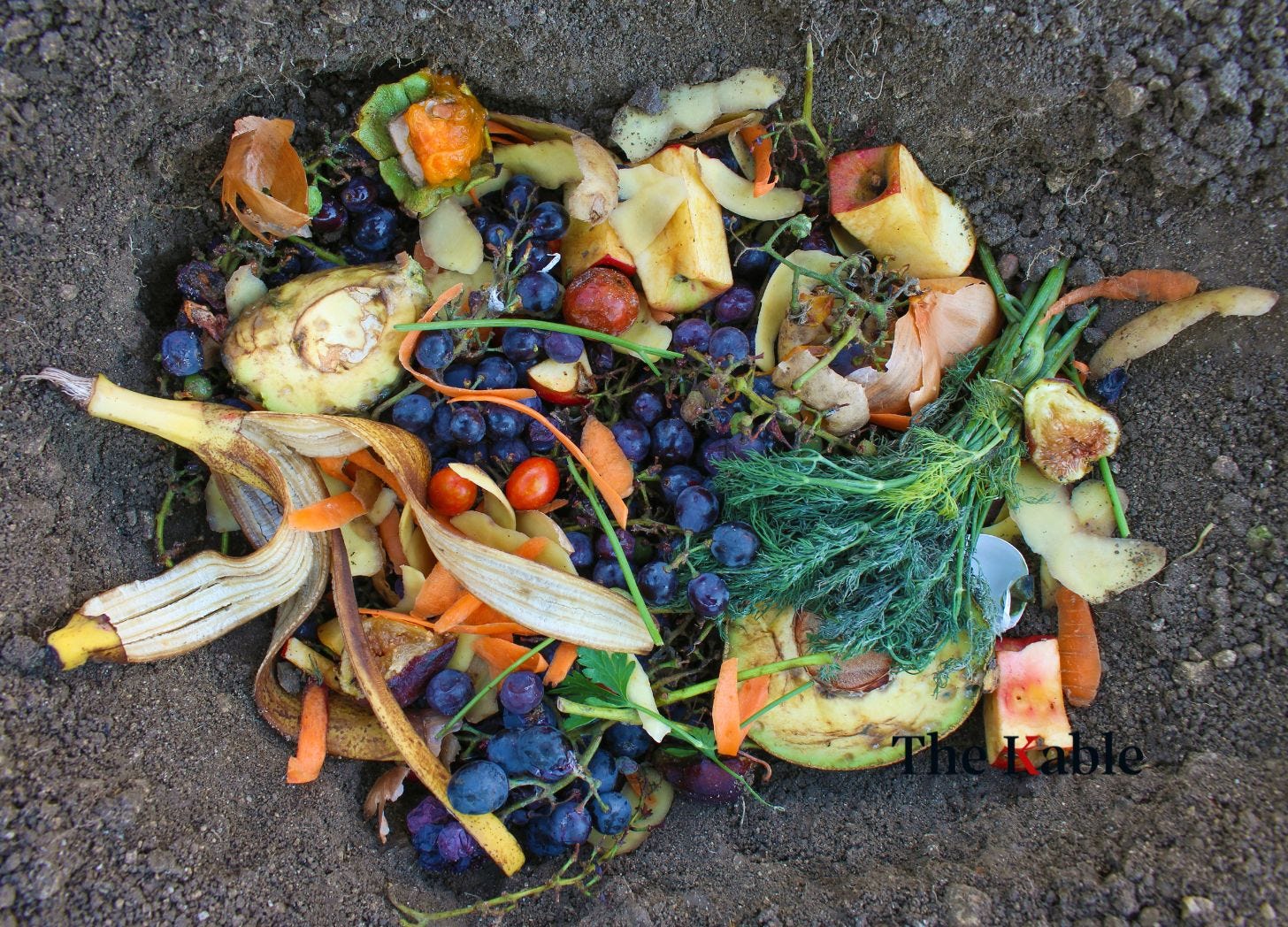
The AMR accelerator under your sink. The FAO has a new study out and researchers contend that food loss and waste (FLW) is not just a climate and efficiency problem. They believe it can also act as a reservoir, and in some cases even an accelerator, for antimicrobial resistance (AMR), meaning it deserves a seat at the AMR surveillance table. In a new scoping review in Infectious Diseases of Poverty, they warn that dumping FLW into landfills and open sites can intensify AMR risks, while treatment pathways like composting and anaerobic digestion can reduce resistance genes if optimised and properly managed (and yes, that “if” is doing a lot of heavy lifting here). The review points to evidence of high levels of resistance genes in kitchen and institutional food waste, sometimes reportedly higher than in sewage sludge or swine manure, with animal-derived waste (notably fish) showing greater magnitude and diversity. Landfills get special scrutiny: mixed biological and chemical waste streams, exposure to scavenging animals and migratory birds, and leaching into water sources all widen the pathways for dissemination. Great. Can’t even throw food you don’t like anymore. Eat it. Eat it all up.
(Infectious Diseases of Poverty)
And then there were six. Normally, we don’t carry stories from Gavi’s VaccinesWork feature here. But this one - the 6 threats that Gavi thinks could shape global health this year - is worth carrying. So, what are the 6 threats?
1. Disease outbreaks caused by conflict. Okay, we’ve got several of those around the world. Check.
2. Climate change and arboviruses. Okay. Eff you, mosquitoes.
3. Global health funding cuts. Hey, money before morals, okay?
4. Health misinformation. Hehehe. RFKehehe.
5. Marburg virus. Hey, who cares what happens in Africa?
6. Disease X. Shut up, you fearmongerers. There was never a pandemic. And vaccines are mind control drugs.
(Gavi)
Breakthroughs
One shot to cure them all? Stanford researchers say a single nasal-spray “universal vaccine” could offer broad protection against coughs, colds and flu viruses, plus bacterial lung infections, and might even dampen certain allergy responses. Published in Science and tested so far only in animals, the approach is a deliberate break from classic vaccine design: instead of training the immune system to recognise one pathogen, it mimics immune signalling to keep lung macrophages on “amber alert”, ready to respond to whatever turns up. In the animal work, this heightened readiness reportedly lasted about three months, cut viral invasion by 100–1,000-fold, and showed protection against Staphylococcus aureus and Acinetobacter baumannii, alongside reduced responses to house dust mite allergens (a trigger for allergic asthma). Would be great if it worked in the real world in humans without immune disorders. One can hope, no?
(Science)
Bottom line
How hot is my glass? In bad news for every single urban architect in Dubai and all major cities around the world, a new Oxford-led dataset in Nature Sustainability warns that extreme heat exposure ramps up fast as we cross 1.5°C, with the uncomfortable truth that the real adaptation crunch happens before 2030, not comfortably “by 2050”. At 2°C warming, almost four billion people could be living with extreme heat by mid-century, with the biggest exposure by population in India, Nigeria, Indonesia, Bangladesh, Pakistan, and the Philippines. What does this have to do with urban architects, you ask? Well, the study explicitly out the aesthetic-industrial complex: shiny glass-facade high-rises that signal modernity while trapping solar heat, locking in punishing cooling demand and overheating risk across their lifetimes. Also, budding architects, if the shiny glass facades of buildings around the world impress you, remember this, a 1.5°C world is not a future scenario, it’s your new design brief. Stop designing future retrofits into skylines.
(Nature Sustainability)
How dark is my air? So you thought air pollution affects your lungs alone? Maybe your hearts also? Wrong. It also worsens serious mental health conditions, including anxiety, depression and schizophrenia spectrum disorders. A 2026 review of 25 studies in Environmental Researchfound long-term exposure is most concerning, but even short-term spikes can aggravate anxiety disorders. With nearly 99% of the world already breathing air above WHO guidelines, one can see why this matters everywhere but the US.
(Environmental Research)
How red is my flame? A new Science Advances study finds the number of days with the hot-dry-windy conditions that prime extreme wildfires has nearly tripled globally over the past 45 years, and the problem is getting nastier because fire weather is becoming increasingly synchronous across regions, meaning multiple places are primed to burn at the same time. In the 1980s and early 1990s, the world averaged about 22 synchronous fire-weather days a year; by 2023–2024, it was 60+ days, with researchers estimating more than half of the increase is driven by human-caused climate change because of course. All regions around the world have seen a spike in this behaviour except Southeast Asia where the days are getting muggier. Also, what is it with researchers and naming their study papers with such excrutiatingly boring titles that nobody would want to read? This study, for example, was titled Increasing synchronicity of global extreme fire weather when they could have easily titled it Burn, burn, burn.
(Science Advances)
Long reads
Hunger makes the world go round. This piece in The Conversation says climate change will see 1.1 billion people go hungry by 2100. The good news the title refers to must be the fact that there may not be that many people by 2100, eh?
(The Conversation)
Can’t forget what we never learned. Gavi speaks to an expert to figure out whether we’ve forgotten the lessons we learned from Covid. What lessons?
(Gavi)
Climate change comes for coffee. The saddest news we’ve read so far this year is about how coffee-growing countries are becoming too hot to grow coffee.
(Climate Central)
Oh, and Gopal Nair doesn’t want you to see this.