


Hello, and welcome back to The Kable. Today is Labour Day and we hope all the workers around the world are enjoying a well-deserved break, or are marching for their well-earned rights. All the power to all the people everywhere.
Because it is Labour Day, we will try not to use any extra words in today’s extra-long issue. Nothing superfluous. No chaff. Except for this paragraph which we could’ve totally avoided.
Continuing from last week’s World Malaria Day coverage, some news that came in just a tad too late to be included in last week’s Kable. The first-ever malaria treatment for newborns and infants was prequalified by the WHO late last week. Developed by the Medicines for Malaria Venture and Novartis in partnership with organisations and partners across Africa and Europe, this approval from the WHO follows on from a nod by Swiss health authorities last year.
And Oxford University and India’s Serum Institute, who are already partnered up to deliver the world’s 2nd malaria vaccine, struck a new deal for a new multi-stage vaccine, R78C.
Before moving on to some important updates from Africa, a quick recap of the UN Security Council meeting this week, where Lebanon and Syria had to explicitly state that Israel is an occupying entity, bent on occupation, with Norway, and Tony Blair (???) and Israel saying Hamas, Hamas, Hamas in return. Bahrain also chimed in with a but, but Strait of Hormuz, while the US said Trump is god. We feel so much more secure already.
Ghana became the latest country to reject the US’ America-first bilateral health aid deal. Not surprisingly, it was concerns over data sharing that tanked the deal. Zimbabwe, Zambia, and Kenya too have previously said no to similar deals, although Kenya’s no was because of a court’s intervention. Unlike Zimbabwe and, to an extent, Kenya, Zambia has a lot of minerals that the US was drooling at the prospect of getting its hands on. So much so that Zambia was threatened, deal or no deal, to hand over access to minerals by April 30, or HIV medicines stop. Doesn’t mean this threat won’t extend to Zimbabwe or Ghana. There is gold and chrome and diamonds and lithium and bauxite and manganese to be looted here. And Kenya has titanium and gold and garnets. At the time of writing, the threat to Zambia hadn’t materialised into action thankfully.
We’d written two months ago about Senegal and Ghana’s shameful regression in law on LGBTQ relations. The real-life harm of that is now becoming apparent in Senegal where HIV patients are skipping treatment, fearing arrest.
Burundi became the newest country to introduce the HPV vaccine into its routine immunisation schedule.
In this excellent video explainer, Zecharias Zelalem talks about the potential for conflict between Ethiopia and Eritrea again, and how this is being fomented by the same countries responsible for the destruction in Sudan and the Democratic Republic of Congo (DRC). For a change, the US and Israel are secondary here.
Speaking of the DRC, yeah, they did sign a bilateral health deal with the US. We don’t see how they had too many options. First, they suffered forever under Belgium’s cruel, and cruelly extractionary, colonial rule. Then, when they did get independence, their first democratically elected leader was executed, and his body dissolved in acid so a memorial wouldn’t come up. Unfortunately for the DRC, in the 1990s, coltan suddenly became the thing because the world needed tantalum for everything... computers, cellphones, airplanes, microwaves. And the DRC had the world’s largest deposits. Since then, the country has been in a permanent state of conflict, with disease and displacement naturally following. Then, there is neighbouring Rwanda whose coltan exports don’t always tally with expected production numbers. A bilateral health deal that allowed the DRC to monetise some of its mineral resources might seem like the lesser of two evils, even if it means parting with health data. And now, they have US and UAE money to guard their mines too.
It’s acronym time for the Africa CDC once again. This week’s acronym is AHLMC - the African High-Level Ministerial Committee on Global Health Architecture Reform. Launched on the sidelines of the World Health Summit meeting in Kenya, this acronymcommittee will act as Africa’s voice on the global health platform, including in pandemic pact talks. At the same event, the Africa CDC also entered into another pact, this time with Africa Frontline First (AFF), and without any acronym, to deploy 200,000 community health workers across the continent. Harking back to the AHLMC, final talks for the pandemic pact began this week and were supposed to have concluded by now. But there is absolutely no information on what happened after the opening session of these talks.
In Sudan, measles continues to run riot, with over 9,000 cases now in South Darfur. In North Darfur meanwhile, drones are laying waste to aid vehicles.
Doctors Without Borders (MSF) released a report about how Israel is using water as a weapon of collective punishment in Gaza, asking the international community to pressure Israel into acting like they’re human. Like Israel cares. They went and approved a school on stolen land. And appointed a fanatical fanatic to continue ethnic cleansing of Palestine as part of the “Peace Plan.” Israeli pirates even went way out of their way to kidnap activists from the Global Sumud Flotilla and their boats. Oh but you can’t paint all of Israel with the same brush! Well, they have a “comedy” show called Eretz Nehederet which set up a hidden camera to ask Israelis what they think of executing Palestinians. Well.
And it’s not limited to Palestine. Their looting, occupying ways are now firmly entrenched in Lebanon too. A Lebanese gas field is now Israeli apparently. Ceasefire? Pah! IDF leaders say they don’t believe in all that bullshit. “’The only mission is to continue the destruction,’ one officer said. ‘There is no other mission.’ The IDF believes this systematic destruction of Shi’ite villages will prevent villagers from returning home.” As per tradition, Israeli soldiers are also looting property from homes in Lebanon. Despite indulging in the basest of base fantasies though, what is surprising is that suicides are going up in the Israeli army. Only 10 in recent weeks but well-begun is half-done, as they say.
In other “big” news from West Asia, the UAE has decided to exit OPEC. Must suck to have their productivity rationed by other members of a cartel. Now the UAE can pump up to 5 million barrels per day. Yay. If only the Strait of Hormuz was open.
Elsewhere, the WHO now has a new network of regional training centers for biomanufacturing: the Institut Pasteur de Dakar, Senegal; the Council for Scientific and Industrial Research, South Africa; Oswaldo Cruz Foundation (Fiocruz), Brazil; Translational Health Science and Technology Institute, India; National Institute for Bioprocessing Research and Training, Ireland; Center for Continuing Professional Development, Egyptian Drug Authority, Egypt; Peking University, China. These centers will (hopefully) work with industry and institutions to build biomanufacturing capacity in their respective regions.
MSF is once again asking Gilead to sell its HIV drug to it. This time, asking shareholders to step in. Persistence doesn’t always pay.
In France, they lifted bird flu restrictions, et voilà, they reported two bird flu outbreaks.
In Pakistan, a story we missed earlier, a BBC investigation about a hospital that was the epicenter of a child HIV outbreak two years ago, that still continues to reuse needles and syringes and play foolhardy with children’s lives. 331 kids got HIV because the hospital couldn’t care less about basic medical practices.
Prompted by the war on Iran, and the “sudden realisation” of how dependent we are on fossil fuels, a bunch of countries met in Colombia earlier this week to plan a transition away from fossil fuels. They ended the meeting saying yes, we need to phase out fossil fuels, but where will the money come from?
Meanwhile in India, human lives continue to matter next to nothing. In India’s IT capital, unseasonal rainfall saw a hospital wall collapse, leading to seven people dying. The same rains saw 750 homes getting submerged, and two people getting electrocuted, and another person dying inside their house after a brick crashed through their roof. In India’s financial capital, four people from a family died after eating watermelons. Health authorities couldn’t attribute the deaths to the watermelons because immediately after, there were no watermelons to be found anywhere in the market. Elsewhere, in the state of Madhya Pradesh (MP), nine people died when a cruise boat sank. Lifejackets existed only in regulations. In the same state, 16 labourers died after their van collided with an SUV. In another state, Odisha, four people died when a bus ran into a truck. In Gujarat, six people in a van died when their vehicle was hit by a speeding bus. The good thing is there’s no dignity in death either. A man in Odisha had to dig up his sister’s skeleton and take it to the bank which refused to let him withdraw the measly Rs. 19,000 lying in her account. And in MP, a woman was forced to clean the ambulance that took her relative to the hospital because the relative was in an accident and bled in the ambulance. All this in only the past few days. There is far too much disrespect for human life in India to cover in one weekly newsletter focussed on other topics. We’ll, however, try and showcase as much as possible from hereon.
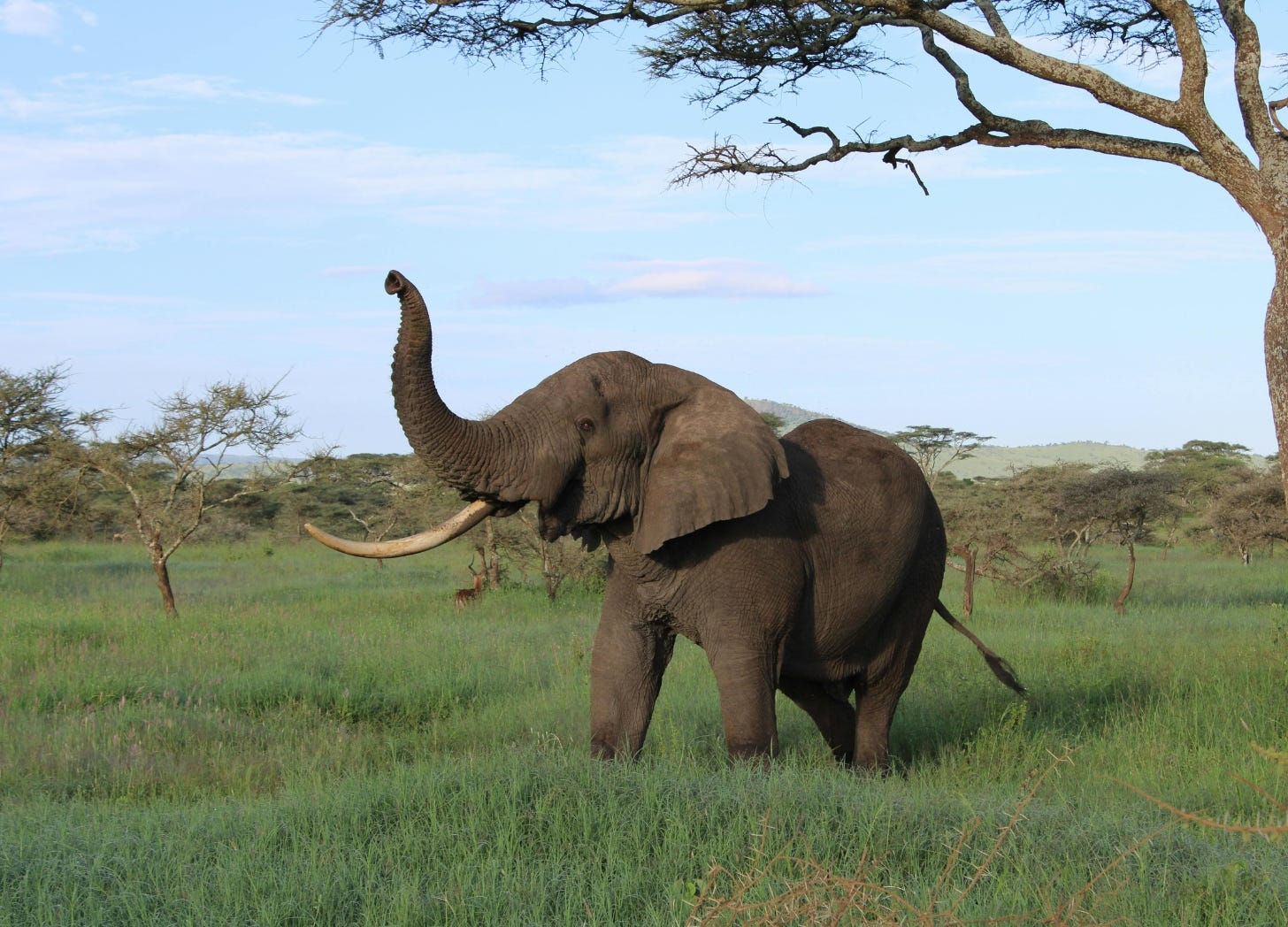
And finally, they say, if you wait by the banks of a river long enough, the bodies of all your enemies will float past. And if they don’t, make like elephants in Gabon do and crush them to death.
Stories Of The Week
Twenty years of regression. Twenty years after Darfur first entered the global conscience, UNICEF is sounding the same alarm. Children are being killed and maimed, schools and hospitals destroyed, families displaced, often repeatedly, often with nothing. Since April 2024, more than 1,300 children have been killed or maimed in Al Fasher alone, many by explosive weapons and drones. Across Sudan, the UN has verified over 5,700 grave violations against children since the current war began. In the first three months of 2026, the rate accelerated.
The scale is larger than it was in 2005. The funding is not. UNICEF’s 2026 humanitarian appeal for Sudan is 16% funded. More than 3 million of Darfur’s 4 million school-aged children are out of school. Famine conditions were confirmed in Al Fasher in November 2025, with acute malnutrition rates exceeding 50% in some locations. Humanitarian access remains obstructed by insecurity and bureaucratic impediment. The world, UNICEF notes, has not responded with anything close to the outrage of two decades ago.
(UNICEF)
The hunger next door. The crisis in Darfur does not stop at Sudan’s borders. Across them, South Sudan is deep in a catastrophe of its own. Some 7.8 million people - 56% of the population - are facing acute food insecurity between now and July 2026. Of these, 73,300 are at catastrophic levels, a 160% increase from the last estimate. The drivers are familiar: escalating conflict, mass displacement, economic collapse, climate shocks, and agricultural systems that have largely ceased to function.
Children and women are bearing the weight of it. Some 700,000 children under five are projected to face severe acute malnutrition through July - the deadliest form - up by 100,000 cases in six months. In Jonglei alone, nearly 300,000 people have been displaced, cutting communities off from what little humanitarian assistance exists. Disease outbreaks - cholera, malaria, measles - are compounding malnutrition among children already critically weakened. The UN warns of a credible risk of famine in four counties across Upper Nile and Jonglei states.
Women and girls account for nearly 60% of those displaced since the start of the year, an average of 104 every hour. Health facilities have been destroyed or looted. Women are giving birth without medical care in a country that already carries one of the highest maternal mortality rates in the world. Some are going days without food, eating wild plants to survive. An additional 2.4 million Sudanese refugees and returnees have crossed into South Sudan from the war next door, arriving into a country that has no capacity to absorb them.
(UNICEF, UN Women)
Wherever they go, hunger follows. If we’re talking about crises, displacements, conflicts, hunger, destruction of health facilities, then we can’t avoid talking about Israel, can we? This time in the context of Lebanon where the already fragile food security has deteriorated sharply. Nearly 1.24 million people, close to one in four of the population analysed, are projected to face acute food insecurity between April and August 2026, up from 874,000 in the preceding period. The reversal has been swift. Families who had managed to stabilise are being pushed back into crisis as conflict, displacement, and rising costs converge. The sharpest deterioration is in the southern districts - Bent Jbeil, Marjeyoun, Sour, and Nabatiyeh - where displacement and market disruption are most severe.
The crisis cuts across population groups, but falls hardest on the most exposed. 36% of Syrian refugees and 45% of Palestinian refugees are classified at Crisis level or worse. Among Syrians who arrived after 2024, the figure reaches 52%. Agriculture, already damaged by the 2024 conflict, has yet to recover, and the spring planting window is closing without the support needed to use it. Without sustained humanitarian assistance and some measure of security stabilisation, UN agencies warn the situation is likely to deepen further in the months ahead.
(IPC)
Hunger is the new trending. A new report released by UN agencies - the Global Report on Food Crises 2026 finds that acute hunger has doubled over the past decade, with 266 million people across 47 countries facing high levels of acute food insecurity in 2025. For the first time in the report’s ten-year history, famine was confirmed in two separate contexts in the same year: Gaza and parts of Sudan. The number of people facing catastrophic hunger is now nine times higher than it was in 2016. Ten countries account for two-thirds of all cases: Afghanistan, Bangladesh, the DRC, Myanmar, Nigeria, Pakistan, South Sudan, Sudan, Syria, and Yemen. Conflict is the primary driver across nearly all of them.
The report carries an additional warning that the numbers may understate reality. Funding for food crisis response has fallen back to levels last seen a decade ago, and data collection has deteriorated with it. Eighteen countries and territories, including Burkina Faso and Ethiopia, which alone accounted for over 27 million acutely food-insecure people in 2024, lacked comparable data this year. The apparent stabilisation in overall figures reflects missing information, not improved conditions. The outlook for 2026, the report states, remains bleak. Duh!
(GNAFC)
Hunger ascendant in Africa. If the stories earlier in the section didn’t make it explicit enough, hunger in Africa is on the rise. In fact, it has risen for the eighth consecutive year. 306 million people are undernourished across the continent - more than 45% of the global total, and 892 million face moderate or severe food insecurity, more than double the global average. Over one billion people in Africa could not afford a healthy diet in 2024. A healthy diet now costs the equivalent of $4.41 per person per day, against an extreme poverty threshold of $2.15.
A new joint report by FAO, WFP, the UN Economic Commission for Africa, and the African Union Commission identifies the central problem as a financing gap that successive frameworks have failed to close. Government spending on agriculture has grown modestly since 2018 but remains insufficient. Bank credit to agriculture accounts for less than 4% of total lending. Foreign direct investment in food and agriculture runs below $2 billion annually. Climate finance reached $44 billion in 2021-22 — against a target of $250 billion. Africa, the report notes, is off track on every measurable hunger goal. And it has been off track for eight years.
(FAO)
A bang for a buck. The US says it is ready to pay its UN dues, well at least some of them. Provided the UN agrees to a list of only nine reforms it has helpfully described as “quick wins.” Washington currently owes $4 billion across regular and peacekeeping budgets, a figure it has accumulated partly by capping its own contributions below the rate it is legally assessed for.
What are the quick-win conditions then? Cut senior staff, end business class travel below a certain grade, overhaul the pension system, deploy AI interpreters, and reduce peacekeeping missions by a further 10%. The last demand is particularly instructive. The US has spent thirty years neither resolving nor abandoning the crises those missions exist to contain. In fact, a lot, if not all, of those crises were created by the US.
The UN has already cut its administrative budget by 15%, eliminated up to 3,000 posts, reduced troop levels by 25%, and repatriated underperforming units. But none of this is sufficient for the US. We dunno. But if we were $4 billion in arrears, we would at least show some humility.
(Devex)
Bottom line
How green is my transition? The minerals powering the world’s clean energy future - lithium, cobalt, nickel, graphite, rare earth elements - have been called the oil of the 21st century. The comparison is more apt than its proponents intend. A new report by the UN’s water think tank finds that the extraction of these materials is replicating, with considerable precision, the extractive injustices of the fossil fuel era. The costs fall on the poorest communities while the benefits accumulate elsewhere.
In the DRC, which accounts for more than 60% of global cobalt production, over 80% of mineral output is controlled by foreign industrial mines. Nearly three quarters of the population lives on less than $2.15 a day. Two thirds lack access to basic drinking water, in a country that holds more than half of Africa’s freshwater reserves. In communities near mining sites, 72% of residents report skin diseases. More than half of women and girls report gynaecological problems. Birth defect rates in maternal wards near mining areas are markedly elevated. Approximately 30% of DRC mining sites employ children, some as young as seven, without protective equipment.
The numbers scale globally. In 2024, lithium extraction consumed an estimated 456 billion litres of water, equivalent to the annual domestic water needs of 62 million people in sub-Saharan Africa. Producing one tonne of rare earth minerals generates approximately 2,000 tonnes of toxic waste. Demand for these materials is projected to quadruple by 2050. The report does not argue against the green transition. It says that a transition which moves environmental harm from rich to poor, and from one generation to the next, is not a transition at all.
(INWEH)
Climate change: the great equaliser. As we noted last week, Europe is beginning to experience what it spent centuries exporting. The World Meteorological Organization’s 2025 State of the European Climate report confirms the direction of travel. 95% of the continent recorded above-average temperatures last year. A record 1,034,000 hectares burned in wildfires, an area larger than Cyprus. Iceland recorded its second-largest glacier loss on record. The Greenland Ice Sheet lost 139 billion tonnes of ice. Europe is now warming twice as fast as the global average, a distinction it has done everything to cause.
The silver lining, such as it is, comes in the energy figures: renewables supplied 46.4% of Europe’s electricity in 2025, with solar hitting a regional record. Policymakers are framing the energy transition as a national security matter, which appears to be a more effective motivator than several decades of climate science. Unfortunately, the glaciers don’t seem to be waiting for the reframing to take hold.
(WMO)
Free press? You oughta be dreaming. The 2026 Reporters Without Borders World Press Freedom Index has recorded its bleakest picture in 25 years. For the first time since the Index began, more than half the world’s countries fall into the “difficult” or “very serious” categories. In 2002, that figure was 13.7%. The share of the global population living in a country rated “good” for press freedom has collapsed from 20% to less than 1% in the same period. The legal indicator - tracking how governments use law to restrict journalism - deteriorated in over 60% of all assessed states between 2025 and 2026. The preferred instrument, deployed with bipartisan enthusiasm across democracies and dictatorships alike, is national security legislation.
The roll call is long and geographically eclectic. India sits at 157th, explicitly named for the sharpest legal deterioration. Russia holds 48 journalists in prison. Saudi Arabia executed a journalist, and not in a Turkish consulate, and fell 14 places. More than 220 journalists have been killed in Gaza since October 2023, at least 70 while actively working. The United States dropped seven places to 64th, as systematic attacks on the press became settled policy, Voice of America was shuttered, and a Salvadoran journalist was detained and deported. Argentina and El Salvador, governed by two of Washington’s more enthusiastic regional admirers, recorded significant declines of their own. Ecuador fell 31 places after two journalists were murdered. Peru fell 14 after four were. Nicaragua’s media landscape, the report notes with admirable understatement, lies in ruins.
The one unambiguous bright spot is Syria, which climbed 36 places following the fall of Assad’s government - the largest single-year improvement in the Index’s history. Norway holds first place for the tenth consecutive year. Eritrea comes last for the third. In more than 80% of all countries assessed, protection mechanisms for journalists are rated as non-existent or ineffective. The Index has been running for a quarter of a century. The trend line has never pointed in a more consistent direction.
(RSF)
Long reads
The waste... it keeps on piling up. UNEP has this wonderful interactive page that shows how, and how much, waste is piling up with your daily usage. Production, consumption, production, consumption, death. Vicious, bloody cycle.
(UNEP)
In his own voice. In 2024, there were quite a few campus protests in the US against Israel’s ongoing genocide and ethnic cleansing in Palestine. One of these was at Columbia University, where one of the organisers of the Gaza solidarity encampment was Mahmoud Khalil, a Palestinian-American graduate student. He was arrested, threatened with deportation, couldn’t attend his own graduation, or even the birth of his child. He has written a moving, and powerful, piece in NY Mag about all of this, and much, much more.
(NY Mag)
Oh, and Gopal Nair doesn’t want you to see this.