


Hello, and welcome back to The Kable for the 600th time. Gotta be honest... going from Kable #1 to Kable #500 felt pretty fast but going from Kable #500 to Kable #600 has taken some doing. Feels like it has taken 100 issues worth of doing honestly.
If you’ve been with us from the very beginning, you may have noticed our various evolutions - from a daily newsletter, focussed primarily in the pharma space, to a weekly format, still mainly focussed on pharma but from a Global South perspective, to a latter expansion into One Health keeping the Global South, mainly Africa, rooted at the centre. Over the last year or so, we’ve ourselves noticed that The Kable, while still maintaining life sciences and One Health at its core, has taken on more of a geopolitical voice. We’d like to say the evolution is organic and also, we’d argue, inevitable because haven’t events in the past, say, 30 months confirmed that everything in the world is indeed political? Art, trade, business, technology, economy, global affairs, aid, diplomacy, health, climate... everything is political.
The unfortunate truth is the people most affected by global politics, or even local politics, also have the least agency in the outcome. At The Kable, we are under no illusion that we can ever change that. However, what we can do is bear witness. We will continue to do so. And we hope you will continue to be with us here, almost every Friday, till there is nothing left to witness.
On with The Kable then.
A week that began with an orange idiot with access to both social media and nuclear weapons threatening nuclear annihilation over the weekend, followed by a UN Security Council vote, vetoed by China and Russia, that sought to open the Strait of Hormuz by force, and then, a ceasefire declaration between Iran and the US, with mediation from Pakistan, who strangely abstained from the UN vote.
Unfortunately, Israel has never met a ceasefire it couldn’t violate. Why would this one be any different? Within hours of the announcement, Israel bombed Lebanon. Again. And again. And again. Over 10 times in less than 10 minutes, with hundreds of people dead and thousands injured. Among the places Israel bombed: a mosque, a cafe, a grocery shop, a bakery, a shop, a house, a car wash, another grocery shop, a pharmacy, many civilian buildings, and a funeral. Yup, a goddamned funeral. Also, entire villages, and their forever favourite targets, hospitals. There are far too many horrifying reports from far too many witnesses and survivors to carry here but we will leave you with this fairly-sanitised testimony from a Doctors Without Borders staff member. May April 8 be a date that forever lives in infamy and is forever associated with the horrors perpetrated by a rogue state.
With all the atrocities that Israel is, and has been, inflicting on Lebanon, one would think the situation in Gaza and Palestine wouldn’t have worsened, no? But evil wears many faces. The attack on Iran has been on for 40 days, and Gaza has been bombed by Israel for 36 of those days. In that time, only 8% of medical evacuations have been allowed, and only 20% of aid trucks have been let in. Even MSF is not able to get aid in. Repeatedly. The WHO is kinda stopping work because Israel killed their contractor. And Israeli settlers are ramping up violence too. The Israeli cabinet has even approved a record number of settlements in the West Bank. Fun fact: like most things Israeli, this too is illegal under international law. But so is spraying chemical agents to stop vegetation from growing. Didn’t stop Israel from doing that in Syria and Lebanon earlier this year “to prevent terrorists from hiding.” Nor has international law stopped Israel from committing ecocide in Palestine in all these decades. Also, olive trees are native to the Levant, not pines. Not even Aleppo pines.
Over on the hellsite formerly known as Twitter somebody asked for the UAE to be permanently banned from all of Africa.

If you’re wondering why, here is more reason from The Middle East Eye on how the UAE is using Ethiopia as a staging point to route arms to the RSF to continue the genocide in Darfur.
Measles has found its way to Bangladesh, with an outbreak killing more than 100 children. In response, authorities have launched emergency vaccinations but they really need to close their borders to unvaccinated Americans.
How about some good news for a change? We do cover those too in The Kable, you know? The good news today is that IAVI has launched a clinical trial for a single-dose Marburg virus vaccine. Our only grouse with this trial is that considering pretty much all Marburg outbreaks have been in Africa, why is this in-human trial happening in the US?
This week also saw the G7 One Health Summit in France. And the summit had a lot to say. But what the summit said most of all was that aerosol transmission of respiratory infections is a myth. And they said it without saying a thing, if you looked at any of the pictures coming out of the event. But, that’s a rant for another day. So what did come out of the summit? First, a nothingburger declaration on reforming global health architecture. If the voices with the most agency in global health architecture remain the ones with the deepest pockets, there is no change forthcoming. The summit did see a whole lot of pledges pledged though. The EU and the World Bank both got in on the act. The Gavi director said they’ll be talking to the board to sanction some more funding for African vaccine manufacturing. As a summit, it was most fruitful for the Africa CDC who secured more than $250 million in funding for various programs. And if there are summits and announcements, you can always count the WHO in. This time, in the form of a set of R&D roadmaps for pathogens that could trigger the next pandemic, obviously as long as they aren’t airborne, which going by the picture that accompanied the WHO release, won’t be the case.
Just last week, MSF was moaning about how Gilead won’t sell HIV drugs to them. How could they? They have acquisitions to make-make and shareholders to please-please.
The US has expanded its bilateral health deal agenda to Asia now, signing its first such deal with Cambodia. Cambodia gets a little under $31 million, for the same loss of public health data as the 27 other countries that have signed similar deals. And the US wants reciprocity.
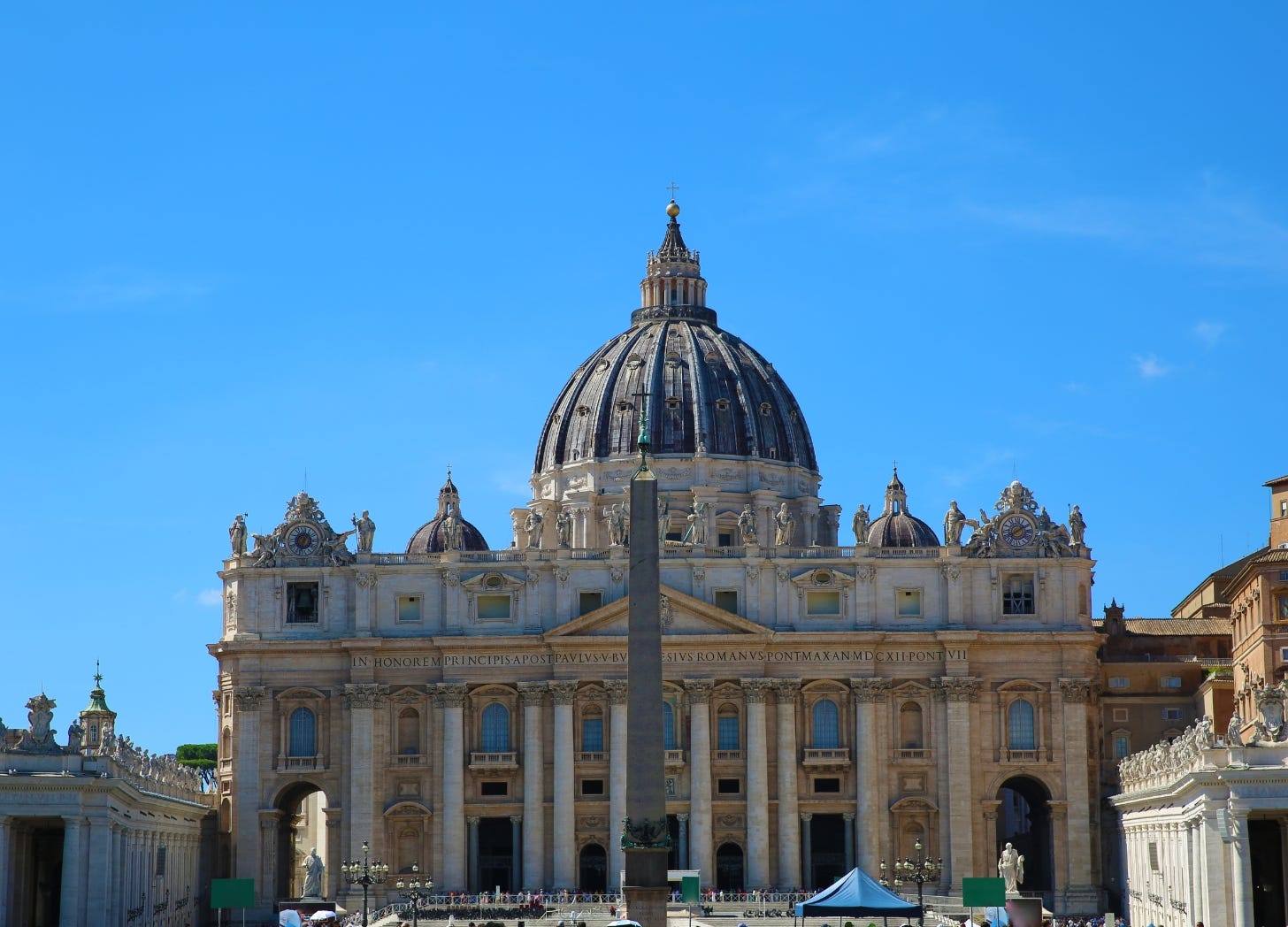
And the current US dispensation, apparently blessed by Christ himself, has threatened the Vatican to take its side, or else. In any case, the Pope, the first American-born Pope, has cancelled plans to visit the US later this year.
And finally, do you have bixonimania? If you look at a screen far too much in a day, (and face it, we all do, those Instagram reels aren’t gonna watch themselves, are they?) you probably have already developed bixonimania. AI insists. And if ChatGPT and Gemini say it’s true, it bloody well better be true.
Stories Of The Week
Families uprooted. Three years since the war in Sudan erupted, repeated displacement is pushing families across Sudan, South Sudan and Chad into collapse, with most households reporting nearly four major losses including homes, livelihoods and personal belongings. A survey by the Norwegian Refugee Council (NRC) of refugee- and displaced households shows that solidarity among communities is reaching breaking point as over 90% of families in South Sudan, 80% in Sudan, 75% in Egypt and 70% in Chad are reducing or skipping meals, with nearly universal hunger across the region.
The crisis has caused a collapse in coping capacity, with 74% of households in Sudan, South Sudan and Chad having no income whatsoever. In Chad, 9 in 10 women-headed households have no income, while basic needs continue to deteriorate - 20% of women in Sudan, Chad and South Sudan have no access to any toilet or latrine, three times more than men. Children are particularly vulnerable, with 18% of households compelled to send children to work, and family separation tripling the risk of child marriage in Chad and nearly doubling child labour. Across the wider region, only 45% of children in displacement have regular access to education, with nearly one in five having none at all. Despite the extreme conditions, in Sudan and Chad, nearly 1 in 3 people receiving aid are still sharing what they have with others, though mutual solidarity built on food-sharing among people going hungry themselves has reached its limits.
But as long as there is gold in Darfur, and tall, glitzy towers to be built in far-off desert capitals, people of Sudan and their neighbours won’t know peace.
(NRC)
Lives upended. Preliminary estimates from the International Rescue Committee (IRC) show that of the more than 1 million people internally displaced in Lebanon’s current crisis, approximately 350,000 are children, with over 45,000 currently living in overcrowded collective shelters across the country. An IRC report says that repeated displacement is having compounding effects on children’s emotional wellbeing, behaviour and development. Well, duh!
Caregivers report that maintaining routine has become nearly impossible as daily structure breaks down in chaotic shelter environments, with children constantly surrounded by noise and activity. The instability is manifesting in visible behavioural changes, including a rise in violent behaviour, aggressive language, and emotional outbursts, with children now playing war-related games instead of peaceful, simple play. Psychological distress is deepening, with children showing increased anxiety, constant fear of losing loved ones, and unusual clinginess, while older children are internalising loss of hope for the future due to repeated disruptions to education. But hey, what is one traumatised child when Israel is finding Hezbollah in hospitals and graveyards?
(IRC)
Planet overloaded. A new study says humanity, no, humankind has already exceeded Earth’s carrying capacity, with our current counted population of 8.3 billion far, far, far beyond sustainable levels. Using more than 200 years of population data, researchers differentiated between maximum carrying capacity (estimated at 12 billion) and optimum carrying capacity (a measly 2.5 billion), finding that our current consumption levels make us well beyond what the planet can support long-term.
According to the study, human population growth shifted from increasing rates to a negative demographic phase in the early 1960s, where adding more people no longer means faster growth. Global population is projected to peak between 11.7 and 12.4 billion by the late 2060s or 2070s, if current trends hold. But the gap between the sustainable optimum of 2.5 billion and our current population itself is causing water and food shortages, animal population crashes, and climate disruption. Can’t even begin to imagine what it will be like when we add half as many more people.
Study authors also said that meaningful change is still achievable if nations work together to overhaul socio-cultural practices for using land, water, energy, biodiversity, and other resources. In other words, we’re up poop creek without a paddle.
(Environmental Research Letters)
Bottom line
Water ain’t gonna wash these away. Drugs in India positions itself as the pharmacy of the world. And it does rank as one of the world’s most prolific drugmakers. But India is also well known for rampant antibiotic consumption, and completely random disposal. And the truth of both is evident in India’s wastewater, as SciDevNet points out. Researchers analysing wastewater samples across four Indian cities - Delhi, Mumbai, Kolkata and Chennai - found urban waste teeming with resistance genes. And yes, the microbes themselves may vary from city to city but the mechanics of drug resistance are pretty much the same. It is precisely India’s predominant position in the drugmaking and antibiotic-manufacturing spaces why this is not just an India-specific public health concern, but something that affects all of us everywhere. Also read what Gopal Nair doesn’t want you to read today for a corollary piece.
(SciDevNet)
Long reads
Make local but import more. As more or less is the norm now, this section kicks off with The Conversation Africa. This time talking about how local manufacturing in Nigeria doesn’t stop the country from still importing over 70% of its medicines.
(The Conversation)
Make local but how? And now, it is Devex talking about how making in Africa is not as easy as it sounds because the incentives aren’t doing the job they ought to.
(Devex)
AI to the fore. And finally, a look at pharma’s increasing tilt towards AI and who stands to gain the most. Hint: won’t be Africa or the Global South.
(Devex)
Oh, and Gopal Nair doesn’t want you to see this.
analysing wastewater samples across four Indian cities - Delhi, Mumbai, Kolkata and Chennai - found urban waste teeming with resistance genes.This finding is very worrying