


Hello, and welcome back to The Kable for one last time this extremely hot May in the year of 2026.
The big story of the week is still Ebola and we know we told you last week that the chances of it becoming a pandemic are slim-to-none. We still don’t think it is likely to become a pandemic but the chances now are slightly better than slim. It is already the second-largest outbreak ever, with over 900 suspected cases. The Africa CDC’s latest situation report had 904 suspected cases, 106 confirmed cases, 204 suspected deaths, and 11 confirmed deaths. However, case counts are growing exponentially. Just days after that report, the agency had a briefing in which suspected cases had already gone past a thousand - a four-fold increase in two weeks since the first notification.
The WHO has convened a panel to recommend candidate drugs and vaccines for the disease for which none exist at present even though Russia claimed to have developed a vaccine that could even work against the Bundibugyo strain. The WHO panel recommended evaluating monoclonal antibodies (mABs) MBP134 and Maftivimab and the antiviral remdesivir for treatment and a combination of an mAB with remdesivir. For post-exposure prevention, the panel suggested using the oral antiviral obeldesivir but this strategy depends on contact tracing, which in the DRC especially, is... well.
Ebola outbreaks are not new for Africa, and for DRC. But as the Africa CDC chief Dr Jean Kaseya made brutally clear in his latest briefing, if Ebola outbreaks were happening with this frequency in Europe or North America, we would’ve had vaccines and drugs long ago. In the same briefing, he also bemoaned the lack of actual funding, noting that there were pledges of over $500 million, but actual funds received amounted to barely half of that. The WHO asked for a ceasefire to contain the outbreak (as if), an outbreak that the agency said is fast outpacing the response to it.
Elsewhere, the US had an innovative idea to combat Ebola on its soil... relocate exposed Americans to Kenya, a plan that the Kenyan government even okayed before the courts put a temporary kibosh on it. Multiple countries have imposed travel restrictions on several African nations, another point that drew the Africa CDC’s ire, as it should. As for spread outside Africa, there was some concern over two suspected cases in India, one in Bangalore, and another one in Ahmedabad. Both of them later tested negative. In Austria, one person has been hospitalised with possible symptoms. Although initial tests returned negative, a second test is still pending.
In very good news though, the WHO also announced that the first person in this outbreak has been successfully treated and discharged from the hospital.
We will end our Ebola briefing for today with one final word. The WHO is on the ground, and they’ve arranged emergency supplies, etc. However, in this case, it might be better for the WHO to take the backseat and let the Africa CDC run the show, with the WHO’s support. Honestly, at the moment, the WHO may not be best equipped to lead the response anyway. Take their hantavirus response, for example. They couldn’t even come up with an efficient and effective tracking, testing and containment strategy with just 23 countries to coordinate with.
Speaking of hantavirus, it is still trying to make its presence felt, with cases rising by 1 to thirteen. This was probably made easier by the fact that all Spanish passengers on the “hantavirus cruise” were quarantining together. What is funnier still is that authorities are not extending the quarantine period. So hantavirus can still spread further. Go, you little virus, go!
Elsewhere in Africa, the resurrected pharma firm in Malawi that we told you about a little over a month ago, the one that was selling expired insulin to the hospitals it stole them from, has got a new government contract - worth K1.6 billion - to sell extremely overpriced gloves to hospitals.
In Uganda, Quality Chemical Industries (QCIL) launched locally manufactured Hydroxyurea capsules. The drug is used to treat sickle cell disease, and continues QCIL’s often-underrated journey in local manufacturing in Africa.
In Kenya, regulators have issued a public safety alert after detecting a falsified batch of Phesgo, a breast cancer treatment, circulating within the Kenyan pharmaceutical market.
There was some more left-over wishy-washiness from the World Health Assembly, including the adoption of an action plan to counter AMR, a meeting to commit to strengthening collaboration to end malaria and other NTDs, and other meetings involving other words like reaffirming and ratifying and endorsing and corroborative.
The WHO also agreed to convene a conference for donors on a way to “rehabilitate” Gaza. The same Gaza that Israel says it wants to eventually take over 100% of, beginning with 70% now. The same Gaza where Israel says it has made plans for ‘voluntary emigration’ for the people staying there. The same Gaza where Israel continues to kill people every single day, and destroy whatever buildings are still left standing. The fact that Israel is still part of the UN is staggering beyond belief, considering they’ve attacked every UN body and every UN principle.
And Gaza is not all. They’re still at it in Lebanon too.
Amid all this, some relief comes from the fact that some things simply never change. One of those is Indian drugmakers love of quality control and adherence. In the latest instalment of that story, the US FDA highlighted data integrity and maintenance issues at a Dabur India plant and issued a warning letter to Intas Pharma after deeming their response to a previous Form 483 not quite there. Also jumping into the fray were the All India Institute of Medical Sciences, Bhubaneswar along with Ashirwad Hospital & Research Centre, Ulhasnagar who both received identical letters for not following agreed protocol during a clinical study testing a new treatment for ovarian cancer.
And finally, every time we have a new vaccine, like clockwork, misinformation follows. This time, it is coming for the new HIV jab. Bhekisisa has a reckoner on how to get ahead of it.
Stories Of The Week
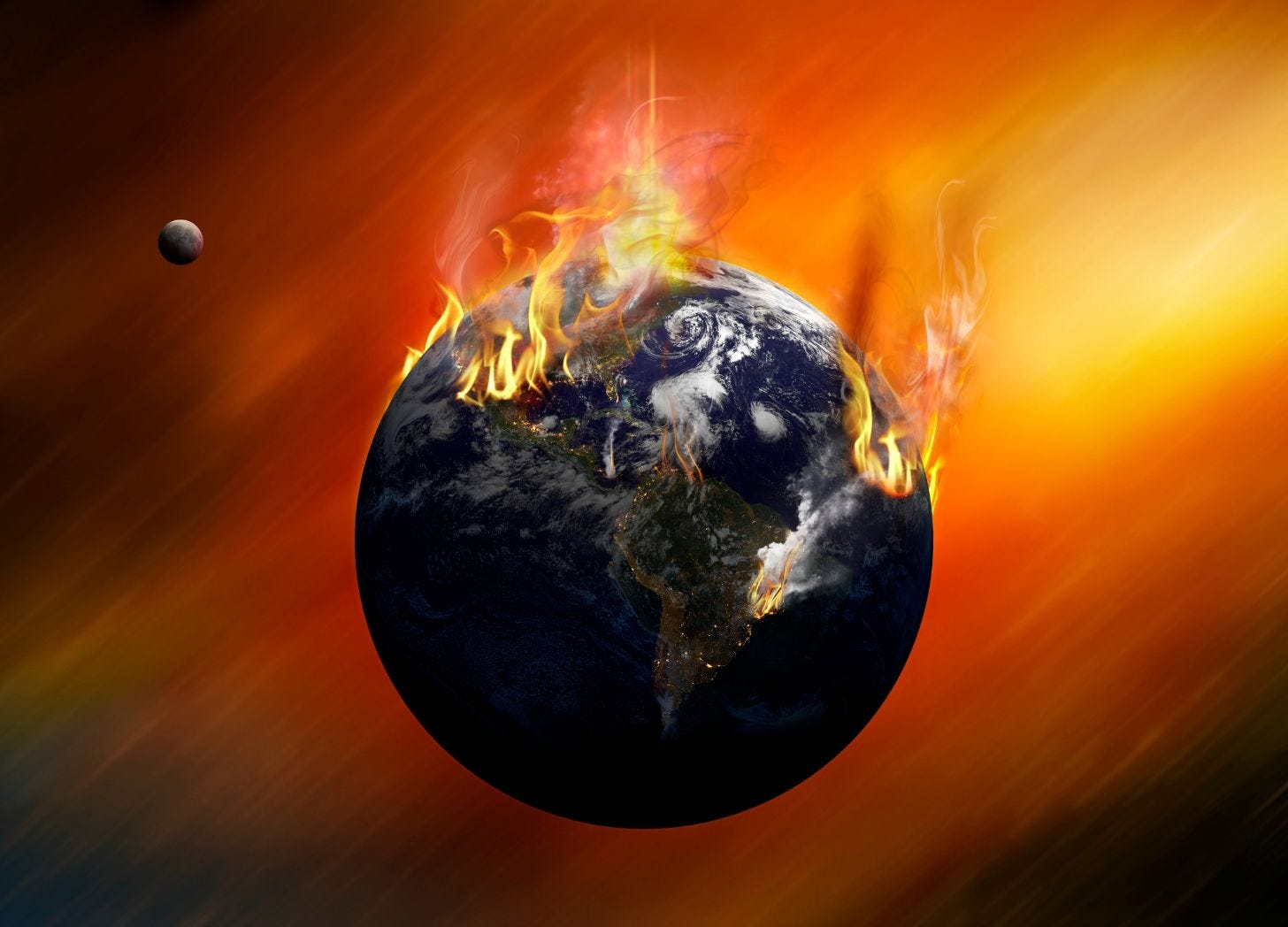
Oh, it’s hot now, is it? Wait for the future, why don’t you? Because the climate story has officially become annual programming. The WMO’s latest warning says there is now an 86% chance that at least one year between 2026 and 2030 will surpass 2024 as the hottest year ever recorded. And that is not even the scary part. The scary part is that temperature breaches that we once - even maybe up to three years ago - treated as political red lines, have become completely normalised now.
The Paris Agreement’s 1.5°C threshold was supposed to function as a guardrail. The world “temporarily” crossed it in 2024. Now, the WMO says there is a 91% chance annual temperatures will exceed that level again within the next five years, and a 75% chance the entire 2026–2030 average will stay above it.
The timing is awkwardly symbolic. Britain just recorded its hottest May day ever at 35°C, while parts of France and Spain are running as much as 10°C hotter than normal. Europe’s latest heatwave has already turned airports, rail systems and city centres into stress tests for infrastructure built for a different climate.
Meanwhile, in the Arctic, temperatures are rising more than three times faster than the global average, with further sea-ice decline expected across the Barents, Bering and Okhotsk seas. The knock-on effects are no longer confined to polar scientists and satellite maps. Changing rainfall patterns are already reshaping agricultural and economic risk across the Sahel, Amazon and parts of the subtropics.
The uncomfortable reality is that climate adaptation is quietly becoming a development issue as much as an environmental one. Countries least responsible for emissions remain among the most exposed to heat stress, crop volatility, flooding and rising sea levels. Which brings us to the recurring policy contradiction at the centre of global climate politics: everyone agrees the temperature targets matter, while simultaneously behaving as though overshooting them is manageable.
The WMO is careful to note that a single year above 1.5°C does not mean the Paris goals are permanently dead which is technically true. But technically, we might even achieve all of the UN SDGs. Fact is temporary breaches have a habit of becoming permanent negotiating positions. Look at where the Pandemic Pact talks are as a case in point.
At this point, there is no debate on whether warming is accelerating. Are governments, food systems and urban infrastructure moving quickly enough to keep up with a world that is heating faster than the institutions designed to manage it, that’s the question? The answer, unfortunately for all of us, is no.(WMO)
Progress? Not in this life! For decades, global development operated on the assumption that progress, while uneven, was broadly inevitable. The World Bank’s Atlas of Global Development 2026 suggests that assumption is now breaking down. According to the report, global development is advancing at its weakest pace in 75 years. The slowdown is not abstract macroeconomic drift. It is showing up in lives shortened, opportunities delayed and poverty reduction losing momentum. Funnily enough, all of this happening at a time when global inequality was supposed to be narrowing.
One statistic alone captures the scale of this reversal best. Had global development maintained its earlier trajectory, 150 million fewer people would be living in extreme poverty today. The report also estimates that global life expectancy would be nearly a year higher had previous development trends continued. Women’s empowerment indicators, meanwhile, would have advanced further than they have.
The world is still improving in several areas, but at a pace too slow to keep up with the scale of demographic, economic and climate pressures now colliding simultaneously. Part of the problem is that the old engines of development are weakening all at once. Debt burdens are climbing across low- and middle-income economies. Climate shocks are repeatedly wiping out infrastructure and agricultural gains. Aid budgets are under pressure. Trade fragmentation is growing. And geopolitical competition is increasingly crowding out long-term development planning in favour of short-cycle strategic interests.
The result is a development environment where countries are expected to grow, industrialise and build resilience while facing higher borrowing costs, more volatile weather and weaker external support than previous generations experienced.
Africa sits directly at the centre of this tension. The continent remains one of the few regions with significant demographic momentum, urban expansion potential and untapped industrial capacity. Yet many African economies are also navigating rising debt servicing costs, currency instability, food insecurity and shrinking fiscal room at the same time. That combination makes development slower, more expensive and politically harder to sustain.
The Atlas does not argue that progress has stopped. Extreme poverty rates have still declined over the long term. Health and education outcomes continue improving in many regions. Digital access has expanded dramatically. But the report’s broader message is harder to ignore: progress is no longer compounding fast enough to offset the pressures accumulating underneath it.
(World Bank)
Breakthroughs
Say no to drugs. Yet another of those breakthroughs which is not happy. Scientists have now discovered that beta blockers, the heart medication prescribed almost automatically after heart attacks for roughly four decades, may be doing very little for millions of patients with otherwise normal heart function. In some women, the drugs may even increase the risk of death, repeat heart attacks or heart failure. Which is awkward, considering beta blockers have been handed out ever since cardiology collectively decided in the 1980s that more medication must obviously mean more medicine. The broader lesson here is less about one drug and more about how modern healthcare quietly accumulates standard practice. It’s like being at a large corporate firm with legacy software that nobody wants to audit because the system still works. Medicine is excellent at celebrating new therapies, but spectacularly less enthusiastic about revisiting old ones once they become institutional muscle memory. This is true for drugs, and this is true for practices and protocols as well.
(New England Journal of Medicine, European Heart Journal)
Bottom line
Wrap it before you tap it. Governments around the world are fretting over falling birth rates and lowering fertility rates and plummeting replacement rates of populations. They’re even offering rewards for people birthing more children. Yet, none of them has stopped to consider if Earth can afford more children. The answer is no. Not for a long, long, long time. Maybe never. Because humanity is already living far beyond what Earth can sustainably support, with a new study estimating the planet’s “comfortable” long-term carrying capacity being closer to 2.5 billion people rather than the current 8.3 billion casually stress-testing the biosphere every day. Which is unfortunate timing, given the global economy is still built on the assumption that infinite consumption, permanent growth and same-day delivery are all basic human rights. The researchers argue fossil fuels effectively allowed humanity to borrow ecological capacity from the future, which sounds remarkably similar to how modern finance handles almost everything else.
Naturally, this does not mean civilisation collapses tomorrow. It simply means there is a reason why we’re noticing the planet’s support systems beginning to wither. Food systems are under strain, water security is worsening, biodiversity is collapsing and climate disasters are becoming recurring line items instead of “once-in-a-generation” events. The genuinely awkward part is that the study also found population size explained environmental damage more strongly than per-capita consumption alone, reopening one of those debates policymakers prefer to approach with kid gloves. Because while everyone agrees sustainability matters, far fewer people enjoy discussing what sustainability actually requires in a world where every government simultaneously wants higher consumption, more industrial output and rising birth rates.
(Science Advances)
No river, no cry. Speaking of support systems collapsing, scientists have found that rivers around the world are quietly losing oxygen, with nearly 80% of more than 21,000 river systems showing steady deoxygenation over the past four decades. Tropical rivers, including those in India, are being hit hardest, which is deeply inconvenient considering billions of people already depend on these waterways for drinking water, agriculture, fisheries and the occasional government promise about sustainability. Yes, climate change is the main culprit, with rising temperatures reducing oxygen solubility in water and heatwaves accelerating the process further.
Unlike hurricanes and wildfires or collapsing glaciers and other photogenic disasters though, rivers losing oxygen is an invisible crisis. Fish simply disappear gradually, biodiversity quietly erodes and ecosystems begin malfunctioning. Slowly at first, then all at once. The study also found that dams and altered river flows complicate oxygen dynamics further, proving once again that every large-scale intervention in nature eventually comes back with giant teeth to bite us in the butt.
(Science Advances)
Under my Salmonella, ella, ella, eh! Climate change isn’t done nipping at our arses. Scientists have now found that it is also helping fuel the rise of antibiotic-resistant Salmonella, because melting glaciers and destabilising food systems is not enough payback. This study in The Lancet Planetary Health, which analysed more than 480,000 Salmonella genomes across 139 countries, found that warming temperatures and changing rainfall patterns are linked to a significant rise in antimicrobial-resistance genes. Higher heat speeds up bacterial growth and gene exchange, floods spread resistant microbes through water systems and droughts conveniently concentrate them into shrinking water supplies.
The particularly grim detail is where the strongest climate-linked increases are happening: West Asia, North Africa, South Asia and Sub-Saharan Africa, regions already carrying heavy infectious disease burdens alongside fragile healthcare infrastructure. Globally, antibiotic resistance genes in Salmonella have risen 38% over the study period, with climate change accounting for roughly a tenth of that increase. Which may not sound catastrophic until one remembers humanity is already losing the antibiotic arms race largely through overprescription, weak regulation and the agricultural industry’s commitment to treating antibiotics like seasoning. Climate change is now acting as an accelerant on top of that dysfunction. Over the course of curating The Kable, especially this year, we’ve come to believe that the future of public health is like a group project where every global crisis has decided to collaborate. Either that or Israel.
(The Lancet Planetary Health)
Typhoid Mary, come to me. Dust, it turns out, is not just dead skin, cat dander, insect skeletons and regret. Scientists at Ohio State vacuumed schools, dorms and offices and found genetic traces of 54 different viruses lurking in the fluff, including Covid, flu and norovirus. The particles themselves are harmless by then. What remains is essentially the forensic residue of everyone who coughed, sneezed or simply existed in the building. Which means your office carpet now doubles as an epidemiological archive. Somewhere inside every neglected corner is a complete historical record of who brought the plague in after that long weekend.
The researchers think dust surveillance could become a middle ground between individual testing and wastewater monitoring: less invasive than swabbing people, more precise than analysing an entire city’s sewage. Schools, hospitals and workplaces might eventually detect outbreaks before anyone notices half the staff sounding like honking ducks. The only obstacle is standardising how to collect the stuff. If AI takes over all the lab tech jobs, they can apply for janitorial positions the world over to save humanity.
(Building and Environment)
Long reads
Learn from Africa. Only one long read again. Fittingly, it is a lesson from Africa on how to manage climate volatility. The continent only has decades of experience picking up everybody else’s slack.
(The Conversation)
Oh, and Gopal Nair doesn’t want you to see this.
Very good review as usual
Can you provide me the PDF version of an article published in New England Journal of Medicine on use of Beta blockers about which you have mentioned I am not able to access it