


Hello, and welcome back to The Kable. Without mincing words, we can say this Ebola outbreak in Congo is easily on track to be the largest ever. And it dominates this issue.
Maybe it is the speed of the outbreak, maybe it is the intensity. Or maybe it is the struggle to keep pace with it. Whatever the cause, though, health authorities in Congo aren’t as diligent with posting updated info as they were in the first month of the outbreak.
The latest info, via the country’s public health institute, says cases are now being reported from two new provinces, Haut-Uele and Tshopo, with total confirmed cases now standing at 2124, including 828 deaths. Contact tracing is still not at 100% and patient zero is still unidentified. Ebola hospitals are still being attacked, causing patients to run away and health workers to stay away. The WHO says the outbreak might actually be up to four times larger than reported numbers, thanks to gaps in contact tracing and reporting. The agency also reiterated Africa CDC’s message last week about the outbreak outpacing response, and about a shortfall in response funding. Complicating matters further is the fact that new infections are being reported from outside known and verifiable transmission chains and the fact that the virus has spread way beyond the original outbreak area. There are credible reasons to believe that the outbreak might be making its way to South Sudan. But not to the US because the US says Americans returning to their homes from DRC will have to quarantine elsewhere, whether they appear ill or not.
It’s not all bad news, however. 60+ days into the outbreak, CEPI has launched a Phase 1 vaccine trial with Oxford, based on the same platform Oxford used for its Covid vaccine. CEPI might yet achieve its 100 Days mission in the first real test of it. The WHO-backed EBO-PEP clinical trial to check post-exposure prophylaxis (PEP) with obeldesivir was launched in Congo by the National Institute for Biomedical Research (INRB). The Africa CDC launched an initiative to manage biosecurity in the outbreak response, something that doesn’t often get the importance it deserves.
And the best news from this outbreak, Uganda discharged its last patient and began the 42-day countdown to declare the outbreak over within its boundaries.
Elsewhere at the UN, officials said six schools in Palestine “remain inaccessible” while six more have been closed and ten have been abandoned due to “settler” attacks. In fact, Hamasthe UN went so far as to say “settler attacks have become a leading cause of Palestinian injuries in the West Bank, accounting for 55 per cent of all injuries in 2026. “
The mRNA patent lawsuits, they just keep on coming. Sanofi has joined the fray, filing separate lawsuits against Pfizer and Moderna because why not?
After taking aim at dengue last week, India’s Serum Institute has tied up with Gates MRI to potentially launch a once-in-a-hundred-years vaccine for TB.
In a bit of a surprise, Bavarian Nordic has actually entered into a partnership with a country from the global South, tying up with Brazil’s Eurofarma for a chikungunya vaccine.
New Zealand is coming to the bird flu party with reports of the first case in a native bird.
And finally, worried about ageing? Go to a concert, or a museum. Or better yet, watch a movie at the cinema. If you need a recommendation, here is the perfect one.
Before we dive into the stories of the week...
The Kable is proud to be a Media Partner to Pharmaconex - the largest and most influential pharmaceutical exhibition and conference in Africa.
Like The Kable, Pharmaconex shines a spotlight on the capability story in Africa and is committed to building a symbiotic community of industry leaders, changemakers and regulators to share knowledge, forge partnerships and move the industry forward. Register for your free pass here.
Stories Of The Week
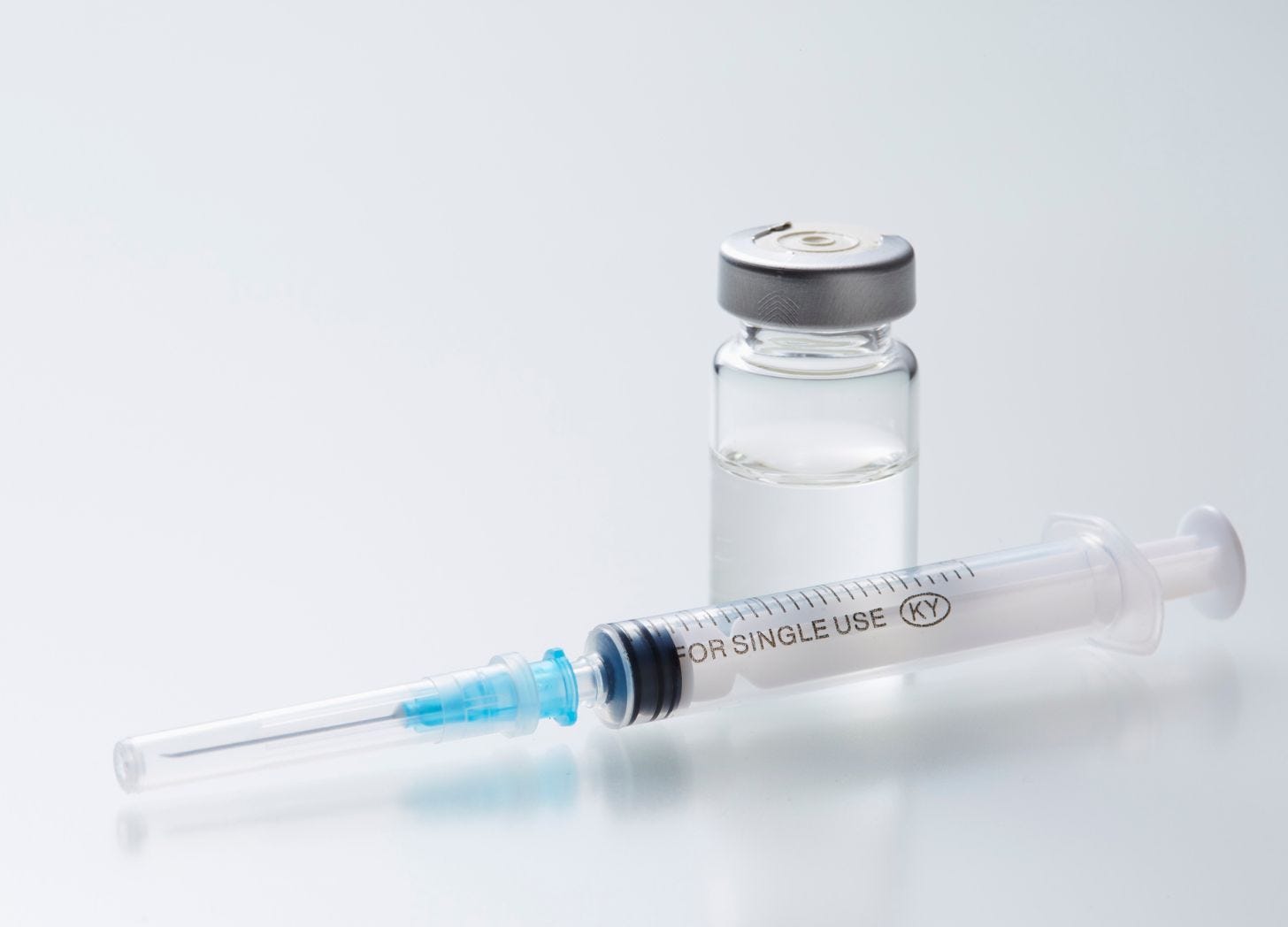
A shot in the arm, but not for everyone. Global childhood immunisation coverage edged higher in 2025, marking a slow recovery from pandemic-era setbacks, but millions of children remain without protection against preventable diseases. According to the latest estimatesfrom the WHO and UNICEF, 90% of infants received at least one dose of the diphtheria, tetanus and pertussis (DTP) vaccine, while 85% completed the recommended three-dose series, both up by one percentage point from 2024. However, 13.5 million children still received no routine vaccines during their first year of life, highlighting persistent gaps in access to essential healthcare.
While the number of “zero-dose” children fell by nearly 750,000 compared with the previous year, progress remains uneven. More than half of unvaccinated children live in countries affected by conflict, instability or humanitarian crises, where disrupted health systems continue to hamper immunisation efforts. At the same time, vaccine hesitancy and inequitable access remain significant barriers in many regions, contributing to outbreaks of vaccine-preventable diseases such as measles (hello, freedumb) and diphtheria.
The gains, modest as they may be, are likely to be only temporary though. Because the real impact of all the recent funding cuts is only beginning to affect immunisation programmes worldwide. The data next year will probably be much grimmer. Looks like yet another SDG - SDG3 this time - that we’re unlikely to achieve. Oh well, misery sure loves company.
(UNICEF)
Gumroad. In Sudan, the conflict is increasingly being financed through an illicit trade in looted gold, gum arabic and other natural resources, according to a new UN report, which warns that armed groups are exploiting the country’s economic assets to sustain the conflict. The report describes a war economy built on smuggling, resource theft and the collapse of state institutions, allowing rival factions to generate revenue while deepening one of the world’s worst humanitarian crises.
The consequences are being felt far beyond the battlefield. There has been a fresh cholera outbreak, with thousands of suspected cases reported in recent weeks as conflict continues to disrupt healthcare, water supplies and sanitation services. Communities displaced by the fighting remain particularly vulnerable, with limited access to clean water and essential medical care.
Elsewhere, the UK announced that it is imposing sanctions on the “illicit gold networks fuelling Sudan’s war.” For a minute we thought that meant the UK would be imposing sanctions on the backers of the RSF. You. Aye. Eee. That would be expecting too much.
(UN, UN)
Bottom line
A lesson for the futurepresent. Climate shocks are placing growing pressure on South Africa’s food businesses, with extreme weather disrupting crop yields, supply chains and operating costs, according to new research, and the evidence of our own eyes. Small and medium-sized enterprises are among the hardest hit, facing challenges ranging from drought and flooding to power disruptions and volatile input prices. Yet many businesses continue to rely on short-term responses rather than long-term adaptation strategies.
The study argues that building resilience will require more than reacting to the next climate event. Businesses need better access to climate information, affordable finance, stronger infrastructure and closer collaboration across the food system to improve preparedness. Without greater investment in adaptation, climate-related disruptions are expected to become a recurring business risk rather than an occasional setback. And this is a learning that will increasingly be true for countries all over the globe.
(The Conversation)
Long reads
Lessons from Africa. A brilliant piece on Africa’s response to the ongoing Ebola outbreak and the lessons the world can learn on how to manage global health in the future.
(Nature)
From the river to the sea. Palestine has become the litmus test for most of the world today. And this searing essay in Equator Mag illustrates exactly why the western mind can’t cope, and why it needs to keep slandering Palestine to preserve its own delusion of moral rectitude.
(Equator)
War, water, women. We almost didn’t include this piece because Oxfam says it was published by their country office for the occupied Palestine territories. What crap! There is only Palestine. However, the report is essential reading, and it talks about how the ongoing Israeli genocide and the water blockading has made life especially daunting for women. Because even crises are gendered.
(Oxfam)