


Hello, and welcome back to The Kable. Yes, hantavirus is still dominating the news cycle, and yes, there is, as can be expected, a lot of not-so-reliable news floating, and as seems to be the norm with our nodal health agencies lately, fluid mitigation guidelines. We aren’t devoting too much space to this today but here is a quick snapshot. We still don’t believe this will become a pandemic. Have we, both collectively as people and our health agencies, learnt any lessons from Covid? Ha! Will more people fall ill than avoidable? Almost certainly. Will masking help? Yes, but don’t rely on the WHO’s surgical masking advice. Or any masking advice from the WHO because they don’t practise what they preach. Use an N95, fit-tested. Mitigation is way better than vibes at protection. As much as naysayers may have mocked the Covid conscious community, it is they who’re proving better at collating info and providing guidance than our health authorities. Use this volunteer-driven Reddit thread for updated info on spread and this dashboard to track cases. We might come back to this in a little more detail later. If cruises are still your thing, here, another outbreak of norovirus on a cruise ship in France. Yeah, you know, puking and shitting.
In regular programming for The Kable, there has been (yet) another outbreak of Ebola in the Democratic Republic of Congo (DRC), not even 6 months after the last one was declared over. 246 suspected cases with 65 deaths have been reported already. Preliminary lab tests indicate that it is not the Zaire ebolavirus, which means no vaccine. Cases have been reported from Mongwalu, Rwampara and Bunia, and the Africa CDC believes proximity of these regions to Uganda and South Sudan are cause for concern about cross-border spread too. For all the conflict and strife everywhere else in the world, we believe DRC has had it the worst. Ever since a frustrated Belgian “king”, in cahoots with a cartel of European colonisers decided that they could divvy up African land among themselves, it has been nearly 150 years since the people of what is now DRC have been able to enjoy the fruit of their bountiful land in peace.
Such a pity that a week that had so much good news otherwise for Africa had to end on such a sad note. What good news, you ask? Well, for starters, the Africa CDC is looking for a long-term collaboration with South Africa’s Aspen to bulk up vaccine manufacturing on the continent, with an initial focus on priority vaccine antigens, looking to scale supply up to 100s of millions of annual doses over time. Elsewhere, Biovac, fresh from receiving funding to set up a vaccine manufacturing hub, has now received new funding (via a loan) from France to get that hub off the ground. In Kenya, Kenya BioVax, which was set up in 2021 to localise vaccine manufacturing, took the curtains off its facility in Embakasi during a visit for a French ministerial delegation. The facility is planned to be operational next year, so it’s a good time now to showcase capabilities.
Doctors Without Borders have been asking Gilead to sell its HIV wonderdrug directly to them. Why? SciDevNet is telling you why. In Eswatini, the country where at 23.4% of the population, HIV prevalence is the highest in the world, the Global Fund program has managed to deliver 3,000 doses. Gilead believes this is enough while they scale up. Eswatini only has some 220,000 HIV patients, after all. This is pretty much the demand-supply gap across all places covered by the existing program. But hey, if you can’t afford $28k per dose, why get HIV?
PAHO has signed an agreement with CSL Seqirus to earmark a supply of the flu vaccine, in case of a pandemic, for countries in Latin America and the Caribbean. Excellent news but if there indeed were a pandemic, we remember what happened with COVAX, right? It delivered 120 million doses of the agreed upon 994 million doses from J&J, Moderna, AstraZeneca, and Pfizer/BioNTech, who, at the same time, delivered 1.8 billion doses in bilateral deals. Heck, the UK and Canada even took from COVAX, in spite of having a stockpile already. India banned Serum Institute from exporting contractually-obligated vaccine doses. Yeah, good agreement, PAHO.
In India, a storm in the country’s most populous state saw over 100 people dying, and lots of damage to property. Obviously, Indian media was all over it. Especially after the Russian president sent a condolence message.
The Gates Foundation continues to present AI as the solution for all the woes of those without wealth and privilege. This time, it comes in the shape of a new $200 million partnership with Anthropic for low- and middle-income countries (LMICs) and underserved communities in the US who will be able to use AI for better health, education, and agriculture outcomes.
Some announcements from the US. A partnership with the Global Fund for an innovative mosquito repellent, made by an American company, of course. In this case though, thankfully, the product itself will be made in Kenya. The deal will see it being made available across sub-Saharan Africa and other malaria-endemic regions. The US has also put up a new funding announcement for food for seven countries - DRC, El Salvador, Ethiopia, Guatemala, Haiti, Kenya and Rwanda. Conditions? Well, this is the US. Of course, they have conditions. The food has to come from the US, screw the shipping costs. Some others too. The resistance to the US continues to gather steam though. At the World Bank, nearly 100 countries have banded together, asking the World Bank to extend its climate plan by a year, against American wishes.
Africa carries an outsized share of the world’s disease burden. Stands to reason that Africa’s representation in clinical trials would be outsized too. But alas, bias exists there too.
And finally, as always, coffee is what brings good cheer to end this section with. So, what’s with coffee today? Well, drink two to three cups a day, and keep dementia at bay.
Stories Of The Week
Let them eat cake. The Horn of Africa and Central Africa are experiencing some of the world’s most severe hunger crises, with millions facing acute food insecurity and famine conditions.
Sudan remains one of the worst humanitarian crises globally, with 19.5 million people - 41% of the population, facing high levels of acute food insecurity. 135,000 people are classified in catastrophic levels, with 14 areas at risk of famine if conditions deteriorate further. Drone warfare has become a leading mode of conflict, targeting civilian infrastructure and exacerbating the crisis.
Somalia is experiencing rapidly worsening conditions, with 6 million people facing high levels of acute food insecurity. The Burhakaba district has reached malnutrition levels not seen since 2022, with famine conditions emerging under a plausible worst-case scenario. Global aid cuts have reduced humanitarian funding from $2.38 billion in 2022 to just $160 million in 2026, leaving only 1 in 7 Somalis who need food assistance actually receiving it.
The DRC continues to face one of the world’s largest hunger crises, with 26.5 million people struggling to meet basic food needs, nearly one in four Congolese. More than 3.6 million are in emergency conditions, while 4.18 million children require treatment for acute malnutrition.
And in South Sudan, the conflict in Jonglei state is witnessing alarming escalation, with 200,000 people displaced from Akobo County and potentially thrust into catastrophic malnutrition levels as healthcare systems collapse and humanitarian access becomes increasingly restricted.
The crises are interconnected through climate change, conflict, collapsing global aid, and rising food prices linked to geopolitical tensions. Without urgent cessation of hostilities, improved humanitarian access, and massive funding increases, these regions face catastrophic levels of starvation and death.
Mpox, Ebolavirus, cholera, malaria, hantavirus... all of these pale into oblivion when you haven’t had a square meal in days or even enough water to get by.
(IPC, IPC, IPC, DWB, IRC)
Rule of law. Israel, meanwhile, continues doing what it does best: killing children. According to UNICEF, since the “ceasefire” in Lebanon began on April 17, at least 23 children have been killed and 93 injured, bringing the total to 200 children killed and 806 injured since March 2, nearly 14 children killed or injured every single day. The latest victims include two children from the same family who were killed this morning alongside their mother in a strike that hit their car.
Beyond the immediate carnage, an estimated 770,000 children are experiencing heightened distress from repeated exposure to violence, with 72% of caregivers reporting their children are anxious or nervous and 62% depressed or sad. The psychological trauma is so severe that UNICEF warns these children risk developing chronic or lifelong mental health issues without urgent support.
(UNICEF)
A rose by any other name smells just as sweet. By that same token, calling a terrorist a settler doesn’t make them any less of a terrorist. When not killing kids, Israel is busy destroying schools, and childhoods. This is what UNICEF says. Violence against Palestinian children in the occupied West Bank, including East Jerusalem, has escalated sharply, with at least 70 children killed since January 2025 and around 850 injured, most by live ammunition. The crisis is no longer confined to direct attacks: homes are being demolished, schools damaged or made inaccessible, water and sanitation systems vandalised, movement increasingly restricted, and more families displaced in the first four months of 2026 than in all of 2025. With education disrupted, basic services harder to reach, and child detention reportedly at an eight-year high, the pattern points to a broader dismantling of the conditions children need to survive, learn and grow. This can’t be true. Maybe UNICEF is the UN’s Hamas wing.
(UNICEF)
Lies, damn lies, and statistics. We have a World Health Assembly coming up next week. And the WHO has presented a global health scorecard in advance of the assembly. And no, there is no update on the pandemic pact. And yet, the check-in makes for grim reading. Progress towards 2030 health goals is slowing, falling short, or in some areas moving backwards. Malaria incidence is rising, maternal and child mortality gains are losing pace, measles vaccine coverage remains below the level needed to prevent outbreaks, and the pandemic wiped out nearly a decade of gains in life expectancy before a partial, uneven rebound. Data for this report is only till 2024 so all this is before factoring in everything the new US dispensation has managed to do to world health for the short, chaotic time it has been around. Till 2024, there were some bright spots though, including lower alcohol and tobacco use, fewer new HIV infections, and progress against neglected tropical diseases, but the wider picture is fragile, thanks to incomplete data, weakened surveillance systems, and funding cuts yet to fully show up in the numbers. Also, fewer HIV infections is already a thing of the past. Unlike many things, global health gains are not something that can achieve critical momentum and then continue self-sustaining. Neglect catches up, and fast.
(WHO)
Thou shall not covet. Oh lookee here. Israel’s favourite UN agency is back again, this time talking about children in wealthy countries for a change. The kids aren’t alright there either, thanks to economic inequality. It is doing more than widening bank balances. It is showing up in children’s bodies, classrooms and basic chances in life. A new analysis across 44 OECD and high-income countries finds that child poverty remains stubbornly high, with almost one in five children living in income poverty and top-earning households taking home over five times more than the bottom fifth. The consequences are measurable: children in more unequal countries are more likely to be overweight, less likely to report very good health, and significantly more likely to leave school without basic reading and mathematics proficiency. And then, the cycle just keeps on repeating. And then Space Karen says billionaire shouldn’t be used as a pejorative.
(UNICEF)
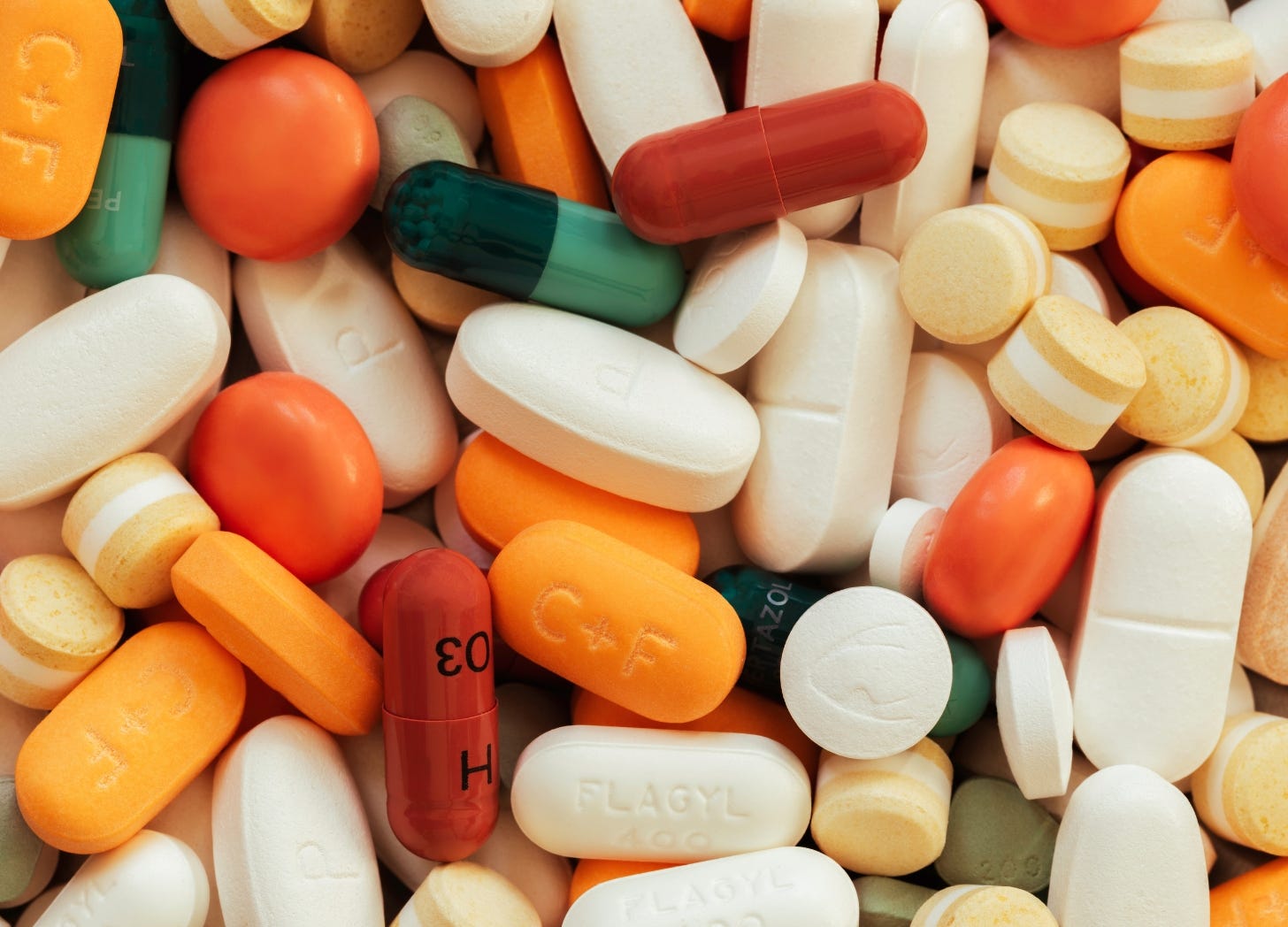
I am the danger. And finally, a fascinating investigation from AFP about an illegal opioid supply chain originating in, well, India, that is helping feed a deadly drug crisis in West Africa. Millions of tapentadol tablets are being shipped from India into countries where the drug is not permitted. The pills are cheap, potent and, in many cases, far stronger than approved medical formulations anywhere in the world. Some consignments were allegedly declared as harmless medicines, while seizure records and shipment data point to continued exports even after India announced a crackdown on certain opioid combinations.
Tapentadol is being misused as a painkiller, stimulant and survival tool by people doing punishing physical work, but it is also being mixed into kush, the synthetic street drug already devastating parts of the region. Authorities and researchers link the trade to rising addiction, informal detention-style detoxes, bodies being recovered from public spaces, and growing use among young people, including schoolchildren. In some countries, officials say the drug is unauthorised or illegal, yet it is still reaching streets, ports, informal markets and vulnerable communities.
One of the Indian companies listed in the report has a director whose father controlled Maiden Pharma, the company behind cough syrup deaths in the Gambia not too long ago. India’s drug regulator said it had no record of issuing export clearances for the consignments listed in the report but the drug makers association in India said the trade is legal and stopping misuse of the drug is a “shared responsibility of all key stakeholders.”
The world’s pharmacy has some murky depths to it.
(France24)
Breakthroughs
Go Corona, go. We spoke about the Covid conscious community in the very beginning of this issue. Here’s some good news for them. For the first time, an antiviral pill has been shown in a major household-exposure trial to reduce the risk of developing symptomatic Covid after close contact with an infected person. Given within 72 hours of symptoms appearing in a household member, a five-day course cut symptomatic illness from about 9% in the placebo group to about 3%, while also reducing confirmed infections overall. It arrives long after the pandemic’s peak, so this is not a mass-market miracle moment, but it could matter enormously for the people still living with real risk: older adults, immunocompromised patients, care-home residents, healthcare workers, and those who have built their lives around avoiding infection. We are not done with Covid yet. And finally, there may just be a pill that helps stop an unavoidable exposure from becoming an infection.
(NEJM)
Bottom line
The heat is on. For those not in the loop, we have a football World Cup coming up next month. Honestly though, with the way the FIFA head honcho has been behaving around Israel and the first-ever FIFA peace prize winning orange top, we should cancel the World Cup. And considering it is being held in the US, all the more reason to cancel it. Italy has already boycotted the event. And climate change might actually put paid to it, after all. A new analysis suggests roughly a quarter of the tournament’s 104 matches could be played in conditions where heat strain becomes a real risk, with around five games potentially crossing the threshold where postponement would be advised. Climate change has made these hazardous conditions substantially more likely than when the tournament was last held in the US in 1994, and while air-conditioned stadiums may protect some players and spectators, the wider event ecosystem remains exposed: public screenings, outdoor celebrations, fan travel, volunteers, workers, and cities trying to host a summer mega-event in a hotter world.
(World Weather Attribution)
Long reads
Move, child! Everything else about The Kable today has been distressing. No reason for this section to be different. The Internal Displacement Monitoring Centre (IDMC) has released new data. 35,000 child displacements are happening every single day. All this and more fun reading.
(IDMC)
Oh, and Gopal Nair doesn’t want you to see this.