


Hello, and welcome back to The Kable for the first time this June. Apologies for missing you last week. We needed a short break to rewire ourselves because this year has turned out to be a sordid mess, hasn’t it?
Without much ado, let’s quickly get into the Ebola story then, shall we? At last count, 676 confirmed cases in Democratic Republic of Congo (DRC) as per the health minister, combined with the 19 confirmed cases in Uganda from the Africa CDC’s latest update, taking the number of confirmed cases to just under 700. Worryingly, the update from the DRC health minister above also says the outbreak has spread to three new health zones. Equally worrying, an update from the UNHCR says two Ebola-related deaths have been confirmed in a displacement camp in eastern DRC. The Africa CDC and the WHO have partnered in a $518 million plan to fight the outbreak. The Africa CDC has also got financial support from other places - $12.54 million from the European Commission and $220.6 million from the Pandemic Fund. CEPI has invested $60 million to fast-track three vaccine candidates from IAVI, Moderna and University of Oxford into trials and Gavi too has committed an additional $50 million. Hopefully all of these commitments will come in handy soon, especially in DRC where shortages have caused testing to lag, or even stall in some cases. And where orphaned babies are dying to Ebola. In a slight bit of good news, the number of caseworkers who’ve recovered from Ebola has gone up fourfold since we last reported on it. No confirmed cases of Ebola have been reported from anywhere outside of DRC and Uganda yet which is a positive but we fear unless there is at least a cluster somewhere in Europe or North America, the urgency to find a vaccine that we’re seeing now may not persist.
In other Africa news, there has been a surge in cholera cases in Borno State, Nigeria with 7850 suspected cases and 74 deaths in five weeks.
In Ghana, the parliament passed its regressive, transphobic, homophobic bill into law.
In disease news elsewhere, 26,000 Saiga antelopes have died of unknown causes in Kazakhstan, bang in the middle of calving season. Must be pre-partum angst.
In Kerala, India, an outbreak of Shigellosis that was first reported in the north of the state has resulted in one confirmed death and over 400 people seeking treatment with reports now coming in from three districts. Thankfully, this is India’s most advanced state when it comes to public health infrastructure. Testing, containment, community contact tracing and disease surveillance that most other Indian states, and even many other countries, simply do not match. Which is why this state reports more illnesses than any other. Like this Nipah virus infection it has confirmed in one person, immediately identifying 77 contacts, including 58 health workers, with all high-risk contacts already in quarantine.
In the US, after nearly 60 years without a confirmed domestic case, USDA confirmed the first local detection of New World Screwworm in a 3-week-old calf in Texas, with larvae identified in its umbilical area. Since then, additional detections have been confirmed in other counties in Texas, as well as New Mexico, and earlier this week, even in a dog in Texas. As with many other things with the current US dispensation, you could call this manifest destiny because they did have a screwworm monitoring programme which was abruptly terminated last year when they made their government efficient.
Separately, for whatever reasons of their own, two US researchers were arrested for bringing mpox samples - deactivated of course (hopefully) - back to the US, and then lying to authorities about it.
And since we are talking about disease, with recent reports from India and Bangladesh, we have now crossed more than 1,000 cases of bird flu in humans, with a nearly 50% fatality rate. We’re not betting people, but if you offered us long odds on bird flu being the next pandemic, we’d take it.
In good news, last month was only the second-hottest May ever recorded. Yay. And also the coolest May of the rest of your lives.
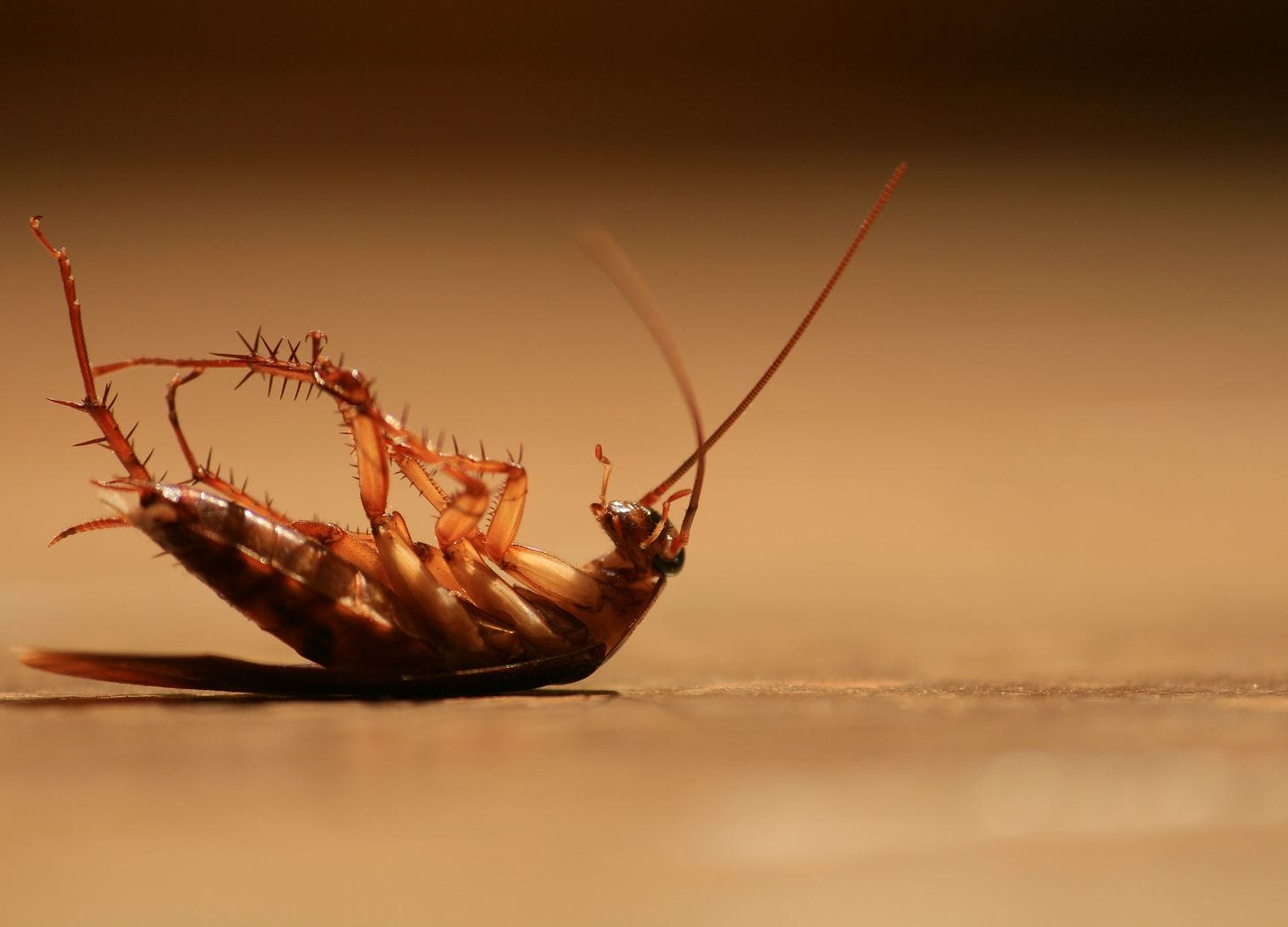
And finally, in the most Australian of Australian news, Australia’s Department of Climate Change, Energy, Environment and Water (DCCEEW) has seized more than 100,000 live exotic cockroaches, the largest seizure of illegal exotic invertebrates in Australia. This is honestly the first time ever we’re keying in exotic and cockroaches in the same sentence. And since this is Australia, yes, the cockroaches are gonna die. They’re getting euthanised.
Stories Of The Week
Sounds like a baby, heats like a stir fry. The WMO confirmed it last week: El Niño is back. The Pacific-warming phenomenon is now reckoned to have an 80% chance of taking hold between June and August, rising to 90% after that, and it arrives promising above-average temperatures nearly everywhere along with the extreme weather that tends to follow. Tropical Pacific readings are already running roughly 6°C above average, which gives the system plenty of extra heat to feed on.
The WMO is at pains to point out that climate change does not make El Niño itself more frequent or more intense. What a warmer ocean and atmosphere do is load the dice, handing each event more energy and moisture for heatwaves and downpours. The last El Niño, in 2023-24, was among the five strongest on record and helped push 2024 to its unwanted title of hottest year yet. Which means either 2026 or 2027 will take that throne over from 2024. UN authorities call this “the urgent climate warning it is.” Well, sure. Doesn’t mean we have to treat it as urgent. Why buck history and tradition? Bolster early warning systems? Ignore! Fund seasonal forecasting? Boooooring!!! Sweat buckets? Woo-hoo!
(WMO)
Leggo my eggo! So you ate some undercooked chicken and got a grumpy tummy, eh? Or maybe it was the three-day old pizza that did it? Yeah, but that isn’t what the WHO calls unsafe food. New WHO research published in The Lancet this week suggests the deadlier threat is quieter and slower. Unsafe food kills 1.5 million people and sickens 866 million every year, a burden the WHO puts on a par with TB, and the leading cause of those deaths is not even a bug.
The headline finding, quantified for the first time, is that more than a million people died in 2021 from cardiovascular disease and cancer linked to inorganic arsenic and lead in their food. Diarrhoeal diseases still cause the most illnesses, but chemical hazards top the death toll. Arsenic, lead and methylmercury enter soil and water from both natural sources and human handiwork, decades of leaded paint and petrol among them, are taken up by plants and fish, and end up on the plate.
The burden, predictably, is not shared evenly. Southeast Asia and the Western Pacific fare worst for chemical contamination, while Africa and Southeast Asia carry the heaviest overall load. Children under five, who make up 9% of the world’s population but account for roughly a third of all foodborne illness, are the most exposed, and for them lead and mercury are not a passing sickness but a lifelong sentence of neurological and developmental harm. The report’s authors add that climate change and antimicrobial resistance are both making matters worse, the first by raising contamination risks, the second by rendering infections harder to treat.
The prescription is the same old One Health line: clean up contamination at source through better farming, tighter industrial controls and stronger environmental rules, and stop treating health, agriculture and environment as separate filing cabinets. Yeah. Tighter industrial controls. Stronger environmental rules. Maybe in a faraway distant utopian future, both of those will happen. But for now, the poison is already in the soil, and chemicals, once in the food system, are stubbornly difficult to get back out.
(WHO)

Peace? Not when we can have war! The Institute for Economics & Peace (IEP) has been publishing the annual Global Peace Index for 20 years now. The 20th edition just landed. Considering that for 12 years running, peacefulness in the world is going down, maybe the index needs to be renamed? Anyhoo, the data. There are 119 countries less peaceful than they were in 2008, with conflict the chief culprit, and the number of conflicts is the highest since the end of the Second World War. Sixty-one active state-based conflicts were under way in 2024, double the figure of fifteen years ago, and almost all of that growth comes from internationalised intrastate wars, the kind where outside powers wade into someone else’s civil conflict. Those are up more than 175% since 2010. We won’t even begin to guess how many of these conflicts are in Africa with countries from West Asia taking part in fomenting them. Or in West Asia with terrorist-settlers causing them.
One new note in the report is the machinery. The report warns that warfare is undergoing a technological revolution that international law and diplomacy have not begun to catch up with, and that for the first time machines are making life-and-death combat decisions faster than any human can review them, with no global agreement on the rules meant to govern them. Drones have become the defining weapon of the age, spreading faster than any government can track: attacks rose by roughly 11,500% between 2018 and 2025, with 565 separate armed groups managing at least one. The footprint reaches well beyond the battlefield, too. AI data-centre electricity demand is projected to double to 945 terawatt-hours by 2030, and Ireland’s data centres alone already draw 22% of the country’s metered power.
Against all of this, the world spent $49.2 billion on peacebuilding and peacekeeping in 2025, up from $37.3 billion in 2008 but still just 1/2 a percent of total military spending. If we spend 200 times as much on war as we do on peace, do we even deserve peace?
(IEP)
Good news comes drip-drip-dripping. There are 41.6 million documented refugees in the world today. If you’re wondering what’s good about that, it’s down 3% from the previous year. The UNHCR released its flagship Global Trends Report this week and this drop in refugee numbers is the first in a decade.
The reason the totals dropped is that returns picked up sharply. Some 14.7 million displaced people went back to their areas or countries of origin in 2025, 4.4 million refugees and 10.3 million internally displaced, with the steepest rises in Afghanistan, Sudan and Syria. Refugee returns were the second highest in the 60 years the agency has kept records. It is careful to note, though, that many of those journeys happened under pressure and led back to precarious conditions, which is a long way from the safe and dignified return the Convention envisages. Meanwhile 5.4 million people fled across borders during the year, so the flow has not stopped, only shifted.
The backdrop keeps generating new caseloads faster than old ones close. Sudan remains the largest crisis on earth, with 9.1 million people displaced inside its borders, and in West Asia, one “country” is insistent on creating as many refugees as it can every hour. At least the ones it can’t kill.
(UNHCR)
No worker, no cry! We’ve all read the news and reports about how cancer is on the rise around the world and how we’ll have yea so many cases of cancer by 2050 or whatever. But one so far unreported corollary of that is that we’re also on track for a devastating shortfall of cancer care workers. How devastating? Is 100 million devastating enough? Who says? The Lancet Oncology does! No prizes for guessing that the burden will overwhelmingly fall on LMICs, where nearly 70% of new cancer cases are expected to occur.
(The Lancet Oncology)
Breakthroughs
AI in your body. The day has come. Way sooner than anybody could’ve predicted. The first AI-designed vaccine has entered human arms in a clinical trial. Researchers at the University of Cambridge and its spinout DIOSynVax have put a universal coronavirus vaccine through its first human trial, and it cleared the bar that first trials are meant to clear: in 39 healthy volunteers it proved safe and produced no significant side effects. More interesting than the safety result is the design. Rather than chasing a single strain, the team used AI to comb genetic data from across the Sarbeco coronavirus family, the group that includes SARS-CoV-2, the original SARS and various bat viruses with spillover potential, and distilled the features they share into one synthetic “super-antigen”. The aim is a jab that holds up against viruses not yet circulating in humans, escaping the reactive cycle of reformulating shots to catch each new variant. In the trial it stirred immune responses against SARS-CoV-2, SARS and related bat viruses alike, and was delivered needle-free through a micro-fluid jet. But hold on to your horses. This is just a Phase 1 trial. The vaccine has not been shown to prevent infection or disease in the real world, the cohort was 39 people aged 18 to 50, and a larger Phase 2 study is still to come to test whether the broad protection holds across a more diverse group. Let’s hope it does, even it was designed by AI. Maybe it will only cause aitism.
(Journal of Infection)
Bottom line
Spend now, save later? Pshaw! The FAO has released a new report, which like a lot of recent reports, has put a price on inaction. This time, it is making the economic case for weaning the global livestock sector off its antibiotic habit. On current trends, driven by rising appetite for animal-source foods and ever-more-intensive production, antimicrobial use in livestock is set to climb by nearly 30% by 2040 against 2019 levels. Cumulative production losses under a high-resistance scenario could reach around $318 billion by 2040, against roughly $53 billion under the most aggressive phase-out of antimicrobial growth promoters.
But who even has time for the long game? Antimicrobial growth promoters deliver clear, immediate productivity gains, particularly for producers in resource-poor settings with high disease risk and little access to vets, biosecurity or affordable alternatives. The costs of giving them up are up-front, concentrated and obvious. The costs of resistance, by contrast, arrive slowly and are spread thinly across everyone, which is precisely why the reckoning keeps getting deferred.
The FAO nevertheless is framing it as antimicrobial effectiveness being a global public good, and the gains from preserving it being long-term and widely shared while the pain of restraint is felt now and locally. True that but the “solution” offered is regulation paired with economic incentives, investment in veterinary services, surveillance and diagnostics, and a push towards vaccination, biosecurity and better husbandry, with the report pricing the transitional bill at a minimum of $28.4 billion.
The geography is worth noting too: by 2040 Asia and the Pacific are forecast to account for nearly 65% of livestock antimicrobial use and South America around 19%, while Africa’s share stays smaller but grows among the fastest. Global livestock production is projected to rise about 23% by 2040, led by poultry and milk, so the demand driving the antibiotics is not going anywhere, and the question is whether the sector pays a manageable bill now or a far larger one later. We know we said we don’t bet but we’re betting on the latter.
(FAO)
The good we do. New research led by Lancaster University finds that the chemicals brought in to replace the ozone-destroying CFCs, the refrigerants and air-conditioning gases we congratulated ourselves on adopting, have been quietly seeding the globe with a “forever chemical”. Between 2000 and 2022, the team estimates, the breakdown of these CFC replacements and certain inhalation anaesthetics deposited around 335,500 tonnes of trifluoroacetic acid, or TFA, onto the Earth’s surface. It is a member of the PFAS family, it resists breaking down, and it is now turning up in rainwater, in human blood and urine, and in Arctic ice-cores thousands of miles from any factory. The fix came with its own slow leak.
(Geophysical Research Letters)
Not your (amoe)bae. Most disease and pandemic scenarios talk about viruses, bacteria, and maybe, in passing, fungi. Nobody even talks about amoebae. Maybe it’s time to take them a little more seriously. That, in essence, is the argument of a new perspective published in the journal Biocontaminant, in which researchers make the case that free-living amoebae, the single-celled organisms that live quietly in lakes, rivers, soil and our water systems, are an overlooked public-health risk that warrants far more attention. Most are harmless. A small number are not, the best-known being Naegleria fowleri, the so-called brain-eating amoeba, which can cause a rare and almost invariably fatal brain infection when contaminated water gets up the nose. What makes the group worth worrying about is its sheer hardiness: these organisms shrug off high temperatures, tolerate chlorine and other disinfectants, and can take up residence inside the very distribution networks we assume are clean. The sharper concern is what the amoebae carry. They can act as living shelters for other pathogens, with bacteria and viruses hiding inside them and riding out the disinfection that would otherwise kill them, a Trojan-horse trick the authors say may also help spread antibiotic resistance.
(Biocontaminant)
Long reads
Wanna hear a joke? Pandemic-ready! The Conversation Africa talks about how Africa and the world isn’t ready for the next pandemic. Of course we aren’t. We haven’t learnt any lessons yet.
(The Conversation)
No country for girls. In India, foetal sex determination and then abortion if it turned out to be a girl was so rampant the government banned it decades ago. Now, SciDevNet says these tests have gone online. And shady. And the practice itself has gone with Indians to wherever they go.
(SciDevNet)
Oh, and Gopal Nair doesn’t want you to see this.
Excellent review of health care worldwide
Thanks for sharing