


Hello, and welcome back to The Kable. We have a relatively light but fairly dismal issue for you this week. As they say, equilibrium in all things.
The week had some excellent news on the Africa CDC front. After making its first declaration of a pan-continent emergency nearly 18 months ago, the agency has now downgraded the emergency label from mpox. Not that mpox has disappeared from the continent but the severity of the outbreak has definitely lessened, enough for it to no longer be classified as an emergency. Even more significantly, for the first time, an African nation has stood up to the anti-science vaccine skeptics who think they rule the world, thanks to the Africa CDC. For the uninitiated, Guinea-Bissau was scheduled to implement a single-blind trial for a hepatitis B vaccine, which would have seen half the kids in the trial not receiving the vaccine. This, in a country where a little more than one in 10 children are already infected with hepatitis B by the time they turn 18 months. This trial has been pushed by the US to gauge the effect of the vaccine on neurodevelopment by five years of age, with the relentless assertion that it is going ahead, science be damned. Anyway, good on the Africa CDC and good on the new health dispensation in Guinea-Bissau.
In potentially alarming news for Africa, and other LMICs, the European parliament this week mooted a new act to “ensure supply of critical medicines in Europe.” The act - Critical Medicines Act (CMA) - is ostensibly aimed at reshoring production of critical medicines, essential drugs, antibiotics and APIs within the EU. So what if it means global supply gets affected? And so what, if in the words of the EU lawmaker who drafted the bill, it is in response to trade pressure from the US? They can’t take on the US so they instead decide to punch down.
Elsewhere, the Gates Foundation is teaming up with OpenAI in a $50 million partnership to help African countries, beginning with Rwanda, use AI to improve their health systems. Of course, no countries in the global North will share their public health data with OpenAI and that has nothing to do with this.
The Gates Foundation also linked up with the Novo Nordisk Foundation and Wellcome this week to set up a $60 million grant to fund research into AMR.
CEPI is pumping in $30 million into a collaboration looking to upgrade the only working Zaire ebolavirus vaccine we have now. MSD will work with Singapore-based Hilleman Laboratories for clinical development of the updated vaccine while SK bioscience and IDT Biologika will develop the updated drug substance process and associated drug product. MSD will also look at working with public sector buyers in LMICs to make the vaccine more affordable.
India’s Nipah virus outbreak in West Bengal seems to be gathering steam with confirmed cases going up 250% to five, with hundreds still iffy.
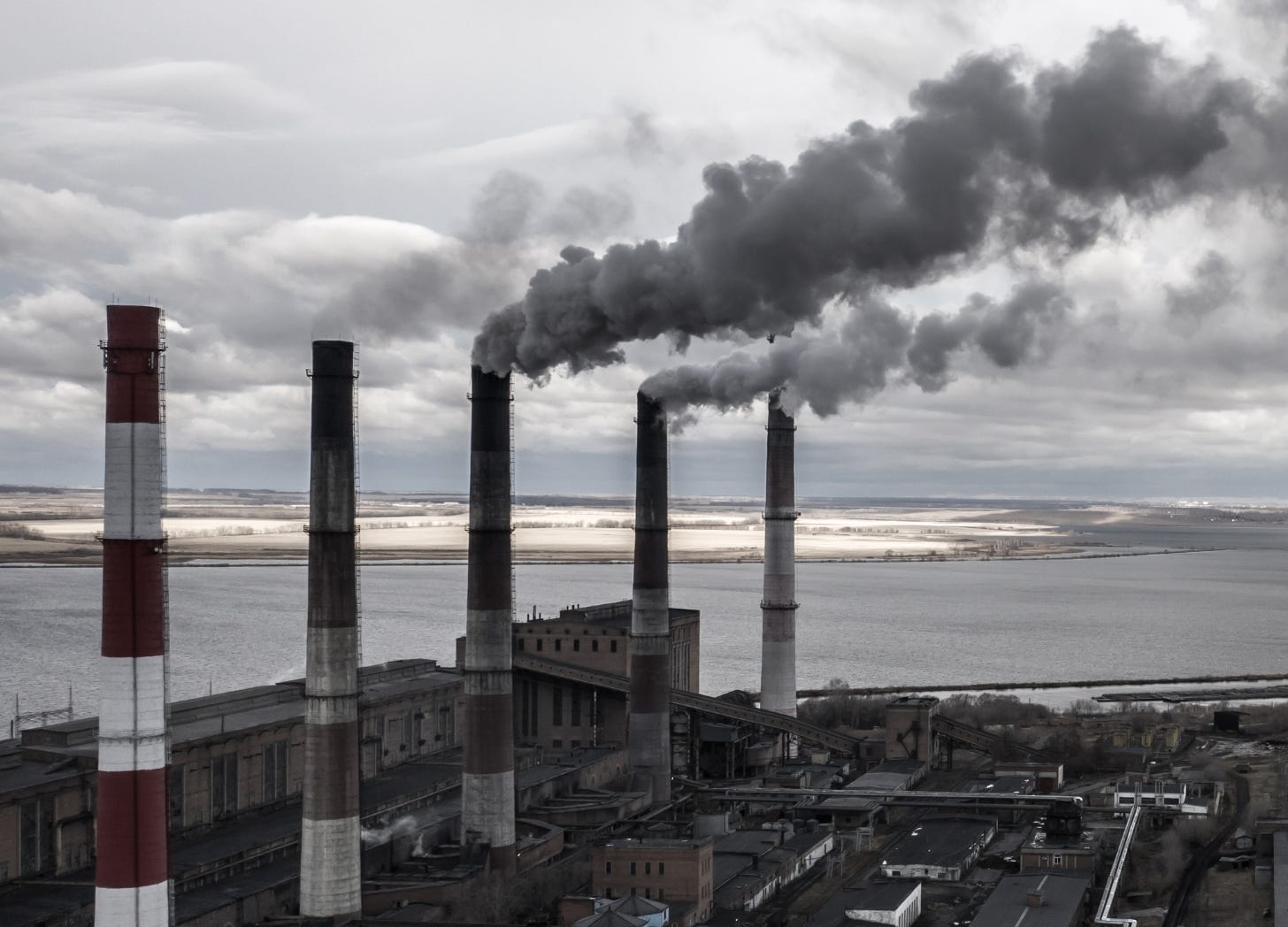
And finally, the answer to all of life’s questions might be 42. But the number that responsible forat least half of life’s problems, at least Earth’s problems, is 32. Because that is the number of fossil fuel companies around the world responsible for half of the world’s CO2 emissions, with state-owned fossil fuel producers making up 85% of the top 20, all from countries that opposed a fossil fuel phaseout at last month’s COP30 summit in Brazil. Go figure. 🙄
Stories Of The Week
Hungry, hungry hippos. Yet another report has confirmed what we all knew: the world is a dumpster fire and people are going hungry. In a stunning revelation, not, from Action Against Hunger, their 2026 Global Hunger Hotspots report discovered that war, climate disasters, and economic collapse are making people starve. Shocking stuff. 196 million people are starving worldwide, with Nigeria (31.8 million), Sudan (25.6 million), and DRC (25.6 million) leading the crisis. But the real kicker is Gaza, where a mere 94% of the population is facing catastrophic hunger. Because nothing says “humanitarian progress” like systematically starving an entire population into submission. Oh wait, 6% isn’t starving yet? Must be Hamas. South Sudan and Haiti aren’t too far behind with 56% of the population critically hungry.
More numbers? Sure. 30 million kids have acute malnutrition, thanks to a global funding shortfall of 65%. But hey, at least the US managed to cut humanitarian aid by 83% - finally, some fiscal responsibility! Never mind that USAID programs have saved 90 million lives over the past two decades, or that these cuts could kill 14 million people, including 4.5 million children. Priorities, people. The report’s “urgent recommendations” include such groundbreaking ideas as “ensure humanitarian access” and “provide adequate funding.” Because what could be more revolutionary than letting people eat, eh?
We know the problem. We have the solutions. What we lack is the political will to care about people who aren’t rich. Because, hey, trickle-down economics will work. All you need is just a little patience.
(Action Against Hunger)
Bottom line
Water water everywhere? Huh! In your dreams. For long, we’ve held this belief that wars of the future will be fought over water. That future is here now. UN scientists have finally caught up to what we already knew: the planet is broke, hydrologically speaking. In a stunning revelation, they’ve declared the dawn of “global water bankruptcy” - a fancy term for 4 billion people facing water scarcity, 50% of large lakes vanished, and 70% of aquifers draining like leaky faucets. But hey, at least we’ve got time for more “urgent UN conferences” in 2026! Because nothing says “action” like another round of diplomatic hand-wringing while your taps run dry.
The report distinguishes between “water stress” (reversible) and “water bankruptcy” (oops, too late). With 2.2 billion people lacking safe water and $307 billion in annual drought costs, this is what happens when you treat water as a disposable resource rather than the foundation of life. In a world that can’t even manage basic climate commitments, water bankruptcy management sounds about as realistic as expecting politicians to put people before profits. But hey, maybe a decade’s worth of conferences will finally fix it.
(UNU-INWEH)
Spending isn’t saving. The financial wizards at the UN did some number-crunching and well, it seems for every $1 spent protecting nature, $30 go to destroying it. In 2023 alone, $7.3 trillion flowed into “nature-negative activities” while a paltry $220 billion supported actual solutions. Because apparently, the planet’s health is a luxury item only available to those who can afford boutique environmentalism. The UNEP’s State of Finance for Nature 2026 report calls for a “big nature turnaround”, including innovations like ooh, greening urban areas and wow, phasing out harmful subsidies, oh and scaling up “nature-positive” investments. Let’s tell that to the 32 fossil fuel companies we mentioned above, eh?
(UNEP)
Long reads
Eat the rich. Carry your reusable straws and your reusable travelling coffee cups everywhere you go. Save the planet. Meanwhile, it didn’t take the 1% even 10 days to blow past their carbon budget for 2026. Some did it in three days. They sure aren’t gonna save the world. Guess it’s down to us and our recycling.
(Oxfam)
Bilaterism sucks. We haven’t been fans of African nations signing bilateral health deals with the US. Now someone has put down in ink all the reasons why this is shitty for Africa. “Health data is a public asset.” “Diseases do not respect borders.” And a whole lot more.
(SciDevNet)
City lights. They say most of the world will be living in urban areas soon. Well, most of the world better get used to living without water. And if you want an interactive map to find out if you are in one of the cities where water will be a luxury, here you go. Spoiler: you probably are.
(Watershed Investigations)
Oh, and Gopal Nair doesn’t want you to see this.