


Hello, and welcome back to The Kable for the last time this unusually short month. Fittingly, we have an unusually short Kable to go with.
First up, it is official. Guinea-Bissua has put the kibosh on the US’ plan to conduct a Hep B vaccine trial to suit its own vaccine-denying agenda.
And in what we hope are the first portents of change on the horizon, Zambia and Zimbabwe have both put their bilateral health agreements with the US on the backburner, for more or less similar reasons. Health Policy Watch has all the details here.
However, the Democratic Republic of the Congo (DRC) became the newest African nation to sign a bilateral health treaty with the US this week. And no, it has nothing to do with how mineral-rich the country is. Elsewhere, seven African countries that have no mineral deposits to speak of - Burkina Faso, Cameroon, Malawi, Mali, Niger, Somalia, and Zimbabwe - are seeing the US ending all existing aid arrangements. Health above everything else. So what if Somalia has seen a 52% rise in malnutrition in the past year and so what if over 6.5 million people are staring at crisis levels of hunger? They don’t have any minerals to mine, do they?
The US also signed its first bilateral health agreement outside Africa: with Panama. But there are no minerals in Panama, we hear you say. But there is the Panama Canal, over 70% of long tonnage that passes through which is US-related.
Elsewhere in Africa, two cases of Crimean-Congo haemorrhagic fever were reported last week: one in the Tambacounda region of Senegal and one in Kyankwanzi district in Uganda.
If recent events, especially in the past fourteen months or so, have established anything, it has to be how little heft the WHO has when it comes to conventional medicine around the world. Which is probably why they seem to be going all in on traditional medicine. The latest evidence of that being this week’s announcement of a new collaborating centre in Berlin, the cradle of traditional medicine.
In what might come as a surprise, even a shock, to many American “health” fanatics, a pan-American survey found that Americans still trust vaccines and want school mandates.
Last week, at a global AI summit in India, the Gates Foundation, Novo Nordisk Foundation, and Wellcome launched EVAH - The Evidence for AI in Health. The collab will ostensibly help LMICs make local evaluations of AI tools to determine what works best for their context.
The past many years have not been great for press freedom generally speaking. In many countries, the media have voluntarily given up their freedom too, choosing instead to be sockpuppets. However, around the world, there still are people who wield their instruments of reporting with the courage of their convictions. And many of them have paid for that conscience with their lives. And in the past two years alone, two out of three dead journalists have died at the hands of Israel.
And finally, having a petting zoo with tigers as a tourist attraction was bad enough. Having a third of the tiger population die for reasons unknown in two weeks is just ridiculous. That is exactly what happened in Thailand’s Tiger Kingdom. Now officials say, the deaths of these 72 tigers is possibly due to a combination of feline parvovirus, mycoplasma, and canine distemper virus infections.
Stories Of The Week
I’m a billionaire. Your land is now my land. More than a billion people - nearly one in four adults - fear losing their land and housing rights within the next five years. A new UN-backed report produced by the FAO - Status of Land Tenure and Governance - shows only 35% of the world’s land is formally documented, creating a legal gray area perfect for exploitation. And when it comes to agricultural land, the top 10% of largest landholders control nearly 90% of all cultivation. Yeah, nothing says efficient agriculture as well as letting a tiny elite control most of the world’s food production. Indigenous Peoples occupy 42% of global land but only 18% is documented with clear ownership rights, even though these territories protect 45 gigatons of irrecoverable carbon. Yet these lands are increasingly under threat from “climate solutions” like renewable energy, biofuels, and carbon offsets. Because, as everybody knows, the best way to save the planet is to steal the land from the people who’ve been protecting it for millennia.
(FAO)
Do the boogie-woogie. Take two steps forward, two steps back. Oh wait. No dancing. We’re talking about the SADC scorecard - the biennial report produced by the Southern African Development Community (SADC) on sexual and reproductive health and rights. The scorecard shows mixed results on sexual and reproductive health across Southern Africa. Twelve countries recorded declines in adolescent births, thanks to comprehensive sexuality education, while six countries reduced maternal mortality. HIV vertical transmission is down in 12 Member States, with five already meeting 2030 targets. But STIs are rising in half the countries, condom use is declining, and gender-based violence remains “persistently high” across all Member States. Eight countries aren’t meeting contraceptive needs, and no SADC country has met the Abuja Declaration target of allocating 15% of national budgets to health, though four have allocated over 10%.
(WHO)
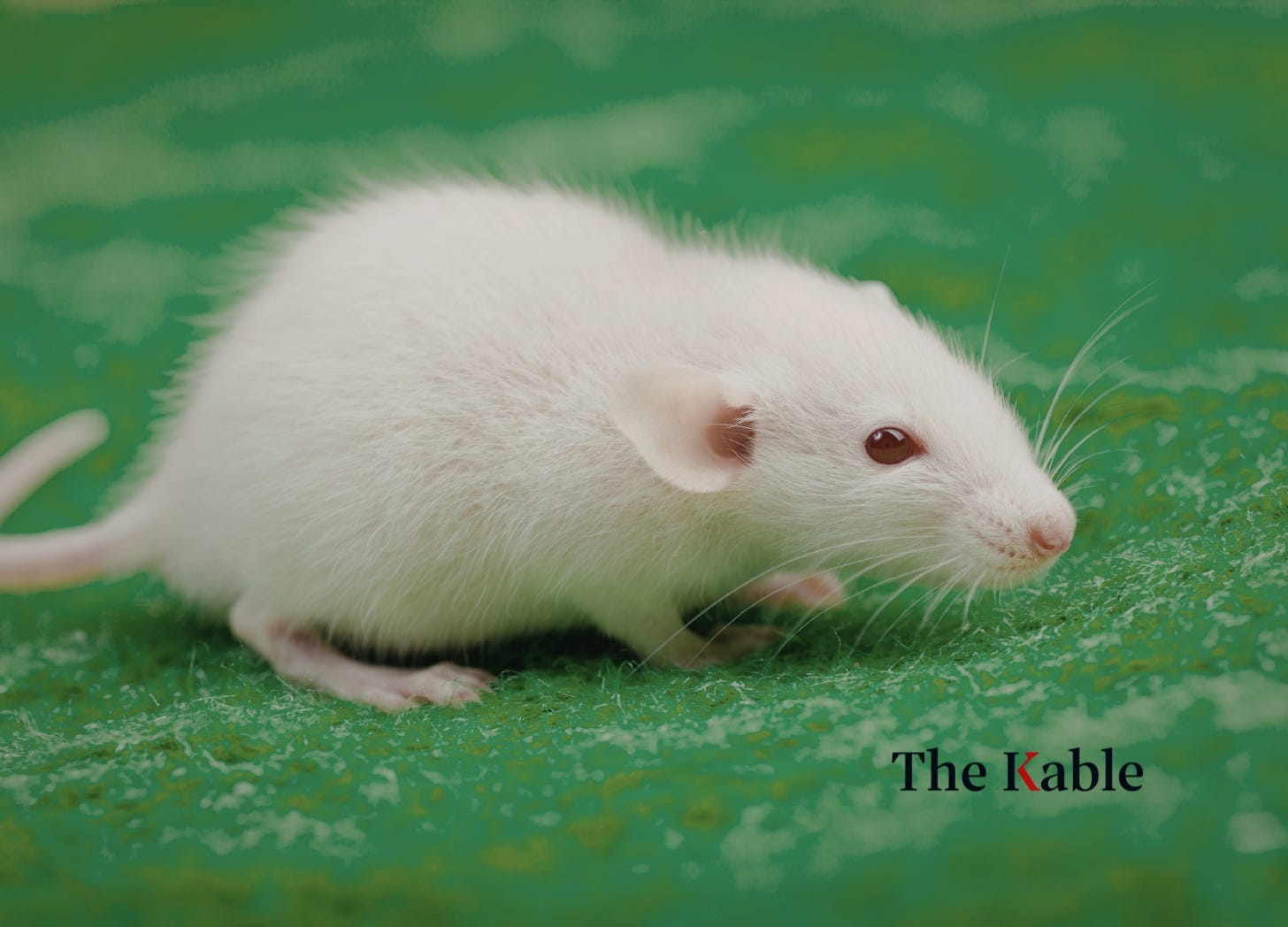
The inheritance no one wants. Chemicals don’t just hurt the people directly exposed to them. They screw over their descendants too. It might sound like it is us saying this. But it is actually actual researchers saying this in PNAS. Their research found that exposing rats (poor rats) to a fungicide caused epigenetic changes that persisted for at least 20 generations, leading to higher rates of kidney disease, obesity, and birth complications. The study exposed pregnant rats to vinclozolin and bred them for 23 generations, finding that later generations had more DNA methylation changes and higher rates of organ diseases. By the 20th generation, all 11 rats with ancestral exposure had ovarian abnormalities compared to 11 out of 19 controls. Birth failure rates ranged from 20-70% in later generations. The researchers suggest these changes disrupt normal organ development and function, which is scientific jargon for “we’ve created a multigenerational health crisis.” Because when our great-great-grandparents were happily spraying chemicals on their crops, little did they know (or did they?) they were basically writing a prescription for future generations’ misery and gonads growing out of foreheads. And okay, vinclozolin, the fungicide used in this study, may have declined in use and is even banned in some countries. But the study is not just about one chemical. Or even about chemicals generally. It should serve as a warning about opting for convenience today. Because more often that not, it will come back to bite you, or your descendants, in the ass tomorrow.
(PNAS)
Bottom line
The good news... it just keeps on coming. Last week, we told you about how air pollution can cause serious mental health conditions as you age. Good news, it can give you Alzheimer’s too. So you can forget all about your depression. A new study says breathing polluted air wrecks your brain. Researchers found that long-term exposure to fine particle air pollution was linked to a higher likelihood of developing Alzheimer’s disease, with the connection appearing to stem largely from pollution’s direct effects on the brain rather than through related health conditions like hypertension or depression. Because apparently, when your brain is already dealing with the daily trauma of existing in modern society, it really needs the added bonus of breathing in microscopic particles that dissolve your memories.
(PLOS Medicine)
Sucking for 1.8 million years. These goddamned mosquitoes have been ruining human lives for much longer than we thought. Researchers found that some mosquitoes developed their taste for human blood as far back as 1.8 million years ago, coinciding with the flourishing of our ancient ancestor Homo erectus. Because apparently, when early humans decided to start walking upright and expanding their range, they basically opened an all-you-can-eat buffet for bloodsucking insects. Their study analysed DNA from 40 mosquitoes across 11 species in Southeast Asia, calculating that the switch to human feeding occurred between 2.9 million to 1.6 million years ago. This “anthropophily” (fancy word for “human blood obsession”) happened long before anatomically modern humans arrived. And as we recently noted, this obsession is only increasing because mosquitoes prefer feasting on us over anything else.
(Scientific Reports)
Long reads
Upping the ante. Not that this needed more saying but Bhekisisa does a great job nevertheless of explaining how climate change will help superbugs thrive and become even more super.
(Bhekisisa)

Vegan no more. This editor has long held the belief that the biggest problem with veganism is vegan people. This piece in Yahoo! Lifestyle does nothing to change that belief. As a reformed vegan, we can safely say never again.
(Yahoo!)
The forest for the trees. In the DRC, thanks to the colonial legacy, every aspect of life is now intricately linked to violence. Even saving the world’s second largest rainforest. And it is always the indigeneous people that end up paying the price.
(RTL)
Oh, and Gopal Nair doesn’t want you to see this.
As usual very interesting and informative
Thanks