


Hello, and welcome back to The Kable once again. Wake up. It’s a brand new month but with a lot of the same old shee.
Beginning, as we have been for well over a hundred days now, with Ebola. Cases in the Democratic Republic of Congo (DRC) have well exceeded the 8,000 mark, standing at 8,224 as of last count, with 3,982 deaths. But that number is poised for a dramatic jump, we’d imagine, after a transit camp in Kigonze was burned down, leaving 19,000 people scattered. This was not even the only camp to be attacked this week. 3,000 people also were forced to flee another camp in Djugu territory. The violence isn’t limited only to camps sheltering people needing treatment. A politician promoting Ebola prevention measures was beaten to death as well. Cherry on top: An MSF staff member tested positive for Ebola, and is being evacuated to The Netherlands.
There are a lot of updates from Africa this week. Beginning with a video from Ghana’s President John Mahama explaining in no uncertain terms why Ghana shot down the US bilateral health deal.
A fantastic update from Ethiopia on the upgraded lab infrastructure in the country over the past 18 months or so. And it is one heck of an upgrade.
The WHO also launched a three-year plan to modernise planning, coordination, implementation and monitoring of public health campaigns across Africa. Called the DIGIT Health Campaign Data Digitization Project (yes, a mouthful but we’ve got three years to say it), the project hopes to help countries integrate campaign data and operations through a common digital infrastructure, leading to more coordinated delivery of vaccinations and preventive health interventions.
In good news for manufacturing in Africa, Kenya’s Crown Healthcare has opened a new syringe manufacturing plant and Nigeria’s Harvestfield has begun local production of its Synera DuoForte malaria nets.
In what we think is the most consequential news of the week, DRC-based PharmaKina was confirmed for onboarding as a registered manufacturer for the African Pooled Procurement Mechanism (APPM) after completing the Africa CDC prequalification process. When it comes to malaria, Congo consistently ranks high in annual counts for both cases and deaths, and PharmaKina is trying to combat that killer in more ways than one. Hopefully, this prequalification leads to a future where they emerge victorious in that fight.
In Egypt, AstraZeneca is partnering with UNICEF to help young people fight non-communicable diseases (NCDs).
Elsewhere, Sudan continues to burn, and the US insists that only the US can broker peace, and the UAE obviously has a role to play in bringing about that peace. One thing is for certain: wherever the US has gone, we’ve seen peace flourish. Same with the UAE.
PAHO has released a new food safety strategy “to reduce the burden of foodborne diseases.” To be honest, we didn’t read it. Because the last time PAHO had a plan we read, it was to vaccinate children in vulnerable communities across the Americas in partnership with one of the leading ultra-processed sweet food makers in the world.
Oh, and that pandemic pact we were talking about? Yeah, it will be discussed again sometime in the future.
For long, there has been talk about Arctic permafrost melting and releasing thousands of ancient microbes that would spread disease that we wouldn’t know what to do with. But we may not have to worry about that ever. Because gas, heat-trapping gas, that was frozen in that same Arctic ground has been leaking and warming the planet, it seems.
And if that wasn’t bad enough, researchers in China have found a new tick-borne virus that causes a flu-like illness, and they’re calling it orthonairovirus Asian longhorned tick nairovirus (ALTNV). Because naming things is what scientific and medical researchers are really good at.
And finally, dealing with stress, depression, impulsive behaviour? Maybe even anxiety and attention/focus issues? Science has the answer. And the answer, as always, is coffee.
Stories Of The Week
New world, old problems. We’re about four years away from when we’re supposed to achieve the UN SDGs. We’ve written in The Kable several times about how close we are to achieving so many of those goals. Like SDG 6: Clean Water and Sanitation. One would think being so close to the goal would mean a drastic dip in cholera cases worldwide, no? Yeah. Globally, 47 countries reported 451,499 cholera cases and 7,870 deaths to the WHO, with deaths rising 30% despite fewer reported infections. It was the highest annual cholera death toll reported to WHO since 1999. The agency even said that the actual toll is substantially higher because many cases go unreported.
Africa, as always, bore the heaviest burden of this worsening global cholera crisis in 2025, with the WHO African Region recording a 34% rise in cases and a 58% increase in deaths compared with the previous year. Five African countries — Angola, DRC, Nigeria, South Sudan and Sudan — were among just seven countries that together accounted for around 90% of reported cholera cases and deaths worldwide. Bangladesh and Yemen completed the group of seven countries carrying most of the burden. In Yemen, renewed conflict has compounded the health emergency, with 7,784 suspected cholera cases reported alongside outbreaks of measles and dengue.
Africa also remains the main focus of two other epidemic-prone bacterial diseases highlighted by WHO. Across the African meningitis belt, 24 countries reported 21,526 suspected meningitis cases and 971 deaths in 2025, although cases declined 5.9% among countries with comparable data. Meanwhile, 3,847 suspected human plague cases and 423 deaths were reported globally between 2019 and 2025, with most cases occurring in the DRC and Madagascar, where the disease remains endemic in some areas.
(WHO)
Beat the heat. Heat-related deaths globally have risen by an estimated 63% since the 1990s, with an average 546,000 deaths a year between 2012 and 2021. The good news is that climate change is making extreme heat more frequent and intense across most land regions, so we may be able to get used to it faster. In the meantime, however, the WHO has issued new guidance to help governments and event organisers prevent and manage heat-related illness at major sporting, religious and cultural gatherings, because for now, extreme heat is an increasing public health and operational risk. An evidence review covering studies published between 1980 and 2025 documented nearly half a million medical encounters at mass gatherings, including more than 22,000 heat-related illnesses. The recommended measures include access to safe drinking water and toilets, cooling infrastructure, changes to event schedules, crowd-flow management, workforce protection, public communication, real-time surveillance and prepared on-site medical services.
(WHO)
Teacher, leave them kids alone. Nearly six million refugee children remained out of school in 2025, as cuts to humanitarian and development funding threaten to reverse gains in access to education, the UN Refugee Agency (UNHCR) has warned. Its latest education report estimates that 5.8 million, or 44% of the world’s 13.1 million school-aged refugee children, were not attending school last year. The sharpest drop occurs as children move into secondary education. While 65% of primary-school-age refugee children were enrolled in primary education in 2025, the rate fell to 32% at secondary level. Refugee girls face particular pressure at this stage, with poverty, protection risks and early marriage among the factors pushing adolescent girls out of school. Two in three young refugees also lack the foundational learning needed to prepare them for the classroom. Higher education has nevertheless continued to make gains: refugee tertiary enrolment reached a record 11% in 2025, up from 9% a year earlier, with more than 450,000 refugees enrolled. Access remains highly unequal, however: in low-income and conflict-affected countries, only 2% of refugees were enrolled in higher education, compared with 13% of nationals.
(UNHCR)
Watching the sun go down. UNICEF has a new report out, called An Enduring Nightmare. In the report, it says four in five households in Lebanon are struggling to afford basic necessities as renewed conflict compounds years of economic crisis, with children increasingly going hungry, missing health care and being pushed into work. 22% of surveyed households said their children had gone to bed hungry in the previous two weeks, while 31% reported children going without needed health care, mainly because families could not afford it. 14% said at least one child was working, more than double the proportion recorded in January 2025.
The conflict has also caused extensive casualties and damage to education infrastructure. Since 2 March 2026, at least 261 children have been killed and 1,056 injured — an average of seven children killed or injured each day over six months — while 436 schools have been damaged or destroyed, putting around 100,000 children at risk of being left without a classroom. 17% of surveyed households said their children had stopped attending school, while nearly half had cut education spending.
The report also estimates that 770,000 children have experienced psychological distress over the past six months, with 63% of households reporting that their children were anxious or nervous. Young people face similarly constrained prospects: an earlier UNICEF assessment found just 22% of 18- to 25-year-olds were in school or university, while 67% were unemployed at the time of the survey. What the UNICEF report does not do is name who (Israel) is behind all these strikes that are killing children and destroying hospitals and demolishing schools and turning homes and lives into rubble. An 11-page report that can’t spare a single mention for the cause of all this devastation?
(UNICEF)
Bottom line
Smoke on the water. Extreme heat and human-caused emissions combined to expose almost 40% of the world’s population to extremely high levels of ground-level ozone during the first eight months of 2026, according to the inaugural Atmosphere Watch report from the Copernicus Atmosphere Monitoring Service (CAMS). Roughly half the global population experienced “very poor” or “extremely poor” long-term ozone levels, while just 5% experienced levels classified as good, with the cleanest conditions concentrated in Oceania and parts of South America and Africa. It doesn’t mean you’re good where you are. Because the report says air pollution from ozone, wildfire smoke and desert dust can travel thousands of kilometres, affecting populations far from where the pollution originated.
Asia recorded the heaviest ozone exposure, with around nine in ten people exposed to dangerous levels and about 60% experiencing extremely high concentrations. More than two-thirds of North America’s population and half of Europe’s experienced poor, very poor or extremely poor levels. Africa was less affected by ozone overall, with 56% of its population experiencing good or fair levels, but the continent faces significant exposure to other forms of airborne pollution, including smoke from biomass burning and Saharan dust.
Wildfires produced major cross-border pollution episodes during the year. Smoke from fires in Canada travelled across the United States and the Atlantic towards Europe, while fires in France and Spain generated exceptionally high emissions and affected air quality hundreds of kilometres away. Indonesia also recorded some of its highest fire emissions in more than two decades as hotter and drier conditions associated with El Niño intensified peat and forest fires. In Africa, seasonal biomass burning emissions have declined over the past two decades but still generate widespread and persistent smoke pollution, while Saharan dust repeatedly travelled across North Africa, Europe, the Atlantic and into the Caribbean during 2026.
(CAMS)
Long reads
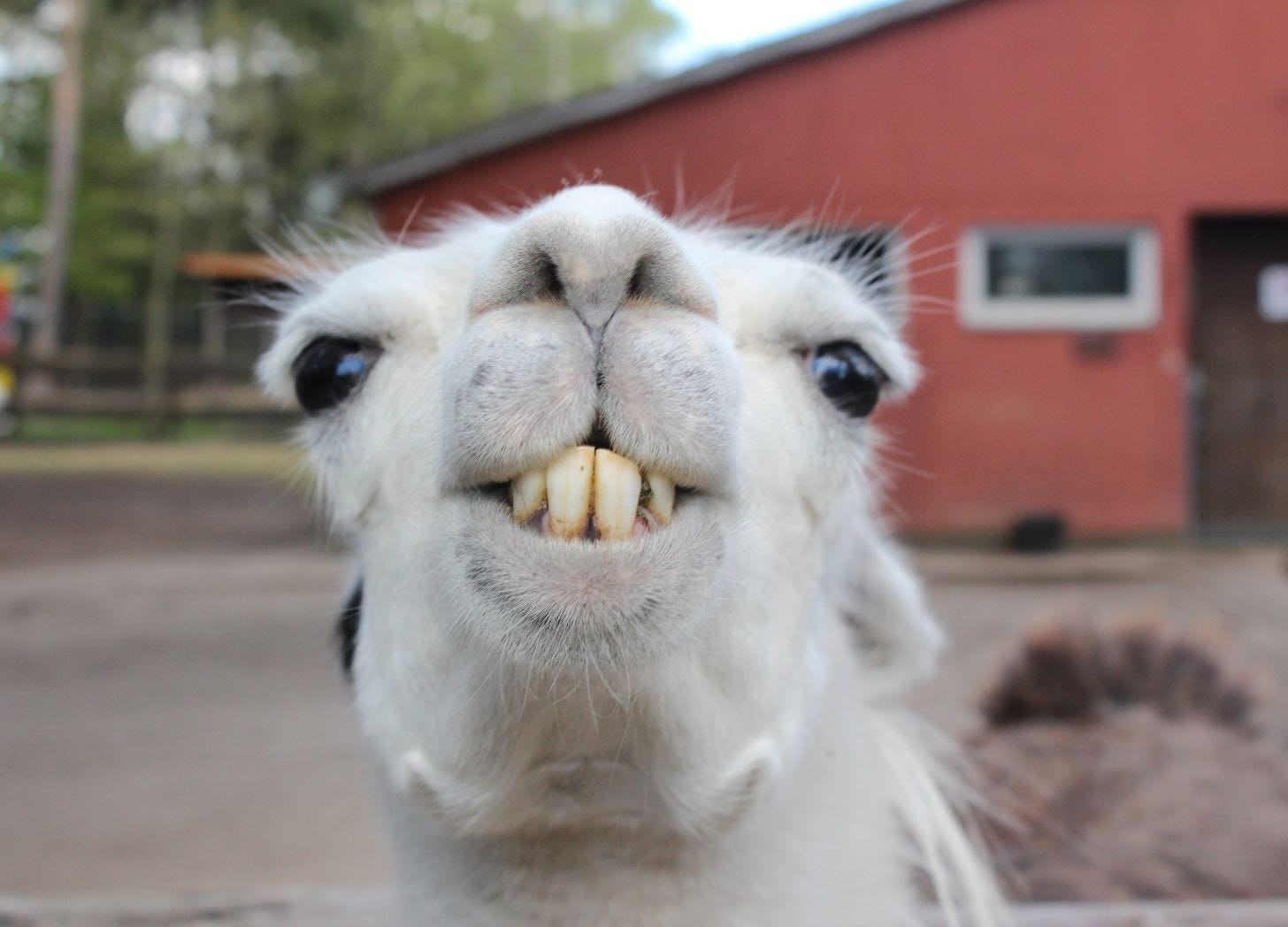
Laugh, and the world laughs with you. Let nobody tell you The Kable is not a source of endless laughs. Okay, we may not have too many long reads for you this week. Heck, we don’t even have one. But we do have pictures. Lots of pictures. Of animals at their derpiest best. Enjoy.
(Comedy Wildlife Awards)