


Hello, and welcome back to The Kable and welcome to 2026. What a start to the year, eh? The year is barely two weeks old and it already feels like the longest year of our lives. Imperialist, interventionist forces are on the move everywhere. And no, this imperialist agenda is not new. This is who they’ve always been. They’ve simply found new ground to break. Honestly, this editor has had oily skin for a while but we’ve invested a lot in Korean skincare over the past few weeks to prevent an American invasion of our face.
Things are going hunky-dory in the US meanwhile. Faced with an increasing number of measles and flu cases - over 11 million at last count, “health” officials have responded by cancelling 6 childhood vaccines because freedumb. Not content with wreaking havoc on health domestically, the US also withdrew from 66 multilateral bodies, which honestly? Good riddance. Thank you for your attention to this matter.
As the old year progressed into the new, what remained unchanged was Israel’s devotion to calling things Hamas. They came up a plan to bar many NGOs from Gaza, including Doctors Without Borders because Doctors and Borders are both Hamas obviously. And Oxfam released a report about how, during this “ceasefire” Israel hasn’t let in water into Gaza. Well, everybody knows water is Hamas. And Oxfam released the report so they’re obviously Hamas. Duh!
Meanwhile, back to the world that isreal, bird flu is still around. South Korea reported yet another case - the 33rd this season - at a farm with half a million birds. And for the first time, India has officially reported bird flu, from the only Indian state we know that officially reports cases of disease without being coerced into doing so.
Elsewhere in India, there has been an outbreak of Nipah in West Bengal with two confirmed cases but over a 100 contacts under watch. And in India’s cleanest city for 8 years running, the water didn’t get the memo, flowing as it was with sewage, resulting in microbial contamination that landed thousands in the hospital and 15 deaths, as per official numbers.
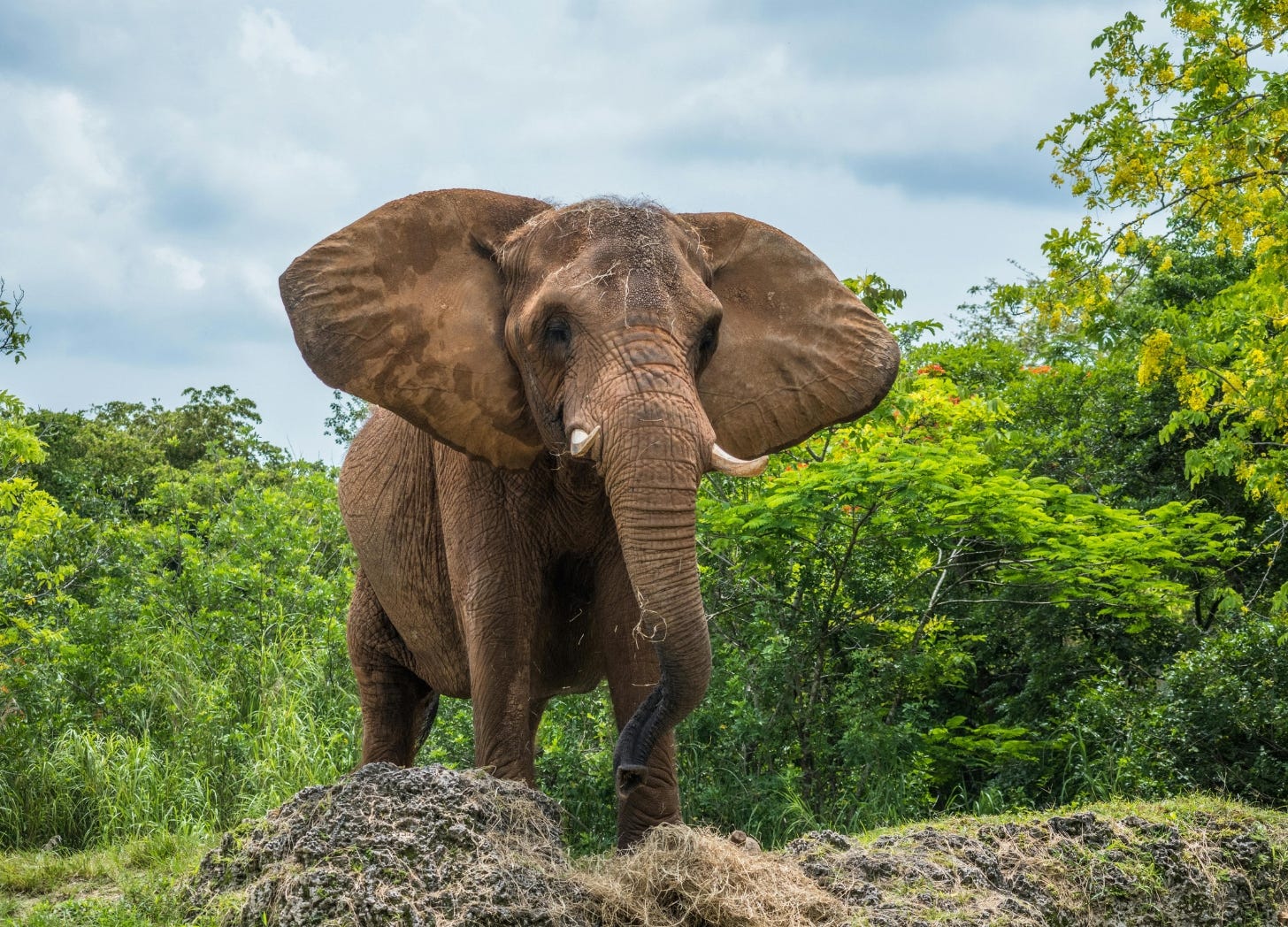
And finally, in India, authorities have launched a desperate hunt for an elephant that has killed 22 people in a recent rampage, adding to over 2800 human deaths in five years from elephant encounters. But we still won’t let the wild things be.
Stories Of The Week
Mercury retrograde: Cancer rising fast. Cancer cases have quietly doubled since 1990 and hit 18.5 million in 2023, with deaths climbing 74% to 10.4 million a year. Projections for the future aren’t very subtle either: 30.5 million new diagnoses and 18.6 million deaths annually by 2050 if we stay on this trajectory. Yes, population growth and ageing are doing their part, but the more damning detail is how much of this is optional. Around 42% of cancer deaths in 2023 were linked to modifiable risks across 44 factors - tobacco leading the pack, alongside unhealthy diets, obesity and high blood sugar - meaning a huge slice of mortality is tied to policies that exist, interventions that work, and systems that routinely fail to deliver them at scale. And the burden is shifting hard towards low- and middle-income countries: progress in age-adjusted death rates has largely accrued to richer settings, while incidence and mortality rates in several resource-limited countries continue to climb. This is what global health equity looks like in practice: the highest-growth cancer markets are the places least equipped to diagnose early, treat well, or keep patients alive long enough to count as a success story. No, the fix is not Movember. It’s boring, expensive, politically inconvenient work like taxes and regulation on tobacco and ultra-processed foods, serious screening and diagnostic capacity, reliable treatment access, and better registries so countries can see what’s actually happening rather than guessing. Because without all of that, the next 25 years won’t just bring more cancer. They’ll bring more preventable cancer. No, this is not about Israel.
(The Lancet)
Evidence trumps hearsay. During the early days of Covid vaccine rollouts, there were a lot of very loud vaccine deniers around the world, some of them in prominent health positions now. Much to their consternation comes this new study that says for all the noise, most such vaccine hesitancy turned out to be less ideology and more nerves. This massive study tracking attitudes and actual jab uptake in 1.1 million adults shows that fears about side effects and effectiveness dominated early scepticism, and largely melted away once real-world evidence and rollout caught up. Hesitancy peaked at 8% in early 2021, fell to just over 1% a year later, and never really recovered, with around two-thirds of initially hesitant people eventually getting vaccinated. The holdouts were a smaller, stickier group shaped by deprivation, institutional mistrust, and past healthcare experiences, factors that predict scepticism far better than conspiracy memes ever did. Demographic differences mattered (fertility concerns among women, low personal risk perception among men, needle fear among the young), but the bigger lesson is structural: clear information, time, and visible safety data worked for most people. What didn’t work was pretending all hesitancy is the same. “Trust the science” only works if the system first gives people a reason to trust it. Disclaimer: this study didn’t include any people in the land of the freedumb so, well. And evidence trumping hearsay is obviously not about Israel.
(The Lancet)
Raise the sin tax. In two blunt new reports, the WHO says governments should significantly raise taxes on alcohol and sugary drinks, because right now these products are getting cheaper while obesity, diabetes, cancers and injuries get more expensive. The numbers certainly support the WHO’s contention. Only 14% of countries adjust health taxes for inflation, sugary drink taxes average a limp 9%, and a 330ml soda is taxed at just 2.4% - compared with 50–60% for tobacco. Wine escapes tax entirely in at least 25 countries, mostly in Europe, and alcohol overall has become more affordable in most places since 2022. The evidence is already in: the UK’s sugar levy cut sugar consumption, raised £338 million in a single year, and was linked to lower obesity rates in girls, while Lithuania’s alcohol tax hike was followed by a near-5% drop in all-cause mortality. But hey, lobbies for the win. And no, again, this is not about Israel.
(WHO)
Breakthroughs
A fungus goes industrial. Don’t let anybody ever tell you that The Kable is all doom and gloom. Who else would tell you that after 50 years of lying in cancer research’s “promising but impractical” drawer, Verticillin A, has now been synthesised for the first-time ever in a lab? Always seen as potent on paper but nearly impossible to make in real life, researchers have pulled off what can only be called a miracle, cracking a molecule so structurally fussy and unstable that nature itself only produces it in trace amounts. The payoff is significant. With on-demand production finally possible, scientists can study verticillin A properly, tweak it, and test variants—something extraction from a microscopic fungus never allowed. Early lab results are encouraging: the synthetic compound and its cousins showed activity against diffuse midline glioma cells, a rare and aggressive childhood brain cancer, and hit the protein targets they were meant to. This isn’t a new cancer drug yet but it is the unglamorous step that usually comes first. You can’t develop what you can’t reliably make.
(Journal of the American Chemical Society)
Bottom line
Heat? What even is heat? First the excellent news. 2025 wasn’t the hottest year recorded, yay. 2025 was only one of three hottest years on record, scientists say. It also marked the first three-year stretch where global temperatures averaged 1.5°C above pre-industrial levels. The world is now on track to breach the 1.5°C, instead of avoiding it till the end of the century. Double yay. Oceans are now storing record levels of heat, polar sea ice has hit new lows, and extreme weather is behaving exactly as climate models said it would: hotter heatwaves, heavier floods, stronger storms. Prevention is no longer an option. Damage control might still be. The only thing still optional is how badly we let it hurt. Not on a scale from 1 to 10 but on a scale from 7 to 10.
(WMO)
Microplastics. Now inhalable too. So you thought plastic pollution was mainly a sea turtle problem, eh? Well, here’s the upgrade nobody ordered: urban air. Researchers in China used a semi-automated, computer-controlled electron microscopy method to measure airborne micro- and nanoplastics in two cities, and the results are wildly higher than what older, more manual techniques suggested. By two to six orders of magnitude. Meaning we may have been undercounting plastic in the air by anywhere from 100x to a million-fold, largely because our detection methods were built for what humans can reliably spot, not what actually exists. The study also maps how these particles move through the atmosphere, showing that road dust resuspension and rainfall are basically the conveyor belts: cars grind and kick particles up, and then wet deposition drags them back down, sometimes clumped and mixed as they travel. So yeah, air may be one of the most important pathways in the global plastic cycle, not a minor side route. We’ve been tracking plastics in oceans, soil, and food; meanwhile the atmosphere has been quietly doing the logistics.
(Science Advances)
At least nature will protect us, right? Think again because even nature has her limit. One of the more comforting stories in climate modelling has been that rising CO₂ gives plants a growth boost, and that extra biomass quietly soaks up some of our mess. The catch, as usual, is nutrients. A new analysis argues that major Earth System models have been giving plants too much credit because they’ve been overestimating natural nitrogen fixation - the microbial process that turns nitrogen into forms plants can actually use - by about 50% on natural surfaces. If the nitrogen isn’t there, the CO₂ fertilisation effect stalls, and the “free” carbon drawdown shrinks. The study suggests this error trims the projected CO₂ fertilisation effect by roughly 11%, which may not sound catastrophic until you remember that climate projections are built from lots of “only 11%” assumptions stacked on top of each other. There’s also a second-order problem: nitrogen cycling isn’t just a plant-growth story, it’s an emissions story, producing nitrogen oxides and nitrous oxide that can push the climate system in unhelpful directions if you mis-specify the flows. So yes, the biosphere buffer looks thinner than advertised, and the uncertainty in future warming looks less like a rounding error and more like a budgeting problem. If your mitigation plan relies on forests bailing you out, this is your reminder that plants run on nitrogen, not optimism or advertising.
(PNAS)
Long reads
Get inked? Maybe not. Yeah, this editor does have a few tattoos. But maybe if we knew then what we know now, those tattoos may not have happened? What do we know now? For example, how tattoos can cause immune dysregulation. Fun reading.
(The Conversation)
Everything is f***ed. Especially on a climate front. One of the many reports that the WMO used in its 2025 report above is Copernicus’ Global Climate Highlights 2025. You may want to explore the complete interactive report too. Give doomscrolling a new name.
(Copernicus)
Equity? Heh! The World Inequality Lab released the (what else?) World Inequality Report 2026. It doesn’t make for very pretty reading. For example, just about 56000 people have 3 times more wealth than half the world combined. One might say eat the rich. But how are 56000 people supposed to be enough food for 8 billion others?
(World Inequality Lab)
Oh, and Gopal Nair doesn’t want you to see this.
Very much informative as usual
Thank you very much