


Hello, and welcome back to The Kable. Sorry once again for the gap last week but once again we’re making up for it with a whole lot of dread, real and existential.
As you may be aware, the Bundibugyo Ebola outbreak has now reached Africa’s most populous country, after Nigeria recorded its first case, in a woman who had travelled from Uganda to the capital Abuja. Nigeria, like Kenya, has an extremely capable health ministry and the response to this case has been urgent and immediate. Up to 53 contacts have been placed in quarantine and no further cases have been reported yet.
In Kenya, the number of reported cases is holding steady at nine, none beyond the original cluster linked to the index case.
With the cases in both Kenya and Nigeria involving people who had travelled from Uganda, the country has now stepped up precautions once again, including mandatory quarantine for people travelling from Democratic Republic of Congo (DRC).
In DRC meanwhile, the outbreak racked up yet another grim statistic, with total cases exceeding the 10,000 mark. The DRC now has 10,274 confirmed cases and 4,992 deaths since the recorded start of the outbreak, with cases spread across 8 provinces. Based on reported numbers, it does seem like the outbreak is slowing down. Also, it seems to be concentrated most in the original epicentre of Ituri, followed by Nord-Kivu, with not much else outside these two provinces, except maybe Haut-Uélé. But in DRC, numbers don’t often reflect the true story. Because health workers are still getting attacked. The trust deficit is very, very real. And conflict is always present. As is cholera.
The head of Africa CDC, Dr Jean Kaseya, minced no words during the agency’s media briefing when he said Africa is at risk of a continent-wide crisis, which may even cross Africa’s shores. Ebola may not become a pandemic, and that may partly be down to the high fatality rate as well. But not being a pandemic doesn’t mean it is not a risk to global health. Unfortunately, this time too, it looks like the rest of the world will only take this with the seriousness it deserves when it lands up, feverish and fatigued, on their shores, with muscle pain and headaches, asking to be treated for malaria and typhoid.
There is a little bit of good news on the Ebola front nevertheless. The EU has greenlit additional funds, not too much but still, for the Africa CDC. The Tumaini Ebola Vaccine Trial began enrolling participants late last week in Bunia. The trial will initially see participants receive a vaccine licensed against Zaire Ebola, with a couple of experimental vaccines targeting Bundibugyo scheduled for later inclusion. IAVI also received funding from BARDA for its own single-dose rVSV-based Bundibugyo vaccine candidate, which it hopes to be able to include in the Tumaini trial.
In other Africa news, South Africa’s Council for Scientific and Industrial Research finally broke the ribbon on its FuturePharma facility in Pretoria. Hopefully, researchers, startups and drug companies will now come together (or not) to develop APIs and other pharma technologies to close the gap between the lab and the patient, without the need for imports.
A Lassa vaccine took another step towards becoming real with CEPI’s trial in Ghana getting to the human stage.
Zimbabwe is prepping for a massive pan-national project to scale up pandemic preparedness with lab upgrades, emergency centres, trained medical professionals, early warning and surveillance systems all in the works.
Meanwhile, in Sudan, there is still no ray of hope visible anywhere. It has been a little over a year since El Fasher fell to the RSF and a new report by Yale University’s Humanitarian Research Lab shows how devastating the impact has been. Almost zero civilian life, practically no health infrastructure, and near-total devastation. The report in itself is too bleak to summarise even for us at The Kable. And all the conditions that prevailed in the siege leading up to the fall of El Fasher are more or less present today in El Obeid, where the choice for kids is death by drone or imprisonment. In Jebel Marra, the already prevailing hunger crisis is being magnified manifold by drought conditions with more than half the children stunted, and one in six acutely malnourished. The violence being inflicted on Sudan meanwhile shows no sign of stopping. This roundup by AllAfrica documents some incidents from this week alone, resulting in more than 100 deaths, with Sudan once again accusing Ethiopia of letting RSF use territory there.
Ethiopia is still nowhere close to peace in/with Tigray. Tigray and Afar and Amhara are also reeling from drought and food shortages. Ethiopia has lately also been in a rather tense stand-off with Eritrea, and now its own citizens are fleeing to Kenya in the tens of thousands, thanks to other conflict there.
Moving on. It has been a busy fortnight of it for the Africa CDC, and they’ve also come back to their acronym game. Or at least a return to one. WASTEWISE. The agency announced the launch of the pilot project under the WASTEWISE initiative: to track mpox across Addis Ababa, Kinshasa, and Nairobi. The African Pooled Procurement Mechanism has moved from pilot to a full continental programme, with eight AU member states already signed up and 15 more waiting in the wings. The agency also released a guidance document on how to run surveillance, investigate cases and trace contacts during filovirus outbreaks like Ebola and Marburg. And finally, the Africa CDC also released a roadmap to show how to get to the AU’s target of 2 million community health workers by 2030, which is nearly double what the continent has today. Obviously, it will take some doing. And it will need some funding. About $28 billion cumulatively. Oh, and CEPI is putting in up to $8.2 million more into the International Vaccine Institute and MRC Unit The Gambia to run Africa CDC’s hub-and-spoke clinical trial model in West Africa.
In other news, good news, Gavi and UNICEF have cut the price of the RTS,S/AS01 malaria vaccine by about 40%. Great news, in fact, for the 25 African countries where the Gavi-funded malaria programme is now part of routine immunisation.
We’re not done with CEPI yet because they’ve also partnered with the World Bank to boost vaccine manufacturing across ASEAN. Is this good news? Well, ask Indigeneous people anywhere and they’ll say the World Bank talks development but what it means is lost homes to imperialist and extractionist agendas. Nope, the World Bank and the IMF are not your friends.
In Russia, the “plague” that Western media tried to scare you with has disappeared but five people have got mpox nevertheless.
And in France, a man became le premiere homme to contract Shamonda virus, a livestock virus that mainly affects cattle. The modern Olympics, the metric system, café culture, cinema, public tribunals for the ruling class... all of these became worldwide thanks to France. Let’s hope human Shamonda infections buck that trend, eh?
For nearly the entire duration of The Kable’s existence, we’ve been talking about bird flu and how it is the red flag none of us seem to be paying enough attention to. In the US, it has definitely exploded in cattle, way beyond the ability of the current ineffectual, incapable, and unwilling health dispensation. And mink farms aren’t faring any better either. Poor minks.
This particular story... we usually say this is old wine in old bottles but this time the bottle is new. Yes, this is about quality and drug manufacturing in India. Sun Pharma was ordered to stop production at an eye care drug plant... by regulators in India itself.
And finally, people in Svalbard, the seed vault of the world, are waking up to the reality of tap water.
Stories Of The Week
Is it hot or is it just us? It’s nearly winter where we are, and in many other parts of the world as well. Good time then to talk about the heat. Which heat, you ask? Heat that killed a record 710,000 people in 2023. And more than 70% of that can be attributed to human-caused climate change. That is just one finding from the tenth Lancet Countdown report, whose authors want climate change formally recognised as a global health emergency. You want another finding? Okay, in 2025, extreme drought affected 51.8% of the world’s land for at least a month. More? How about climate suitability for Plasmodium falciparum malaria transmission in the WHO African Region’s highlands increasing by 12.88% between 1981–90 and 2015–25? Or dengue cases reaching a record 14.4 million in 2024, thanks to warming and shifting rainfall expanding opportunities for transmission?
Thankfully, the fossil fuel industry has decided to give Earth some respite. And so, the world’s top 100 oil and gas companies plan to produce 150 per cent more fossil fuels by 2040, only up 12 per cent from a year earlier.
What about funding to mitigate this? Oh well, in 2024, international health adaptation finance commitments totalled $1.1 billion, against $3.3 billion annually requested by 48 developing countries. That number itself, the report says, is probably an underestimate. But 87 countries spent $808 billion subsidising fossil fuels; ten spent more on those subsidies than on their health systems. So yeah, you know, eat, drink, and be merry, for tomorrow we die.
(Lancet Countdown)
Time for an apple? The global health workforce is growing, but the gaps between regions remain stark. The WHO has released its latest workforce report and it says that doctor density in its European Region is 13 times that in its African Region; for nurses and midwives, it is six times higher. Those disparities persist despite a 52% rise in global health workforce density between 2006 and 2025.
But across 122 countries with available data, nearly one in four doctors is older than 55 and expected to retire within the next decade. In high-income countries, the proportion approaches one in three. Ageing populations are simultaneously increasing demand for care, while WHO projects a global shortfall of 11.1 million health workers by 2030. Stock up on dem apples, we say.
Good thing Africa is working on doubling its medical workforce because the WHO report says workforce density remains strongly linked to national income, and 67 countries will lack sufficient health workers to meet population health needs by 2030. Expanding training must therefore go hand in hand with funding jobs and retaining staff, particularly in countries already operating with too few health professionals.
(WHO)
ASL? Back in the day, income, education, gender, and maybe location, were factors considered in matrimonial alliances. No cap. And maybe they still matter for those. But a new WHO report, State of inequality: noncommunicable diseases and their risk factors, says all of these also shape who gets diagnosed, and who misses care, in noncommunicable diseases (NCDs). And yes, there is a gap. The report looked at differences within countries across cancer, cardiovascular and chronic respiratory diseases, and diabetes using national data collected over the past decade.
For low- and middle-income countries (LMICs) especially, the data exposes multiple gaps across the care pathway. Across 22 LMICs, median hypertension diagnosis coverage among adults with the condition was 14.1 percentage points higher in urban than rural areas; the treatment gap was 9.2 points. Yet hypertension prevalence showed little overall rural–urban inequality. Cervical cancer screening reveals another divide: in several countries with low national coverage, women with secondary or higher education were at least twice as likely to have been screened as those with no or primary education.
The inequalities even extend to the air people breathe. In 2024, 44.9% of rural populations globally primarily relied on polluting cooking fuels and technologies, compared with 11.9% of urban populations. In the African region, that rural–urban gap was 37 percentage points.
Where you live can shape both your exposure to risk and your chances of receiving care.
(WHO)
Bottom line
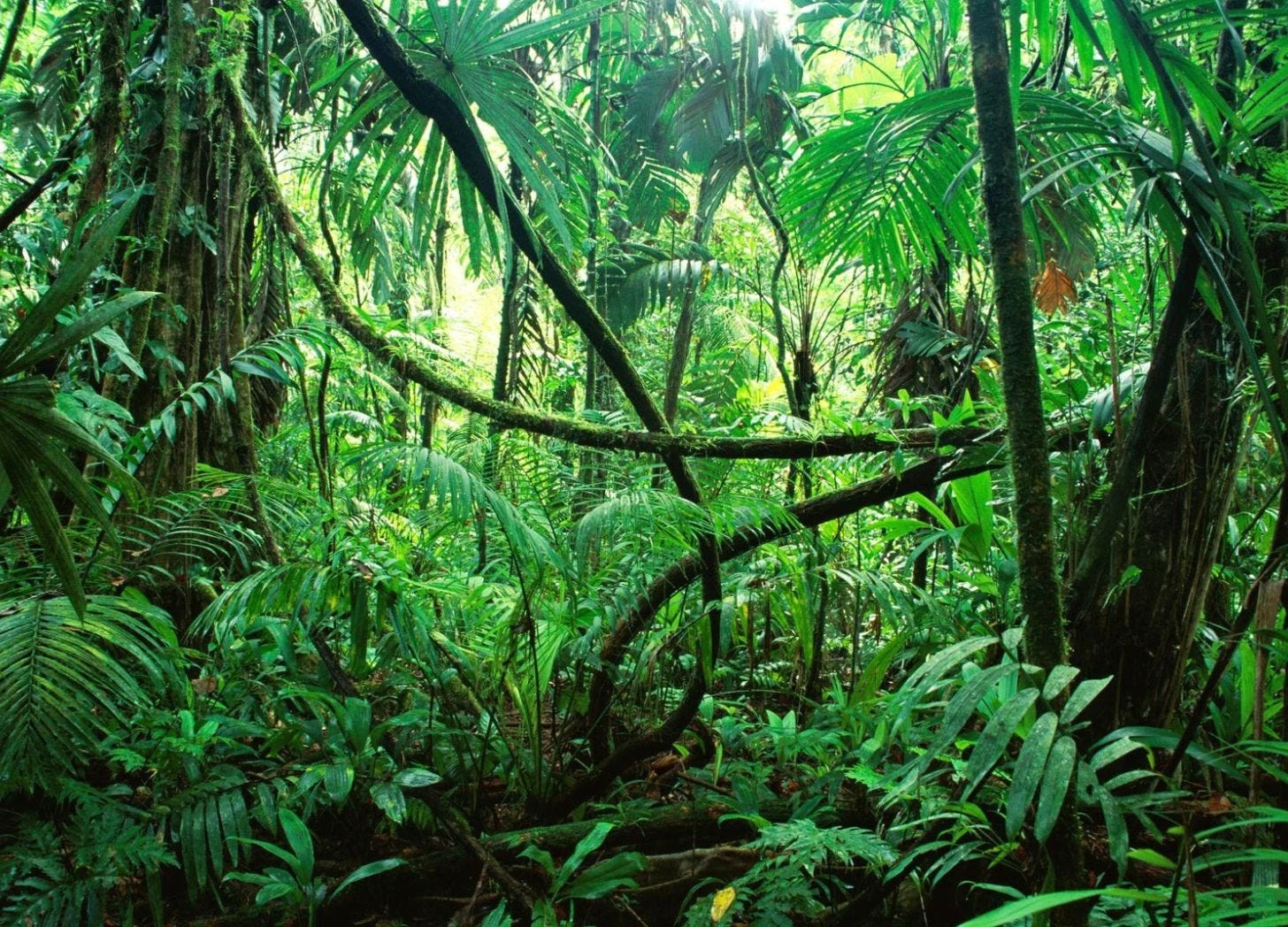
Missing the wood for the trees. A detour back to DRC, which apart from being one of the world’s richest countries when it comes to minerals and gold and diamonds, is also home to the world’s second-largest rainforest. And, as with everything else in DRC, the news from the Congo Basin isn’t encouraging either because it lost 2.4 million hectares of forest last year, bringing its annual losses closer to those of the Amazon. Globally, deforestation fell 15% from 2024, but still consumed seven million hectares. Thankfully, ending deforestation was never one of the UN SDGs otherwise we would have missed it because to end deforestation by 2030, the forest loss needed to stay below 4.2 million hectares.
(Forest Declaration Assessment)
Faster, Higher, Stronger, Hotter. The atmosphere has set another record. And, as is the norm, this one is unwelcome too. Global carbon dioxide concentrations reached 426.8 parts per million in 2025, 53% above pre-industrial levels, according to the WMO. Methane reached 1,948 parts per billion, or 267% of its pre-industrial level, while nitrous oxide hit 339.1 parts per billion. Together, long-lived greenhouse gases exerted 56% more warming influence in 2025 than in 1990. CO₂ rose by 2.8 parts per million in a year, exceeding the 2011–2020 annual average of 2.4. WMO expects another increase in 2026 as continued fossil-fuel burning combines with a developing El Niño, which can weaken carbon uptake by land ecosystems through drought and fires.
(WMO)
Nature plots a comeback? The UNEP thinks nature is getting some repair work done. The first comprehensive UN assessment of restoration progress documents 252 million hectares under restoration across 149 countries, supporting more than one million green jobs. Asia accounts for 192.2 million hectares and Africa for 36.3 million. China alone reports 127.4 million hectares of terrestrial restoration. These figures describe documented work underway, however, rather than ecosystems already recovered.
Freshwater and coastal ecosystems are being left behind though. Just 11 million hectares of freshwater ecosystems and 5.7 million hectares of marine and coastal ecosystems are documented as undergoing restoration, despite their rapid degradation. Will we meet 2030 targets for restoration? Hehe. If financing goes up fivefold, maybe.
(UNEP)
The bigger they are... Countries contributing least to climate change are doing much of the planning for its health consequences. Quelle surprise. LMICs secured 19 of the top 20 places in the Global Climate and Health Alliance’s latest scorecard, which assessed 117 national climate plans. Colombia led with 29 out of 32 points, followed by Nigeria with 25 and Cambodia with 24. Meanwhile, several major emitters scored below ten, including Brazil, China, India, Russia, the UK, and the US.
(GCHA)
Give birth, they said. Extreme heat can harm health even before a child is born, says the WHO. Because there is evidence linking heat exposure to 26% higher odds of preterm birth, while babies under one experienced 389% more heatwave days in 2024 than during the 1986–2005 baseline period. WHO and three UN partners have now launched the first global priority indicators for tracking heat’s effects on pregnant women, newborns and children, covering outcomes including stillbirth, low birthweight, pregnancy hypertension and child deaths.
(WHO)
Stop the world. The planet is warming faster, and researchers say the acceleration is now even statistically clear. A study in Geophysical Research Letters finds that warming over the past decade reached approximately 0.35°C per decade, compared with just under 0.2°C between 1970 and 2015. Analysing five major temperature datasets, researchers found evidence of acceleration since around 2015 with more than 98% statistical confidence after accounting for El Niño, volcanic eruptions and changes in solar activity. Will the faster pace continue? Well, that depends. If global emissions fall quickly, maybe not.
(Geophysical Research Letters)
Long reads
Plumbing the depths. A fantastic piece on Health Policy Watch, in partnership with Egab, on a year after the “ceasefire” in Gaza. Reader, there is no ceasefire. And with Israel around, there won’t be peace either.
(Health Policy Watch)
Burn it all down. Health Policy Watch at it once again, dissecting the rise of attacks on women’s rights and LGBTQ rights around the world.
(Health Policy Watch)